

Small apartment storage ideas work best when they respect the parts of renting that are not negotiable: limited square footage, lease rules, shared walls, and surfaces that may not tolerate permanent hardware. The goal is not to make the apartment look empty. The goal is to make everyday items easier to reach, easier to put away, and less likely to become visual clutter.
In a real rental, the most useful storage plan starts with what already happens in the room. Shoes collect by the door. Laundry lands near the closet. Pantry overflow moves to the counter. Those clues show where the storage should go, even if the room is small.
Use the ideas below as a calm sequence rather than a shopping list. Start with one friction point, test it for a week, and only add a product when the job is clear.
Why This Matters in a Real Rental
A rental apartment often needs storage that can be removed, adjusted, or simplified later. That means the best setup is usually light, modular, and easy to maintain. Before using tall furniture, freestanding shelves, or stacked storage, check stability and keep heavier items low. Erlanger Children’s Hospital’s tip-over safety guidance recommends securing unstable or top-heavy furniture and keeping heavier items on lower shelves or in lower drawers.
That does not mean every rental solution has to be temporary or flimsy. It means each idea should have a clear job, a safe weight range, and a simple way to reset it when the apartment gets busy.
Start With Apartment Storage Basics
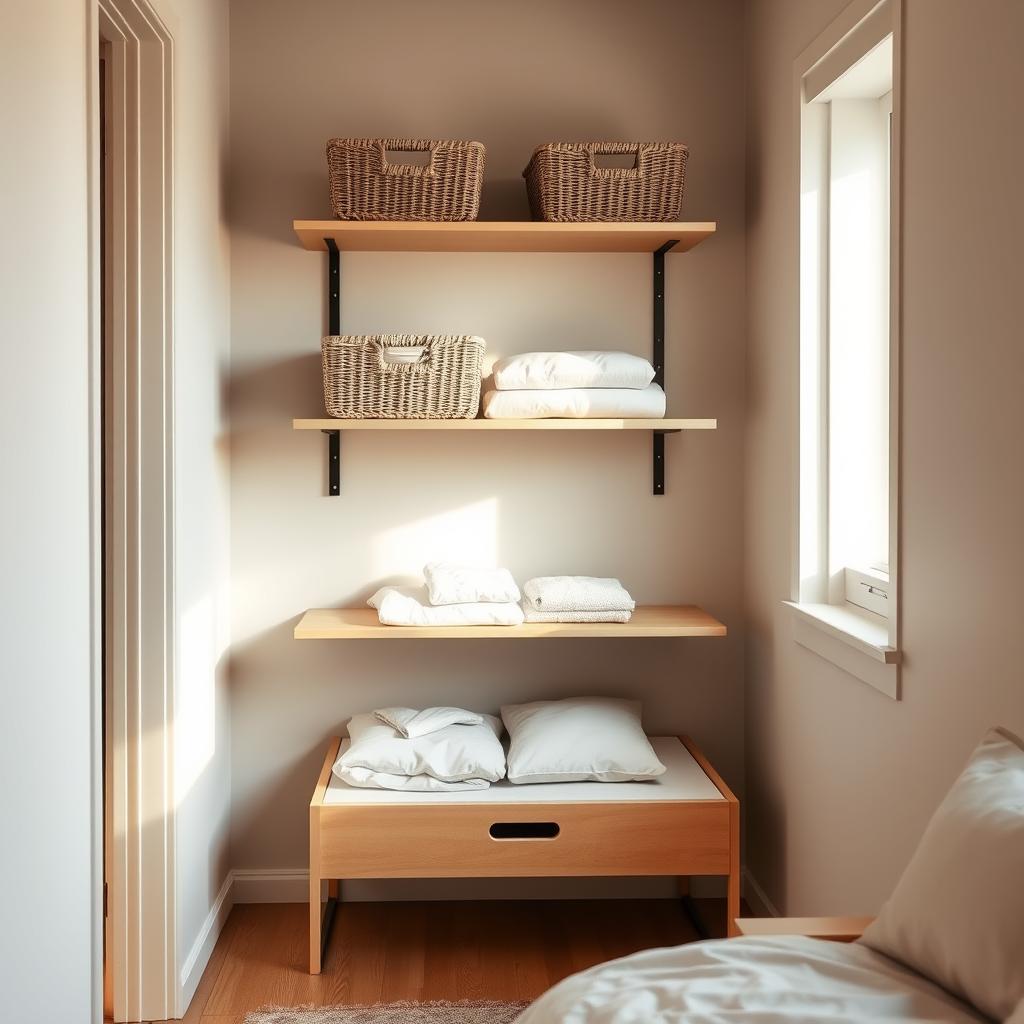
Before buying bins or shelves, divide the apartment into small storage zones. A zone is not a room. It is a job. For example, the entry zone handles keys, shoes, bags, and returns. The cooking zone handles daily food prep. The laundry zone handles supplies, dirty clothes, and clean items waiting to be put away.
Choose one friction point
Pick the spot that gets messy fastest. If the sofa collects blankets and mail, the living room needs a landing place and a reset rule. If the bathroom counter fills up, the problem may be daily access, not a lack of cabinet space.
Measure the useful opening
Measure the real opening, not just the wall. Include baseboards, door swings, drawers, vents, outlets, and the space your hand needs to remove an item. A bin that technically fits but scrapes every time will not stay useful.
What to Check First
Good small apartment storage ideas answer a few boring questions before they look good. What needs to be stored? How often is it used? Does it need airflow? Is it heavy? Does it belong near the place where it is used? Can the setup be cleaned without emptying half the room?
- Daily items: keep them between waist and eye level when possible.
- Heavy items: store them low, stable, and easy to lift without twisting.
- Occasional items: move them higher, deeper, or under furniture if they are protected.
- Shared items: place them where every person can return them without asking.
- Seasonal items: label them clearly and avoid mixing them with daily supplies.
This first check prevents the common rental mistake of buying one large organizer that becomes a new clutter zone.
Small Apartment Storage Ideas That Usually Work
The most reliable ideas are flexible. They do not require a perfect closet, a large pantry, or custom built-ins. They simply make the apartment’s existing surfaces work harder without making the room harder to live in.
Use vertical space carefully
A tall shelf can help when it holds light baskets, folded linens, paper goods, or decor you actually use. It becomes a problem when it holds heavy appliances, overfilled bins, or items that require climbing. Keep the lower shelves for weight and the upper shelves for light, occasional things.
Create a narrow entry setup
For an apartment with no coat closet, use a slim shoe rack, one tray for keys, and a small bag hook or freestanding rack if your lease allows it. Limit the entry to current shoes and current bags. Everything else belongs in a closet or under-bed zone.
Make under-bed storage specific
Under-bed space works best for categories that do not need daily access: off-season clothes, spare bedding, gift wrap, or keepsakes. Use low containers that slide fully out. If the container is hard to reach, it will become forgotten storage.
How to Handle the Setup Step by Step
- Empty one small area: choose a shelf, cabinet, drawer, or corner instead of the whole apartment.
- Group by use: separate daily, weekly, seasonal, and rarely used items.
- Remove duplicates: keep the version you actually reach for and donate or store the rest appropriately.
- Assign the easiest access: daily items get the best space; occasional items move away.
- Test before buying: use a temporary box or tray for a few days before choosing a permanent organizer.
- Leave visible margin: stop filling the zone when it is about three-quarters full.
The margin is important. A full shelf looks efficient on day one but becomes frustrating after laundry day, grocery day, or a busy week.
Common Apartment Storage Mistakes to Avoid
The biggest mistake is trying to solve every storage problem at once. A full-apartment overhaul creates piles, decision fatigue, and half-finished systems. Small spaces respond better to small finished zones.
Another mistake is hiding too much. Closed bins can make a room look calmer, but they also make it easy to forget what is inside. Use clear labels or transparent bins for categories you rotate often. Use woven baskets or closed boxes for categories that are simple and stable.
A third mistake is using products against their instructions. Adhesive shelves, tension rods, over-door racks, and stackable bins all have limits. Read the product guidance and avoid loading them with fragile, heavy, or hard-to-replace items.
Pros and Cons
Works with rental limits
The method favors removable, measured, and adjustable storage before permanent changes.
Reduces overbuying
Each product needs a defined job before it earns space in the apartment.
Improves daily resets
Items live closer to the moments when they are used and returned.
Requires measuring first
The useful setup depends on clear dimensions, surface checks, and product limits.
Not every idea fits every lease
Some wall-mounted, adhesive, or over-door solutions may be restricted or unsuitable.
A Simple Checklist
- Can the item return home in one motion? If not, the storage is too difficult.
- Is the heaviest item stored low? If not, adjust before the setup becomes routine.
- Does the product match the surface? Check instructions before trusting adhesive or pressure-based storage.
- Is there room for the next normal use? Leave space for grocery day, laundry day, or guests.
- Can the zone be reset in five minutes? If not, simplify the category.
When to Get Extra Help
Ask for help when a storage idea involves tall furniture, heavy items, wall anchoring, electrical outlets, plumbing areas, or anything your lease controls. Do not guess about hardware, surface strength, or load limits. The safest answer is usually in the product manual, the landlord’s written rules, or a qualified installer.
For renters, this extra check is not overthinking. It protects the apartment, the deposit, and the people who use the space.
Frequently Asked Questions
What should I check first in apartment storage basics?
Start with one messy zone and identify what keeps landing there. Then measure the space and decide whether the problem is access, overflow, or an unclear category.
How often should I review a small apartment storage setup?
Review active zones once a week for five minutes. Seasonal or rarely used zones can be checked monthly or when the category changes.
What should I do if I am not sure a product is safe for my wall or shelf?
Pause and check the product instructions, surface limits, and lease rules. If the answer is still unclear, ask the landlord, manufacturer, or a qualified installer before loading it.
Can I undo these storage changes later?
Most renter-friendly storage changes can be adjusted later if you avoid permanent hardware and keep the system modular. Save instructions and avoid overloading products so changes stay simple.
Final Thoughts
Small apartment storage ideas that work in real rentals are usually modest, measured, and easy to repeat. Choose one friction point, give the category a clear home, and test the setup before expanding it.
The calmest apartment systems are not the ones with the most containers. They are the ones where everyday items can leave and return without creating a second mess.