Learning how to organize an apartment entryway with no closet starts with a small decision: this area is not a storage room. It is a handoff zone. It needs to catch keys, bags, shoes, mail, and weather gear long enough to keep mornings calm, then reset quickly when you come home.
A closet can hide clutter, but a no-closet entry has to work in the open. That means every item needs a clear job, a realistic limit, and a place that does not block the door, walkway, light switch, intercom, or nearby furniture.
Start with the items that enter and leave with you most often. Then build a narrow system around those habits instead of buying a large organizer that makes the apartment feel smaller.
Why This Matters
An apartment entryway with no closet can become crowded fast because it collects objects from outside life: shoes, umbrellas, tote bags, packages, jackets, pet gear, and mail. When those items land on the floor or the nearest chair, the first few feet of the home feel busier than they need to.
The goal is not to create a perfect mudroom. Most rentals do not have that kind of square footage. The better goal is a small, repeatable landing system that protects the walking path and makes daily departures easier.
If you plan to use a freestanding shelf, tall cabinet, or narrow bookcase near the door, treat stability as part of the setup. The U.S. Consumer Product Safety Commission's Anchor It guidance is a useful safety reference for furniture tip-over awareness, especially in homes with children.
Start With Apartment Storage Basics
Before you choose hooks, baskets, benches, or racks, define the entryway boundary. In a small apartment, the entry might be only the back of the door, a 24-inch wall strip, a console top, or the side of a shoe cabinet. Keeping the boundary small prevents the entry from spreading into the living room.
Sort by motion, not by category
Think about what happens when you walk in. Shoes come off, keys need a landing spot, mail needs a short-term decision, and bags need to leave the floor. The best storage is placed in the order your body already moves.
Keep daily items in the easiest reach zone
Everyday keys, one bag, the current pair of shoes, and a light jacket should be easiest to reach. Backup shoes, seasonal gear, reusable bags, and extra supplies can live higher, lower, or farther away. This keeps the entry from becoming a display of everything you own.
If the whole apartment feels crowded, ShelfCalm's guide to organizing a small apartment without buying more furniture can help you reclaim existing surfaces before adding new pieces.
What to Check First for an Entryway With No Closet
Look at the space before looking at products. Measure the width from the open door to the nearest wall, the depth of the walking path, the height available for hooks, and the swing of nearby doors or cabinets. Also check whether the wall has a thermostat, outlet, light switch, intercom, return vent, or breaker panel that must stay clear.
- Walking path: leave enough clearance for bags, groceries, guests, and moving around without turning sideways.
- Door function: make sure over-door hooks, mats, racks, and baskets do not stop the door from opening, closing, or locking properly.
- Lease rules: check whether adhesive hooks, screws, wall anchors, or door-mounted organizers are allowed.
- Surface limits: follow product instructions for adhesive prep, load limits, cure time, and removal steps.
- Visual weight: choose closed or repeated containers when the entry is visible from the main room.
How to Organize an Apartment Entryway With No Closet Step by Step
Work in a small sequence. The entryway should solve the first five minutes of coming home and the last five minutes before leaving. Anything beyond that may belong in a closet, bedroom, utility corner, or under-bed storage zone instead.
- Clear the floor first: remove everything from the entry and put back only the items used during a normal week.
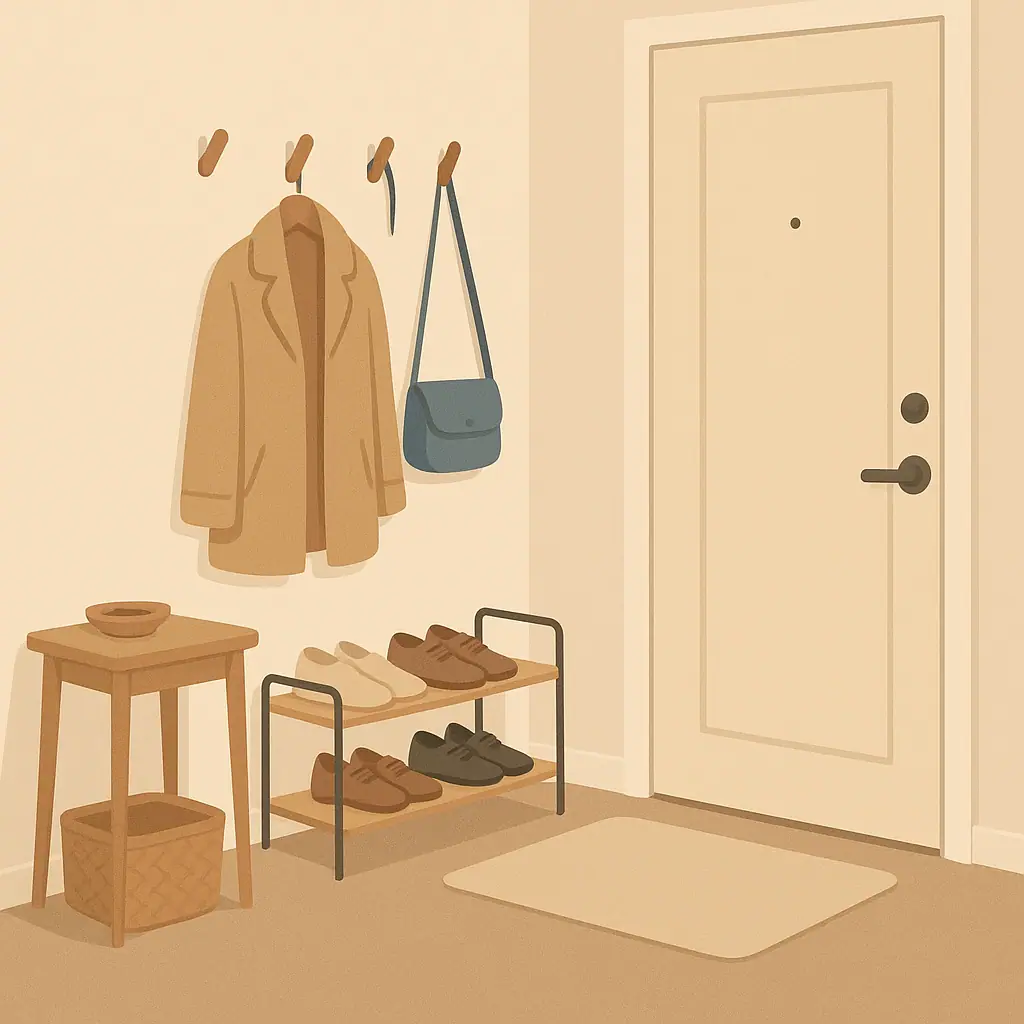
- Set a shoe limit: keep one or two active pairs per person near the door, then move the rest to a closet, bedroom bin, or under-bed container.
- Create a small drop zone: use a tray, shallow bowl, wall pocket, or compact shelf for keys, sunglasses, wallet, and transit card.
- Choose one bag home: add one hook, peg, or narrow basket for the daily bag. If several bags collect there, rotate them back to a secondary zone.
- Control mail immediately: use one slim sorter or tray, but empty it during a weekly reset so it does not become a paper archive.
- Add vertical storage carefully: hooks, rails, and over-door organizers help only when they hold light, specific categories.
- Review after one week: notice what lands outside the system and adjust one piece at a time.
For apartments where one room has to do several jobs, the ShelfCalm article on creating storage zones in a studio apartment explains how to keep each storage area tied to a clear routine.
Entryway Storage Ideas That Usually Work
A narrow shoe landing
A slim shoe rack, low shelf, or washable tray can define the floor zone without turning it into a pile. Choose a size that fits the real shoe limit. If the rack holds twelve pairs, it may invite twelve pairs to stay by the door.
A wall hook row for light daily items
Hooks are useful for keys, hats, leashes, tote bags, and one light jacket. Avoid using a small hook row for heavy backpacks or too many coats unless the product instructions and installation method support that load.
A small closed container for visual calm
If the entry is visible from the sofa or kitchen, a lidded basket or closed-front cabinet can reduce visual noise. Use it for predictable categories such as reusable bags, slippers, or pet-walk items, not for random overflow.
A weekly reset tray
A tray can hold mail, receipts, returns, and outgoing items for a few days. It needs a reset habit. Without one, the tray becomes a clutter permission slip instead of a decision point.
Common Apartment Storage Basics Mistakes to Avoid
The first mistake is trying to copy a house mudroom. A small apartment entry usually cannot hold every coat, shoe, bag, umbrella, tool, and paper category. It should hold the current rotation, not the whole inventory.
The second mistake is buying the tallest or widest organizer that fits. Bigger storage can make the first impression of the home feel cramped. A smaller piece with a stricter limit often works better.
The third mistake is ignoring removal and surface rules. Adhesive hooks, wall pockets, and mounted shelves should be installed only according to instructions and lease limits. If the surface is uncertain, a freestanding or over-door option may be easier to undo later.
Pros and Cons
Keeps the doorway usable
A small entry system can protect the walking path and reduce floor piles near the front door.
Works without a real closet
Hooks, trays, shoe limits, and compact shelves can replace the main functions of an entry closet without pretending to be one.
Supports a weekly reset
When each category has a small limit, it is easier to notice what needs to move back to its main storage zone.
Can look busy in the open
Because there is no door to hide the system, containers and hooks need stricter limits than they would inside a closet.
Needs surface and load checks
Door racks, adhesive hooks, tall shelves, and wall-mounted pieces all need product-specific instructions and realistic weight limits.
A Simple Entryway Checklist
- Can the door open fully? Test it with the mat, rack, hooks, and any shoe storage in place.
- Is the shoe limit visible? If the rack is full, another pair has to move elsewhere.
- Is there one key spot? Keys should not compete with mail, receipts, and loose change.
- Can bags leave the floor? Give the daily bag one stable hook, basket, or chair-free landing place.
- Does mail have a deadline? Empty the tray weekly so the entry does not become a paper backlog.
When to Get Extra Help
Ask for help when an entryway plan involves mounting shelves, anchoring a tall piece, moving heavy furniture, or placing storage above shoulder height. A second person can help measure clearance and notice whether the door path still feels comfortable.
If you are unsure about an adhesive product, wall surface, door load, or furniture stability, check the manufacturer instructions before loading it. For a rental, it is also worth checking lease rules before making holes or using products that may damage paint.
Frequently Asked Questions
What should I check first in an apartment entryway with no closet?
Check the door swing, walking path, and the items you use every day. The entry should support daily motion before it stores extra belongings.
How often should I review the entryway setup?
Review it once a week, ideally after grocery day, laundry day, or a busy workday. If items keep landing outside the system, the limit or location needs adjustment.
What should I do if I am not sure a hook or shelf is safe?
Do not guess. Check the product instructions, surface requirements, and lease rules before adding weight. Use a simpler freestanding option if the setup feels uncertain.
Can I undo these changes later?
Usually, yes, if you choose trays, baskets, freestanding racks, and over-door organizers. Adhesive or mounted products may need careful removal, so review those instructions first.
Final Thoughts
How to organize an apartment entryway with no closet comes down to limits, reach, and reset habits. Keep the current rotation near the door, move backup items elsewhere, and avoid turning the first wall of the apartment into overflow storage.
Start with a shoe limit, a key tray, one bag spot, and a weekly mail reset. Once those pieces work for real daily life, the entryway can feel calmer without needing a traditional closet.