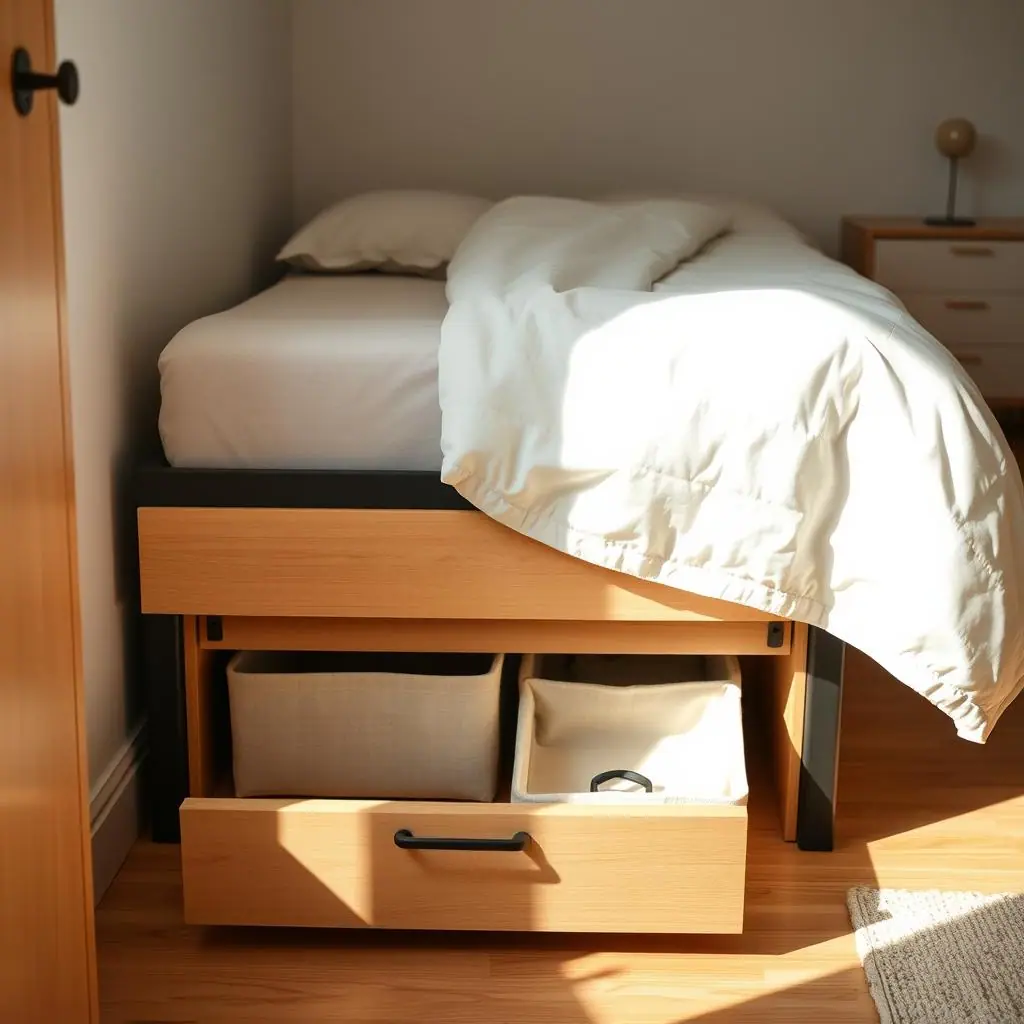
Under-bed storage types compared can sound like a product question, but in a small apartment it is really a routine question. The space under a bed is useful only when it stores the right categories, stays easy to reach, and does not become a hidden second closet.
The best under-bed setup depends on bed height, floor type, dust, humidity, how often you need the items, and whether the container can slide out without dragging or trapping clutter. A calm system usually starts with fewer items, clearer categories, and one storage type chosen for a specific job.
Why Under-Bed Storage Types Compared Matters
Under-bed space is tempting because it looks empty. In a small home, that open rectangle can hold seasonal clothes, extra bedding, shoes, gift wrap, keepsakes, or backup linens. The risk is that it becomes invisible storage. If you cannot remember what is under the bed, the space is not really helping.
Comparing storage types before buying also prevents awkward purchases. A rigid lidded bin may protect linens well but scrape on a low frame. A soft zip bag may compress nicely but sag when pulled. A rolling drawer may be convenient on hard flooring but frustrating on thick carpet.
Safety still matters around beds and storage furniture. The U.S. Consumer Product Safety Commission's Anchor It furniture safety guidance is a useful reminder to follow manufacturer instructions and treat unstable or top-heavy furniture conservatively, especially in homes with children.
Start With the Job Under the Bed Should Do
Before comparing bins, bags, drawers, or baskets, decide what the under-bed zone should hold. This area works best for low-frequency items that are light enough to move and clear enough to review. It is less helpful for daily items, heavy tools, anything damp, or categories you need to see at a glance.
Good under-bed categories
Extra sheets, off-season clothing, guest bedding, lightweight blankets, gift wrap, flat shoes, and small memory boxes can work well under a bed when they are contained and labeled. These categories do not need daily access, but they should still be reachable without unloading the whole room.
Categories to store somewhere else
Avoid using under-bed space for heavy books, loose paperwork, cleaning products, food, electronics with cords, damp textiles, or items you need every morning. If a category needs ventilation, upright access, or frequent checking, another storage zone will usually feel calmer.
If your bedroom storage is already crowded, ShelfCalm's guide to storage bins for small closets can help you decide which items belong in a closet before pushing overflow under the bed.
What to Check First for Under-Bed Storage Types Compared
Measure the clearance from the floor to the lowest part of the bed frame. Then subtract a little room for handles, lids, fabric seams, wheels, or the natural tilt that happens when you pull a container forward. A bin that matches the clearance exactly may still jam.
Next, check the floor. Hard flooring, low-pile rugs, thick carpet, and uneven boards all change how a storage type behaves. Wheels are not always better. On some floors, a smooth-bottom bin or fabric bag with handles is easier than a wheeled drawer.
Finally, look for product-specific guidance. Manufacturer support pages, such as IKEA product support, can help you find assembly guides and product details when a bed frame, drawer, or storage system has stated instructions.
How to Compare Under-Bed Storage Types Step by Step
Use this sequence before you buy anything. It keeps the decision practical and helps you avoid filling the bed area with containers that do not match your room.
- Choose one category first. Decide whether the space is for bedding, clothes, shoes, keepsakes, or another clear group.
- Measure the bed clearance. Check height, depth, width, center supports, legs, and any frame parts that interrupt the opening.
- Decide how often you need access. Weekly items need easier pull-out storage than once-a-season items.
- Match the container to the floor. Test whether a sample bin, box, or empty bag slides smoothly before loading it.
- Protect against dust. Choose lids, zippers, or close-fitting covers for textiles and items that sit for months.
- Keep weight reasonable. A full container should be easy to pull, lift slightly, and return without straining.
- Label the visible edge. The label should face outward so you can identify the category without opening everything.
- Review after one season. If you did not use or review the contents, the category may not deserve under-bed space.
Pros and Cons of Common Under-Bed Storage Types
Each under-bed storage type solves a different problem. The calm choice is the one that matches your bed height, floor, and access routine, not the one with the largest advertised capacity.
Rigid lidded bins protect textiles
They keep bedding, seasonal clothing, and guest linens more contained than open baskets or loose stacks.
Soft zip bags fit low spaces
Fabric bags can slide into shallower openings and compress around blankets or off-season clothes.
Rolling drawers improve access
When the floor works with the wheels, drawers make it easier to pull the whole category forward.
Large bins can get too heavy
A deep bin may hold more than you can comfortably pull out, especially when it is packed with shoes or books.
Open baskets collect dust
Baskets can look calm, but they are not ideal for long-term textile storage unless the contents are protected.
Common Product Buying Mistakes to Avoid
Buying the tallest bin that fits
A container needs working clearance, not just storage clearance. Leave room for the lid, handle, wheel, or a hand grip so it can move without scraping the frame.
Using under-bed space for daily clutter
If something is used every day, storing it under the bed may add friction. Daily shoes, chargers, medicine, and work items usually need a more visible home.
Skipping labels because the bins are clear
Clear bins help, but a small outward-facing label still saves time. It also prevents mystery categories from blending together over time.
Buying a full matching set too soon
A matching set can look organized but still fail the room. Test one container with real contents first, then expand only if it slides, stores, and resets easily.
A Simple Checklist
- Does the container fit with room to move? Measure clearance and leave space for handles, wheels, and lids.
- Is the category low-frequency? Under-bed storage works best for items you do not need every day.
- Can you pull it out when full? Test weight before deciding the container is practical.
- Will dust be controlled? Use lids, zippers, or covers for textiles and long-term storage.
- Is the label visible from the edge? You should not have to open every container to know what is inside.
- Can the bed still breathe and clean easily? Leave enough access to vacuum or sweep under and around the frame.
When to Get Extra Help
Get extra help if the under-bed plan involves lifting a heavy bed frame, assembling drawers, changing risers, moving a mattress, or using furniture parts that feel unstable. A second person can help measure safely and notice problems before the container is loaded.
Also pause if you plan to use bed risers, built-in drawers, or a frame with stated weight limits. Check the product manual, the bed manufacturer's guidance, and your lease rules before making changes that affect height, stability, or floor protection.
Frequently Asked Questions
What under-bed storage type should I check first?
Start with the category and the bed clearance. If the items are textiles and the space is low, a soft zip bag may work. If the opening is taller and dust matters, a lidded bin may be better.
How often should I review under-bed storage?
Review it once a season or whenever you rotate bedding and clothing. If you forget what is stored there, simplify the categories and improve the labels.
Are rolling under-bed drawers always better?
No. Rolling drawers are helpful on the right floor and with enough clearance. On thick carpet or uneven flooring, a smooth bin or soft bag may be easier to manage.
Can I undo an under-bed storage setup later?
Yes. Start with movable containers and avoid buying a full set until one container works in real use. Bed risers and built-in systems need more careful checking before changes.
Final Thoughts
Under-bed storage types compared comes down to fit, access, dust control, and weight. Rigid lidded bins, soft zip bags, rolling drawers, and baskets can all work, but only when they match the job you want the space to do.
Start with one category and one container. If it slides out easily, stays labeled, and still makes sense after a seasonal review, then the under-bed zone is earning its place in your small home.