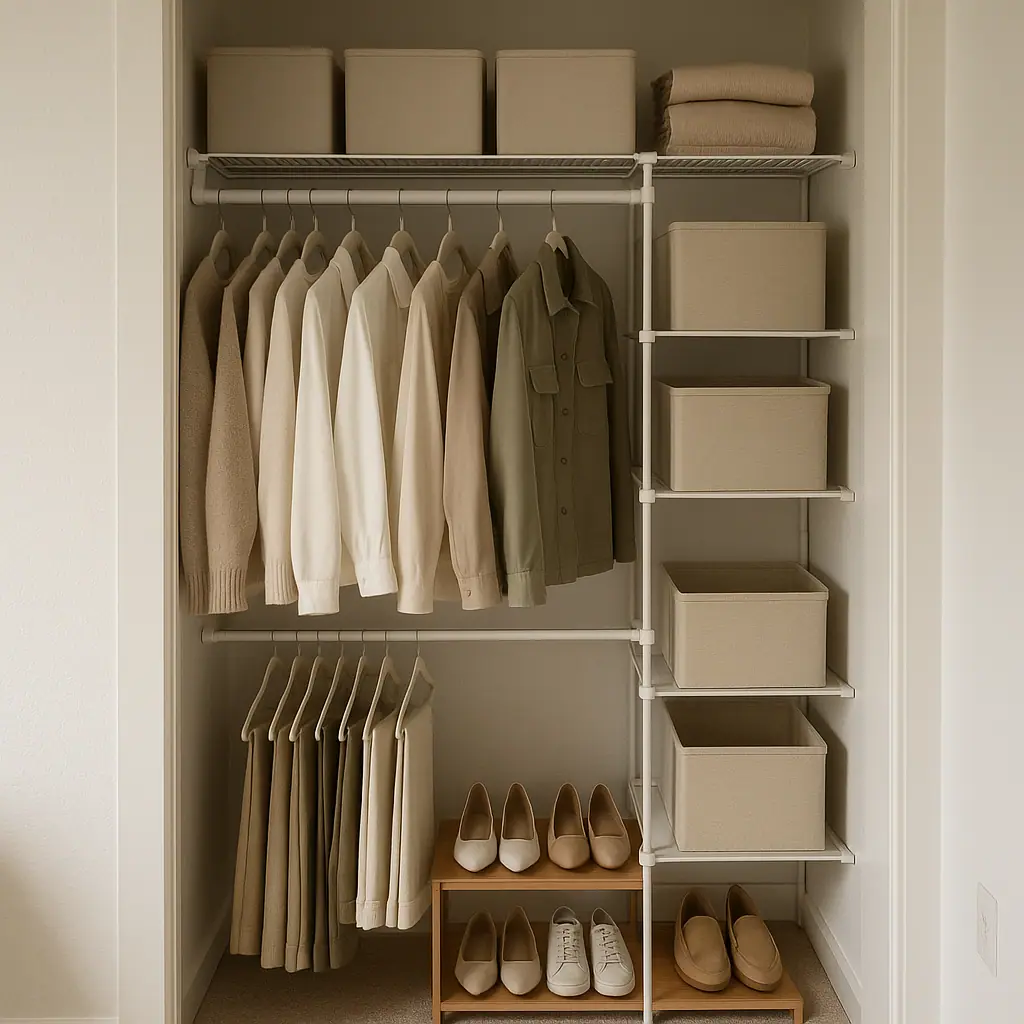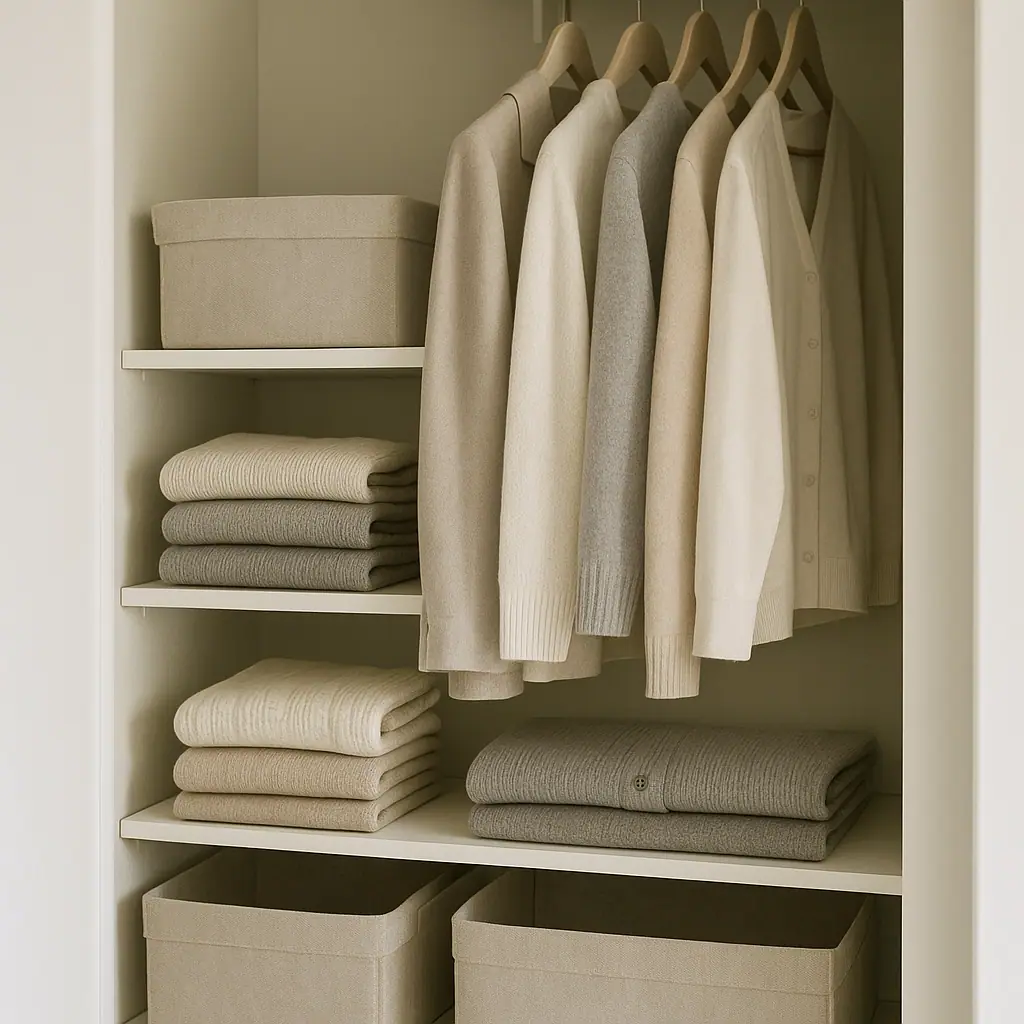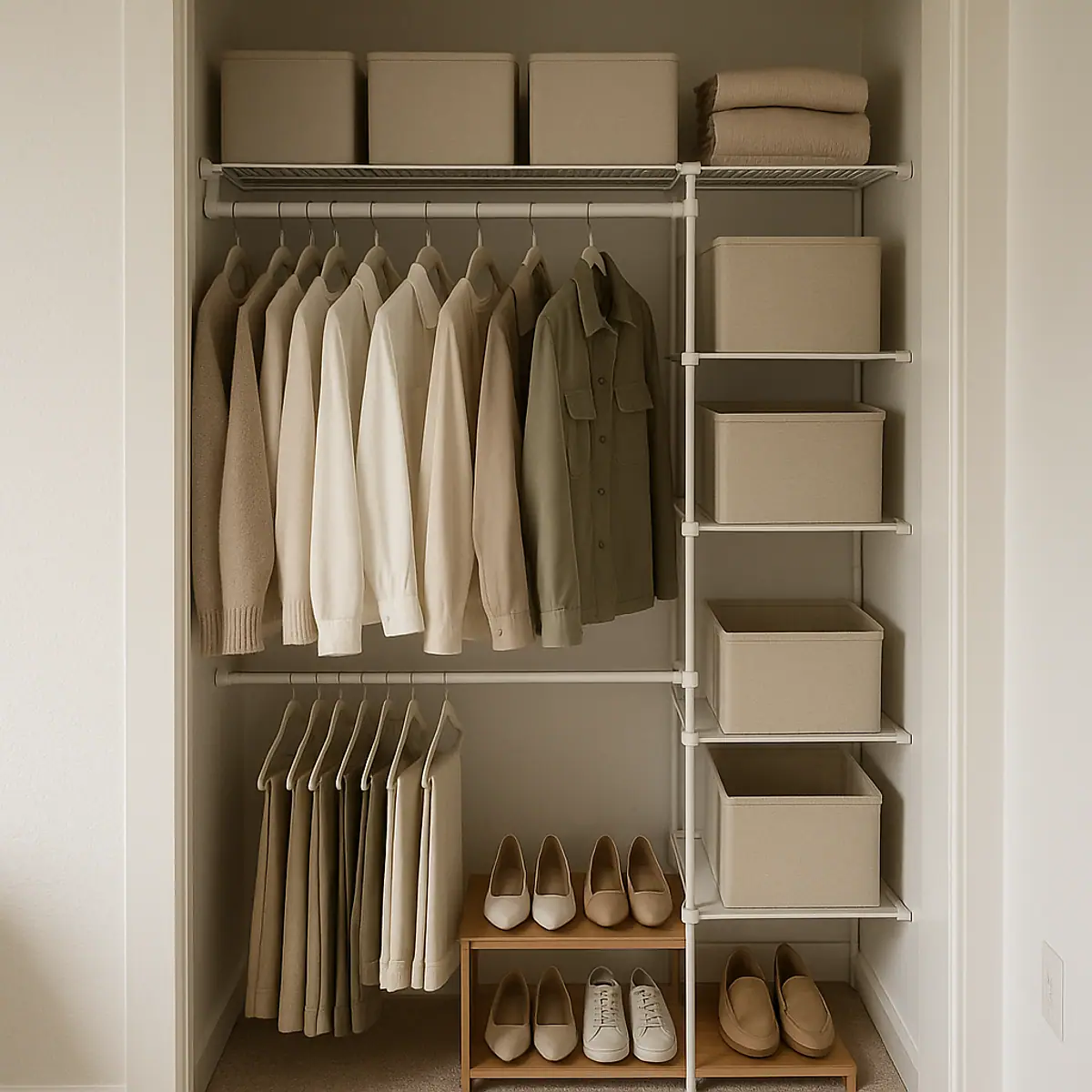
The best storage bins for small closets are not always the biggest bins, the prettiest bins, or the full matching set from a product photo. In a small closet, a bin has one quiet job: make a narrow category easier to reach, return, and review without turning the shelf into a hidden pile.
That means the right choice depends on the closet you actually have. A reach-in closet with one high shelf needs different bins than a coat closet, a shared wardrobe, or a small linen shelf. Before buying anything, look at the shelf height, the depth, the door swing, and how often the items inside the bin need to come out.
Why the Best Storage Bins for Small Closets Matter
Small closets fail when storage products make access harder. A deep bin may hold more, but if you have to pull down a heavy container every morning, it will not stay neat. A stackable set may look efficient, but if the bottom bin holds daily items, the stack becomes a chore.
The best storage bins for small closets protect the routine. They keep socks, accessories, linens, seasonal items, backup toiletries, cleaning cloths, or folded basics from spreading across the shelf. They also make the closet easier to reset because each bin has a visible job.
For general product safety context, the U.S. Consumer Product Safety Commission publishes recall and safety education information through CPSC.gov. That does not choose a closet bin for you, but it is a useful reminder to treat storage products conservatively when loaded weight, high shelves, children, or falling objects could matter.
Start With the Closet Zone
Before comparing materials, name the closet zone. A small closet often contains several different jobs: daily clothing, off-season clothing, shoes, linens, accessories, supplies, and odd household backups. If one bin tries to hold all of those things, it becomes a junk drawer with handles.
If your closet already feels hard to use, start with the highest-friction area. Readers working on a full closet layout may also find the step-by-step approach in how to organize a small reach-in closet useful before buying new containers.
Once the zone is named, the bin decision becomes calmer. Daily items need open access or shallow bins. Occasional items can use lidded bins. Heavy items should stay low. Light, seasonal, or soft items can live higher if the bin is easy to grip.
Use open bins for daily items
Open bins work well for scarves, belts, workout accessories, rolled T-shirts, cleaning cloths, and other categories you touch often. They remove the extra step of opening a lid, which matters in a closet you use every day.
Use lidded bins for dust and off-season storage
Lidded bins are better for off-season items, guest linens, keepsakes, or backup categories that do not need daily access. The lid helps protect contents, but it also adds friction, so avoid using lidded bins for items you reach for several times a week.
What to Check First for Small Closet Bins
The first check is depth. Many small closets are deeper than they are easy to reach. A bin that fills the full depth may hide items in the back. In many closets, two shallower bins work better than one long bin because each category stays easier to pull forward.
The second check is height. Measure the shelf opening, not just the shelf itself. Leave finger room above the bin so you can slide it out without scraping your knuckles or tipping the contents forward.
The third check is weight. A fabric cube full of sweaters may be fine on a high shelf. A plastic bin full of books, tools, shoes, or bottled products may be awkward and unsafe overhead. Keep heavy loaded containers below shoulder height whenever possible.
The fourth check is visibility. If you forget what you own, clear or semi-clear bins can help. If the closet is open or highly visible, opaque bins may look calmer, but they need simple labels or very narrow categories to prevent guessing.
How to Choose Storage Bins Step by Step
Use this process before buying a set. It keeps the choice tied to the real closet instead of a store display.
- Empty one shelf or section. Work on one closet area at a time so the project stays manageable.
- Group by use, not by product type. A useful category might be "winter accessories," "workout tops," "guest towels," or "shoe care," not simply "miscellaneous."
- Measure width, depth, height, and reach. Include door tracks, shelf lips, closet rods, and the space your hand needs to pull the bin out.
- Choose access style. Open bins fit daily use. Lidded bins fit storage. Drawer-style bins fit small loose items when the front remains reachable.
- Match material to the category. Fabric softens clothing storage. Clear plastic helps inventory. Wire or open baskets may work for breathable soft goods but can snag delicate fabrics.
- Test one bin first. Put it in the busiest spot for a week before buying multiples.
- Review after laundry day. A bin that works only when empty is not the right size for the routine.
Best Bin Types for Small Closets
There is no single best bin for every small closet, but a few types solve common problems well.
- Shallow open bins: best for daily accessories, folded basics, and items that should slide out easily.
- Clear plastic bins: best for backup supplies, seasonal accessories, and categories where seeing inventory prevents rebuying.
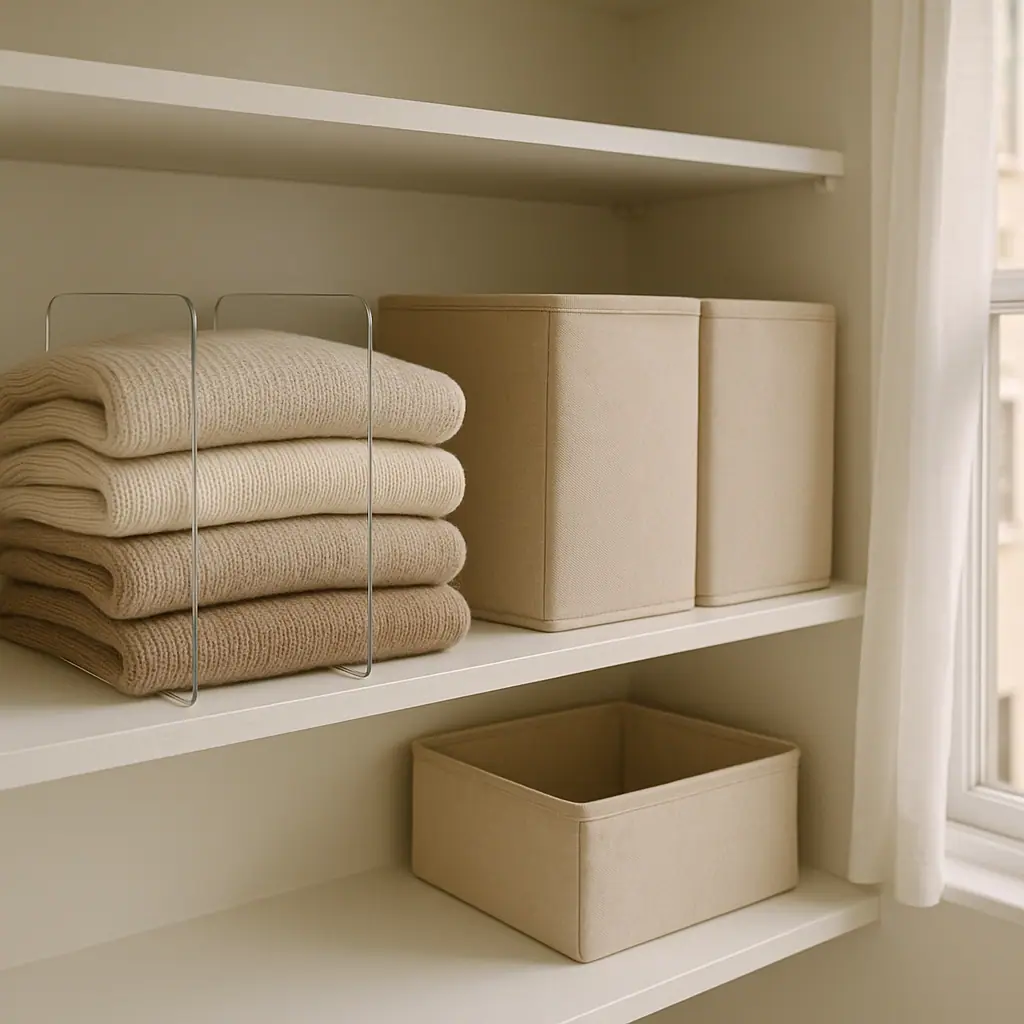
- Fabric cubes: best for lightweight soft goods on low or middle shelves, especially when the closet is visible from the room.
- Stackable bins: best for occasional categories, not daily-use items trapped underneath another container.
- Drawer bins: best for small loose items when the drawer can open fully without hitting closet doors or hanging clothes.
- Long under-shelf bins: useful only when they can be pulled forward without disturbing the rest of the shelf.
If your closet shelf problem is more about dividers than bins, compare that choice separately. The guide to shelf dividers vs storage bins for closet shelves explains when a divider keeps folded stacks calmer than another container.
Pros and Cons
Storage bins can make a small closet easier, but only when the bin solves a specific access problem. The right pros and cons depend on how honest the category is.
Bins create clear categories
A labeled or obvious bin gives small items a home and makes the shelf easier to reset after normal use.
Shallow bins improve reach
The right depth keeps items from disappearing into the back of a small closet shelf.
Clear bins help inventory
When you can see backups or seasonal items, you are less likely to forget what is already in the closet.
Deep bins can hide clutter
A large bin may look tidy while collecting unrelated items that become hard to find later.
Stacking can slow daily use
Stackable bins save vertical space, but they become annoying when you need the lower bin often.
Common Buying Mistakes to Avoid
The first mistake is buying a full set before measuring. Closet shelves vary, and a set that fits one shelf may waste space or block access on another.
The second mistake is choosing bins that are too deep. A deep bin can be useful for off-season storage, but daily categories usually need shallower containers that slide forward easily.
The third mistake is ignoring the door. Sliding doors, bifold doors, and closet rods can all limit how far a drawer bin or lidded bin can open.
The fourth mistake is using opaque bins for categories you forget. Opaque bins look calm, but they need labels and narrow categories. Otherwise, they become quiet-looking clutter.
The fifth mistake is storing heavy bins high. Small closets tempt people to use upper shelves for everything, but loaded bins overhead should be light, stable, and easy to grip.
A Simple Checklist
Use this checklist before choosing the best storage bins for small closets in your home.
- Is the category narrow? If the bin name is vague, split it before buying.
- Can I reach it comfortably? A useful bin should slide out without tipping or scraping.
- Is it too heavy when full? Test loaded weight before placing it high.
- Does it need a lid? Use lids for dust and storage, not for daily friction points.
- Can I see what matters? Choose clear bins or labels when inventory is the problem.
- Did it survive laundry day? Judge the setup after real use, not immediately after organizing.
When to Get Extra Help
Get extra help when a bin decision involves heavy overhead storage, a wobbly shelf, children climbing, a closet system with unclear load limits, or anything attached to a wall. Product instructions and lease rules matter more than a pretty setup.
If a closet shelf bows, brackets feel loose, or a storage system seems unstable, do not solve it by adding more bins. Reduce the load first and check the product or building guidance before storing anything heavy there.
Frequently Asked Questions
What should I check first before buying storage bins for a small closet?
Measure the shelf opening and name the exact category. A bin should fit the space and hold one clear group of items, not a broad mix of leftovers.
Are clear bins or fabric bins better for small closets?
Clear bins are better when you need inventory at a glance. Fabric bins are better for lightweight soft goods or visible closets where a calmer look matters more.
How often should I review closet storage bins?
Review daily-use bins after laundry day and storage bins at the change of season. If a bin is hard to reset twice in a row, adjust the category or location.
Can I mix different bin types in one closet?
Yes. A calm closet often uses open bins for daily items, clear bins for inventory, and lidded bins for off-season storage. Matching the job matters more than matching every container.
Final Thoughts
The best storage bins for small closets make the closet easier to use after an ordinary week. They do not force every shelf to match. They give one category a clear home, protect access, and make reset time shorter.
Start with one shelf, one category, and one bin. Measure carefully, keep heavy items low, and let the first week show whether the product supports the routine. A calm small closet is built through small repeatable choices, not one perfect shopping trip.