Adhesive hooks vs over-door organizers: which is better? The calm answer depends less on the product and more on the surface, weight, door movement, and routine you are trying to fix. Both can be renter-friendly, but both can also create damage, clutter, or daily annoyance when they are used in the wrong spot.
Use adhesive hooks when you need a few light items exactly where the habit happens. Use over-door organizers when you need more contained storage and the door can still open, close, and clear the frame comfortably. The better choice is the one that solves one storage job without making the apartment harder to live in.
Why Adhesive Hooks vs Over-Door Organizers Matters
Small rentals often have the same problem in several rooms: there is a narrow patch of unused space, but not enough permission or wall confidence to add permanent hardware. Adhesive hooks and over-door organizers feel like easy answers because they avoid drilling. That ease is useful, but it can hide real limits.
Adhesive hooks depend on the surface. Smooth painted drywall, tile, finished wood, and metal may behave differently, and each product has its own prep, wait time, weight rating, and removal method. A hook that works well for keys may not be right for a damp towel, heavy tote, or pot lid.
Over-door organizers depend on the door. A door that swings often, rubs the frame, has a tight top gap, or is hollow and lightweight may not be a calm place for bulky storage. Before trusting any door rack, open and close the door several times with the organizer empty, then again with a light load.
For broader home safety, especially around tall furniture and heavy stored items, the U.S. Consumer Product Safety Commission's Anchor It campaign explains why furniture with drawers, doors, and shelves should be secured against tip-over risks when appropriate: CPSC Anchor It furniture safety guidance.
Start With No-Drill and Renter-Friendly Storage
No-drill and renter-friendly storage works best when it starts with one small friction point. Do not begin by asking which product looks more useful. Begin by asking what keeps ending up in the wrong place.
Name the exact item group
Choose a narrow group: keys and dog leash, two daily bags, hair tools, scarves, cleaning cloths, pantry packets, bathroom backups, or laundry stain products. If the group is vague, the organizer will likely become vague too.
Match the organizer to the motion
Think about how the item moves. Keys need a tiny landing spot near the entry. Cleaning cloths may need a light hook inside a utility door. Bathroom backups may need pockets or baskets, not hooks. A robe may work on an over-door hook, while a heavy wet towel may need a sturdier bar or lower storage spot.
When a product gives instructions or support pages, use those before guessing. IKEA's product support page, for example, points readers toward assembly guides and product-specific help instead of treating every storage item the same way: IKEA product support and assembly guidance.
What to Check First for Adhesive Hooks vs Over-Door Organizers
The first check is not price or style. It is whether the location can handle the organizer calmly for normal use. A product can look renter-friendly online and still fail in a steamy bathroom, on textured paint, or on a door that needs to close tightly.
Check the surface for adhesive hooks
Adhesive hooks usually need a clean, dry, smooth surface. Dust, humidity, uneven texture, fresh paint, grease, and repeated tugging can all reduce performance. If the surface is fragile, unknown, or valuable to your deposit, keep the load very light or choose a freestanding option instead.
Check the door for over-door organizers
Over-door organizers need clearance at the top and sometimes at the bottom. They can make a door noisy, scrape trim, press against weatherstripping, or stop a closet door from closing. They also add visual weight to a surface that may already be busy.
- Use adhesive hooks for: keys, lightweight leashes, small tools, measuring spoons, oven mitts, scarves, and small daily items that need one obvious landing spot.
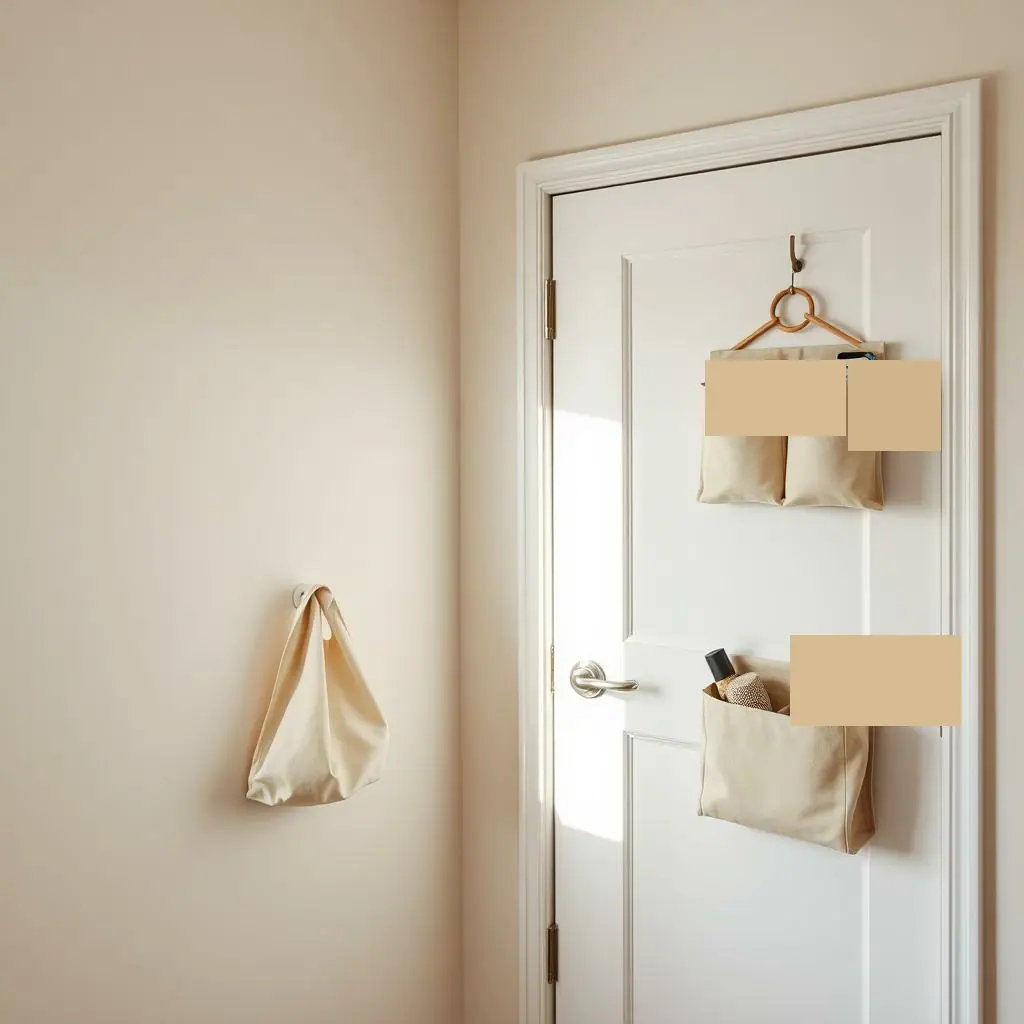
- Use over-door organizers for: shoes, hair tools, cleaning cloths, lightweight pantry packets, folded accessories, small toiletries, or laundry items that benefit from pockets or rows.
- Avoid both for: very heavy bags, glass storage, liquid bottles above shoulder height, unstable tall furniture, valuable finishes, or anything that would cause damage if it fell.
How to Choose Step by Step
Use this simple process before buying or installing either option. It keeps the decision practical and prevents the common small-apartment habit of adding storage before editing the items.
- Empty the problem spot. Remove the items that keep landing on the floor, counter, chair, or shelf.
- Keep only what belongs in that zone. If something belongs in another room, move it before measuring.
- Weigh the category lightly. You do not need a scale for every item, but you do need to know whether the group is truly light, medium, or heavy.
- Test the surface or door motion. For hooks, inspect the finish and clean the surface according to instructions. For door organizers, test opening, closing, and clearance before loading.
- Choose the smaller solution first. One hook or a narrow door organizer often works better than a large system that invites overloading.
- Load slowly. Start under the stated limit and watch for peeling, sagging, rubbing, shifting, or door strain.
- Review after one week. If the setup blocks movement or collects unrelated items, simplify it before adding more storage.
Pros and Cons
Both choices can work well in a rental. The difference is where each one is strongest.
Adhesive hooks are precise
They place one light item exactly where the routine happens, which helps entries, cabinets, closets, and utility corners feel less scattered.
Over-door organizers hold categories
Pockets, rails, and rows can turn unused door space into a simple home for shoes, toiletries, laundry tools, or accessories.
Both avoid permanent hardware
When chosen carefully, both options can improve storage without starting with drilling, anchors, or a larger furniture purchase.
Adhesive hooks depend on surface quality
They can fail on damp, dusty, textured, greasy, fragile, or overloaded surfaces, especially when pulled from an angle.
Over-door organizers can affect the door
They may rub paint, make noise, block closure, crowd a narrow room, or put too much stress on a door used many times a day.
Common No-Drill and Renter-Friendly Storage Mistakes to Avoid
The first mistake is using adhesive hooks for heavy daily bags. A hook near the door is tempting, but backpacks, laptop bags, and loaded totes often need a floor basket, bench, or low cubby instead.
The second mistake is filling every pocket of an over-door organizer just because the pockets exist. A full organizer can make a small room feel visually heavier and can turn a door into a swinging storage wall. Leave a few pockets empty if the room feels calmer that way.
The third mistake is skipping removal instructions. Removable does not mean careless. Keep packaging, follow surface prep, respect wait times, and remove products slowly according to the manufacturer directions, especially near painted walls or veneer.
A Simple Checklist
Before deciding between adhesive hooks vs over-door organizers, run through these checks.
- Is the item group light enough? If not, use low storage or freestanding furniture.
- Is the surface smooth, clean, dry, and suitable? If not, avoid adhesive hooks.
- Does the door still close easily? If not, avoid an over-door organizer in that location.
- Can the setup reset in under one minute? If not, reduce the item group.
- Will removal be calm later? If not, choose a less attached option.
- Does it make the room quieter visually? If it adds clutter, it may not be the better choice even if it adds storage.
When to Get Extra Help
Get extra help if the organizer will hold anything heavy, fragile, sharp, hot, wet, or breakable. Also pause before using removable storage near plumbing, electrical panels, heat sources, exterior doors, mirrors, tile you do not own, or damaged paint.
Ask the landlord, product manufacturer, or a qualified installer when you are unsure about a surface, door, or load. A small storage win is only useful when it stays stable, removable, and easy to maintain.
Frequently Asked Questions
What should I check first before choosing between adhesive hooks and over-door organizers?
Check the item weight, surface type, door clearance, lease limits, and product instructions. Then choose the option that solves the smallest real problem first.
How often should I review this kind of no-drill storage?
Review it after the first week, then during a monthly reset. Look for peeling adhesive, rubbing doors, sagging pockets, overloaded hooks, and items that no longer belong there.
What should I do if I am not sure a surface can handle adhesive?
Do not guess. Check the product instructions, test with a very light load if appropriate, or choose a freestanding bin, tray, cart, or low shelf instead.
Can I undo adhesive hooks or over-door organizers later?
Usually, yes, but removal depends on the product and surface. Read removal instructions before installation and keep the load lighter than the maximum rating.
Final Thoughts
Adhesive hooks vs over-door organizers: which is better? Choose adhesive hooks for a few light, specific items near the habit. Choose over-door organizers when a whole small category needs pockets or rows and the door can handle the movement.
The best choice is the one that makes the apartment easier to reset, not the one that stores the most. Start small, load lightly, watch how the space behaves for a week, and let the routine decide whether the organizer deserves to stay.