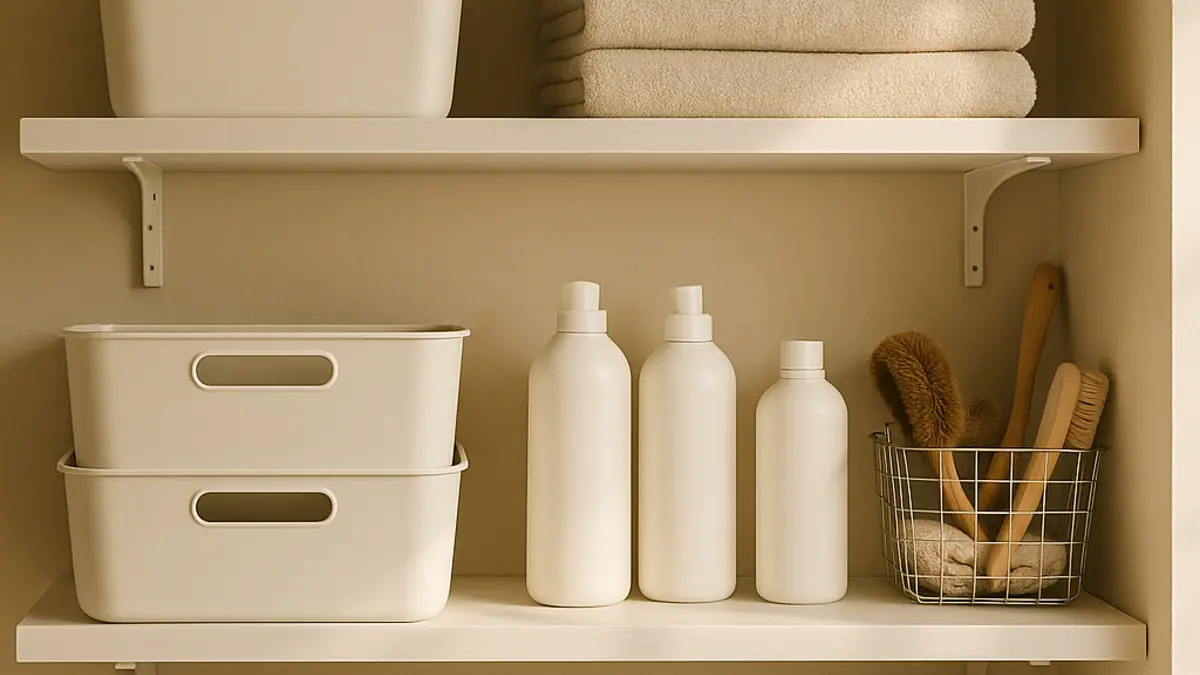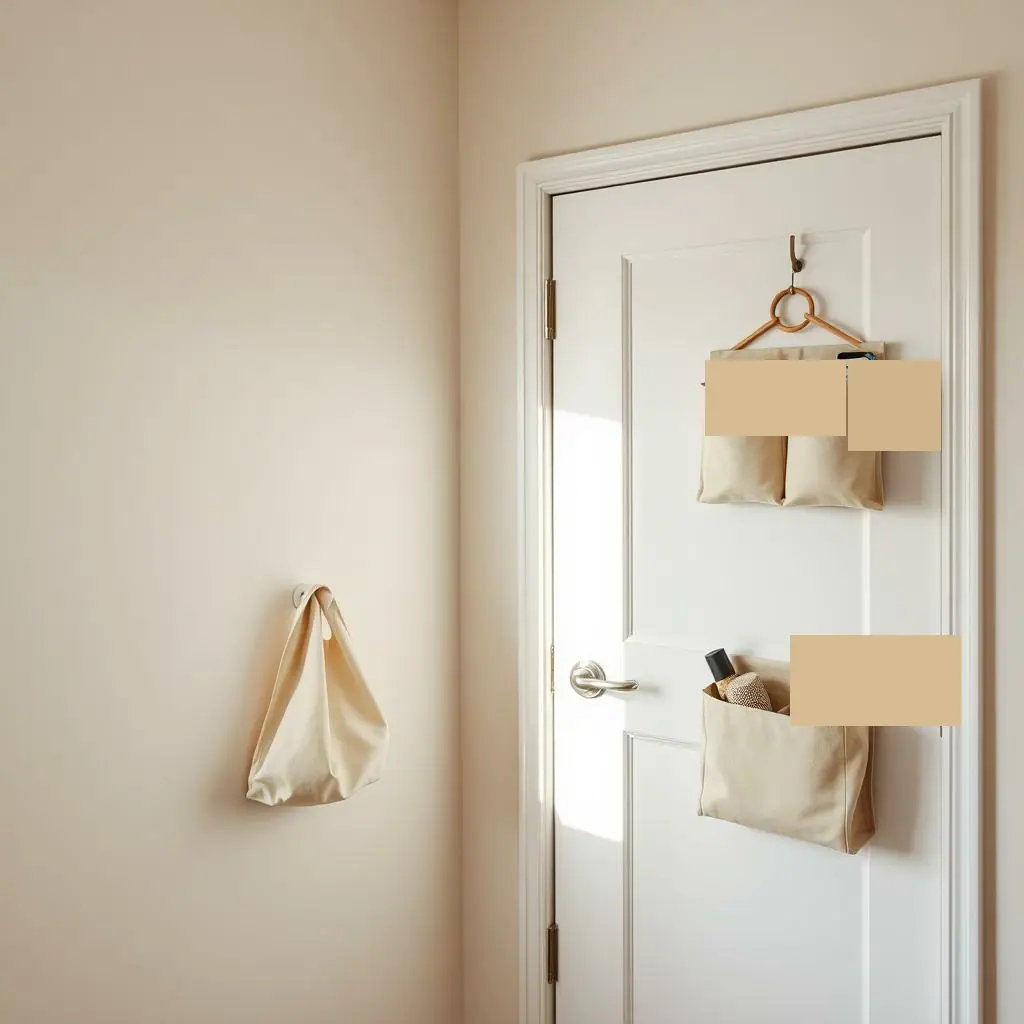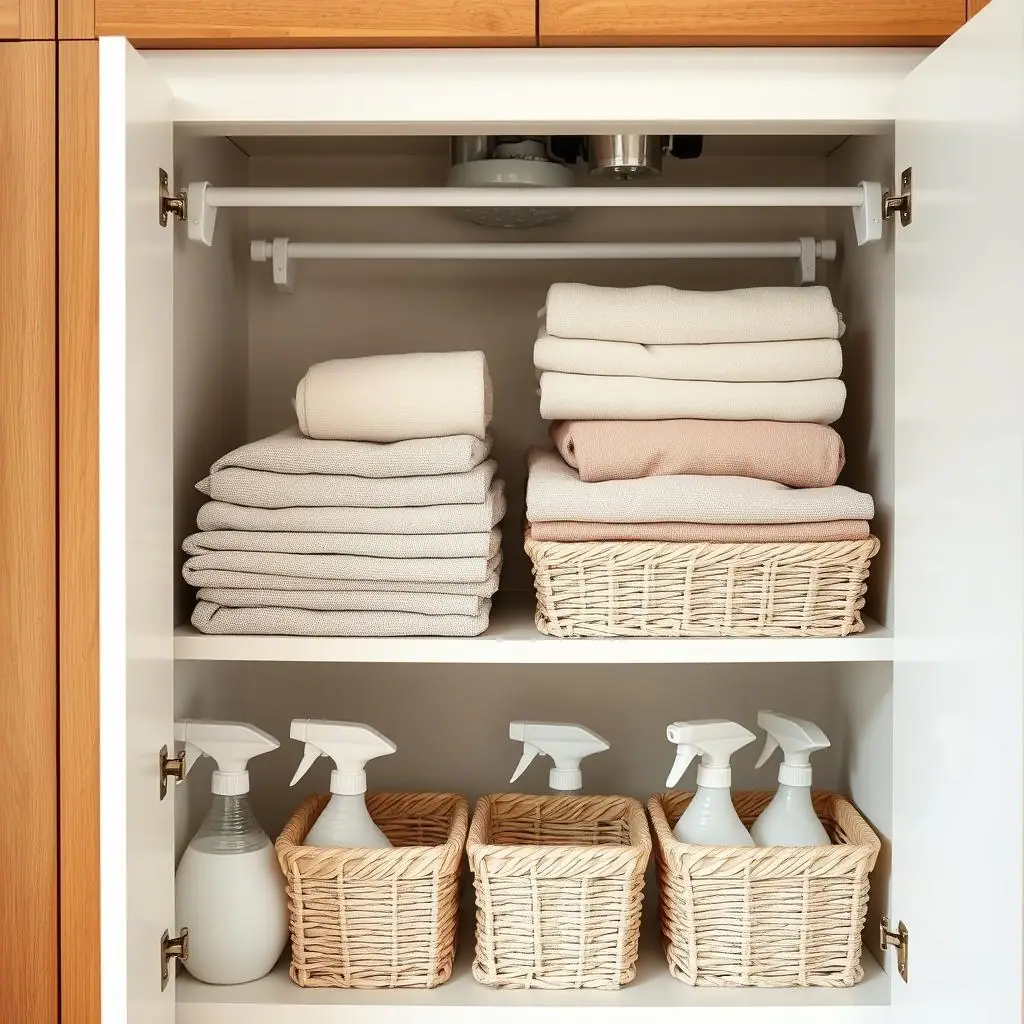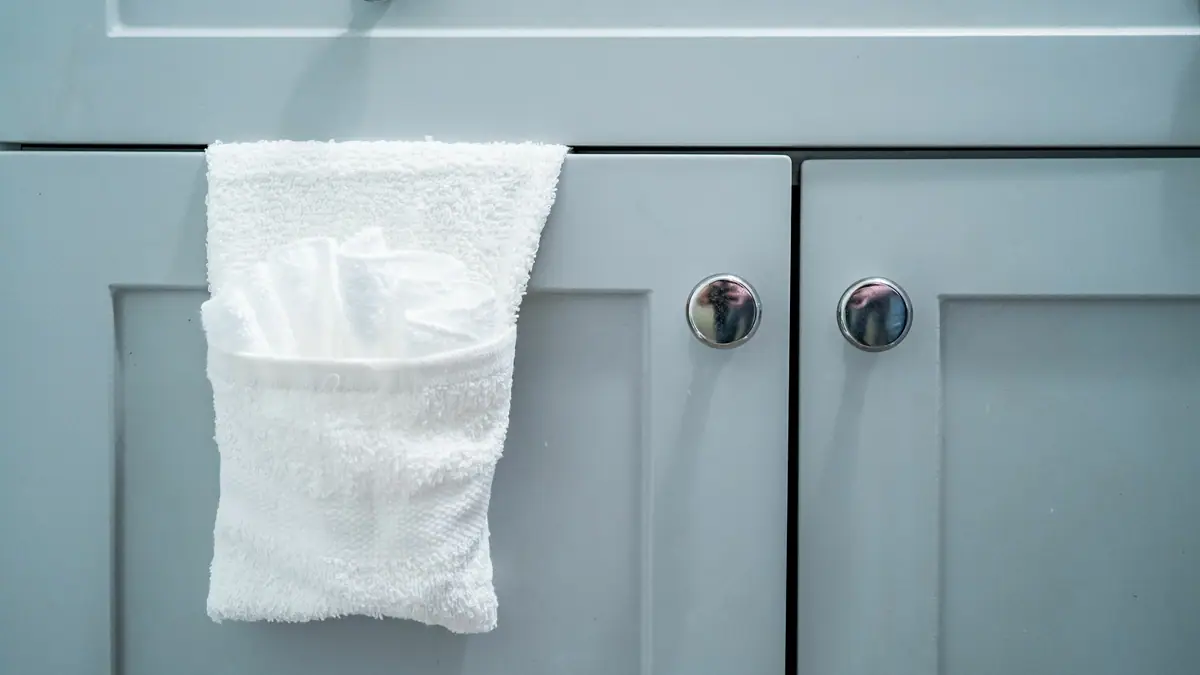
Renter-friendly bathroom storage ideas for small bathrooms work best when they start with one honest question: what keeps landing on the sink, floor, toilet tank, or tub edge because it does not have a calm home? A small bathroom can hold daily routines well, but only when every shelf, hook, bin, and caddy has a clear job.
The goal is not to fill every wall. It is to reduce the number of loose items you touch every morning and evening. In a rental, that also means checking the lease, surface limits, product instructions, moisture, and removal method before trusting any adhesive shelf, hook, tension piece, or over-door organizer.
Why Renter-Friendly Bathroom Storage Matters
Bathrooms are small, damp, and used many times a day. That makes clutter feel louder than it does in a closet or pantry. A bottle left on the counter, a towel without a landing spot, or a cleaning product shoved under the sink can turn a short routine into a daily shuffle.
Renters have another layer to consider: the room may have tile, old paint, hollow-core doors, weak cabinet interiors, or surfaces that are not yours to alter. A storage idea that looks simple in a photo can become frustrating if it leaves marks, traps moisture, blocks a door, or overloads a weak surface.
For broader home safety context, the U.S. Consumer Product Safety Commission explains that furniture and storage pieces with drawers, doors, and shelves may need stable anchoring when tip-over is possible. Bathroom storage should stay especially conservative with heavy items, high placement, and freestanding pieces. Review the CPSC Anchor It safety guidance when a cabinet, shelf tower, or freestanding unit could become unstable.
Start With Renter-Friendly Bathroom Storage Zones
The easiest way to make a small bathroom calmer is to stop thinking in products first. Think in zones. A zone is a small group of items that support one routine: morning care, shower supplies, towels, cleaning, backup toiletries, or guest items.
Once each zone has a name, you can choose storage that fits the routine instead of buying a bin that only looks tidy for a day. A calm bathroom usually needs fewer categories, not more containers.
Keep daily items at easy reach
Daily items should live where you can reach them without moving several other things. Toothbrushes, face wash, deodorant, and one or two hair tools belong in the most convenient spots. Backups, extras, and occasional products can move higher, lower, or outside the bathroom if space is tight.
Keep moisture in mind
Bathrooms change throughout the day. Steam, splashes, damp towels, and cleaning sprays can affect labels, adhesives, wood, metal, cardboard, and fabric. Choose washable bins, open airflow, and storage that can be lifted out during cleaning.
What to Check First for Small Bathroom Storage
Before adding renter-friendly bathroom storage, check the surface, load, moisture, door movement, and removal method. These checks take only a few minutes, but they prevent most storage regrets.
If you are considering a product with assembly, mounting, adhesive, suction, or load guidance, check the actual product page or manual. IKEA, for example, maintains a product support area with assembly guides and product help, which is a useful reminder to verify instructions for the exact item rather than guessing from a similar organizer. Start with the IKEA product support page or the manufacturer support page for the item you own.
- Surface: avoid loose paint, damp cabinet sides, textured walls, weak veneer, wallpaper, and tile you are not allowed to alter.
- Load: store heavy items low, preferably inside a cabinet base, bin, or freestanding unit that sits flat on the floor.
- Moisture: keep paper, cardboard, extra medicine, and fabric backups away from splash zones and damp corners.
- Movement: open the door, cabinet, drawer, toilet lid, and shower curtain before deciding where storage belongs.
- Removal: choose options you can remove slowly and cleanly at move-out, following the product instructions.
How to Set Up Renter-Friendly Bathroom Storage Step by Step
Use a slow setup process. It keeps the bathroom practical and prevents the common mistake of adding too many organizers at once.
- Clear one area. Start with the sink, under-sink cabinet, shower edge, towel area, or back of the door. Do not empty the whole room unless you have time to finish.
- Remove expired, empty, and duplicate items. Small bathrooms often feel full because old products stay after the routine changed.
- Name the main routine. Decide whether this area is for daily care, shower supplies, towels, cleaning, or backups.
- Measure the real space. Check width, depth, height, door swing, plumbing, and clearance around the toilet or tub.
- Choose the lowest-risk storage type. Try a bin, tray, over-door pocket, drawer divider, shower caddy, or freestanding narrow shelf before relying on heavier mounted storage.
- Place daily items first. Give the easiest reach to what you use every day. Move occasional items away from prime space.
- Test one normal day. Use the bathroom as usual, then notice what was easy to return and what still landed loose.
- Adjust before buying more. If the setup almost works, change the category or height before adding another product.
Storage Ideas That Usually Work in Rentals
These options are flexible enough for many rentals, but each still needs the checks above. The best choice depends on the surface, item weight, and how often the category moves.
- Over-door towel hooks: useful when wall holes are not allowed, as long as the door closes normally and the hooks do not rub the frame.
- Shallow under-sink bins: good for cleaning products, hair tools, and backups because they slide out around plumbing and can be removed for leaks or cleaning.
- Countertop trays: helpful for daily care items when drawer space is limited. Keep the tray small so it does not become a catch-all.
- Freestanding narrow shelves: better for heavier items than adhesive shelves, but they must sit level and avoid blocking walking space.
- Shower caddies: useful for active shower products, especially when you limit the number of bottles and clean the caddy regularly.
- Drawer dividers: calm for small tools, grooming items, and makeup because they improve access without changing the room.
- Removable hooks: helpful for lightweight items when the surface, moisture level, and product instructions all support the use.
Pros and Cons
Renter-friendly bathroom storage can make a small room easier to use, but only when the setup stays light, cleanable, and honest about limits.
Reduces daily counter clutter
Clear zones give toothbrushes, towels, shower items, and backups a predictable home.
Works without permanent changes
Bins, trays, over-door hooks, caddies, and freestanding shelves can often improve storage without drilling.
Easier to clean and reset
Small removable containers make it simpler to wipe shelves, check for leaks, and return items after use.
Not every surface is safe for adhesive
Moisture, texture, old paint, and product limits can make removable mounting less reliable than it looks.
Too many organizers can shrink the room
A small bathroom can feel busier when every wall, door, and shelf gains another storage layer.
Common Renter-Friendly Bathroom Storage Mistakes to Avoid
The first mistake is storing heavy items high. Extra shampoo, cleaning bottles, appliances, and stacks of towels belong low and stable. High shelves should hold light, occasional items only when the shelf itself is secure.
The second mistake is trusting an adhesive product without reading the instructions. Weight limits, cure time, surface exclusions, cleaning prep, removal method, and moisture guidance vary by product. If the instructions do not support the bathroom surface, choose a non-mounted option.
The third mistake is ignoring plumbing access. Under-sink storage should slide out easily so you can see leaks, clean spills, and reach shutoff areas if needed. Do not pack the cabinet so tightly that a small leak stays hidden.
The fourth mistake is buying matching containers before editing the category. If you have six half-used bottles, three expired products, and tools you rarely use, new containers will only organize the excess. Edit first, then measure.
A Simple Bathroom Storage Checklist
Use this checklist before calling the setup finished.
- Can I remove and clean this storage? If not, it may trap dust, hair, moisture, or spills.
- Is the heaviest item stored low? Heavy products should not depend on adhesive, suction, or a narrow high shelf.
- Does the door still move freely? Test doors, drawers, hinges, and shower access with the organizer loaded.
- Can daily items be returned quickly? If reset takes too long, the storage job is too complicated.
- Did I verify product instructions? Use the exact manufacturer guidance for load, surface, prep, and removal.
- Will this be easy at move-out? Renter-friendly storage should be simple to undo without surprise damage.
When to Get Extra Help
Get extra help when storage touches tile, stone, old paint, plumbing, electrical outlets, medicine storage, glass, mirrors, or anything above shoulder height. Also pause if a freestanding unit feels wobbly, if a shelf could tip, or if the product instructions are unclear.
Ask the landlord, product manufacturer, or a qualified installer before making a risky change. In a rental bathroom, the safest answer is often the simplest one: a low bin, a washable tray, or a freestanding piece that does not depend on a questionable surface.
Frequently Asked Questions
What should I check first for renter-friendly bathroom storage?
Check the lease, surface condition, moisture level, product instructions, and weight of the items. If any of those are uncertain, start with a freestanding bin or tray.
How often should I review a small bathroom storage setup?
Review it after one week of normal use, then during a monthly bathroom reset. Look for loose items, damp spots, overloaded bins, or storage that is hard to clean.
What should I do if I am not sure an adhesive shelf will hold?
Do not guess. Read the exact product instructions, check the surface exclusions, and choose a low bin, drawer divider, or freestanding organizer if the surface is questionable.
Can I undo renter-friendly bathroom storage later?
Usually, yes, when the product is truly removable and installed correctly. Follow the removal instructions slowly and avoid products that are not approved for the surface.
Final Thoughts
Renter-friendly bathroom storage ideas for small bathrooms should make one daily routine easier, not turn the room into a display of organizers. Start with the item pile that bothers you most, give it a clear zone, and choose the lowest-risk storage method that fits the space.
Keep heavy items low, verify instructions, respect moisture, and review the setup after real use. A calm bathroom is not the one with the most storage. It is the one you can clean, reset, and leave without worry.