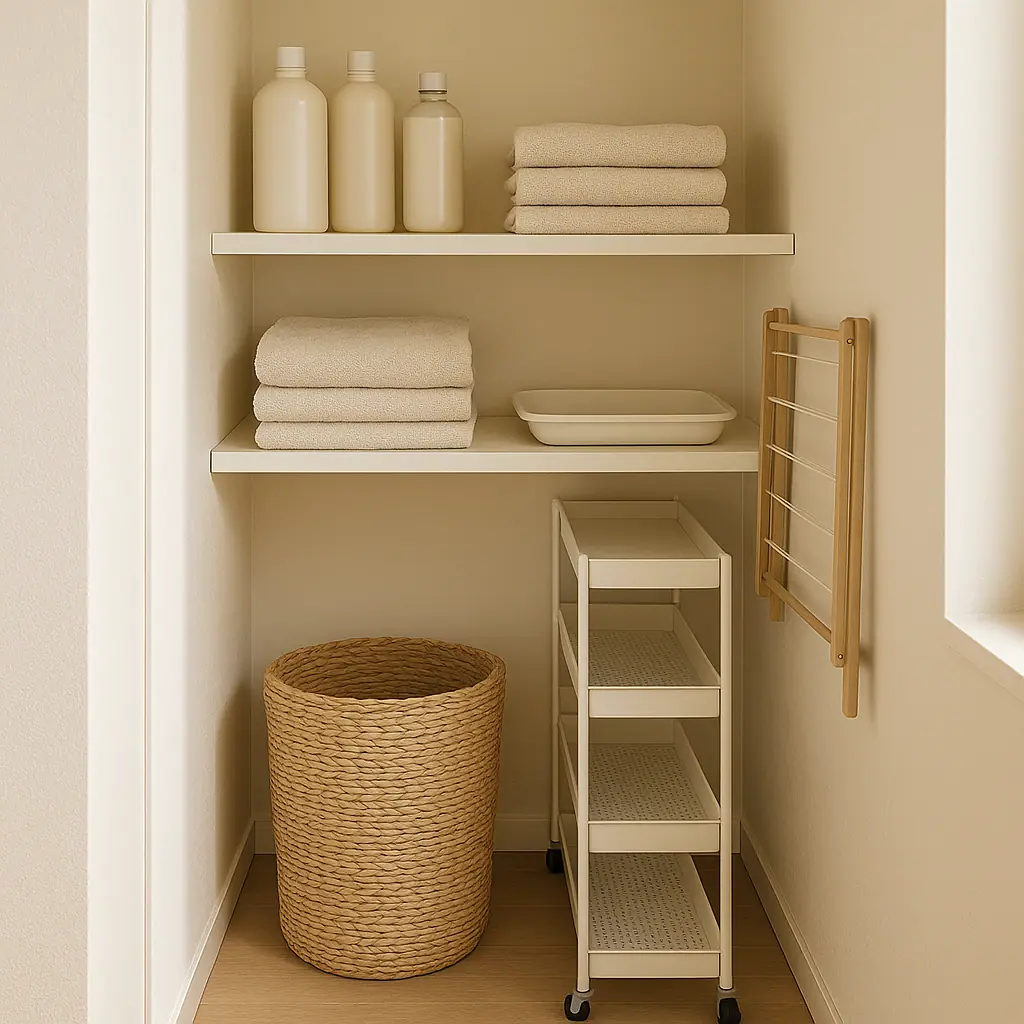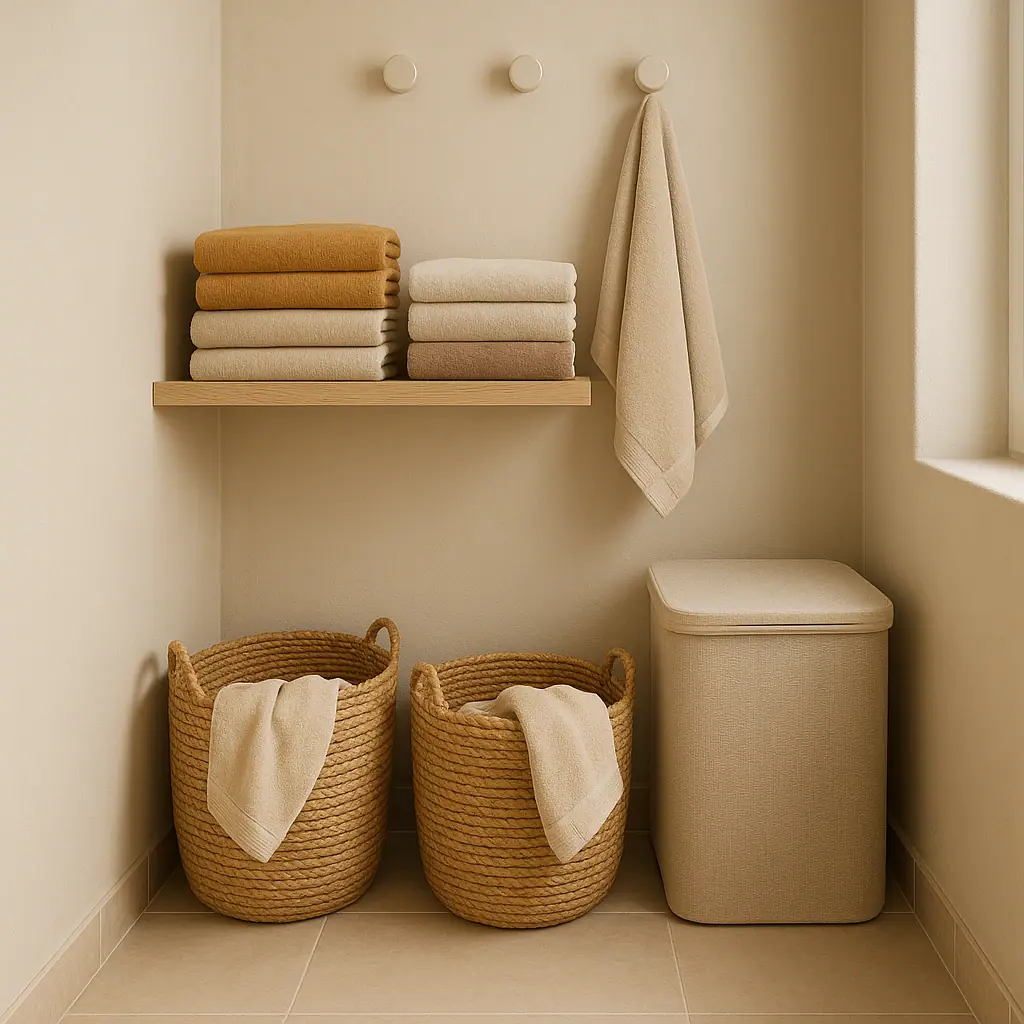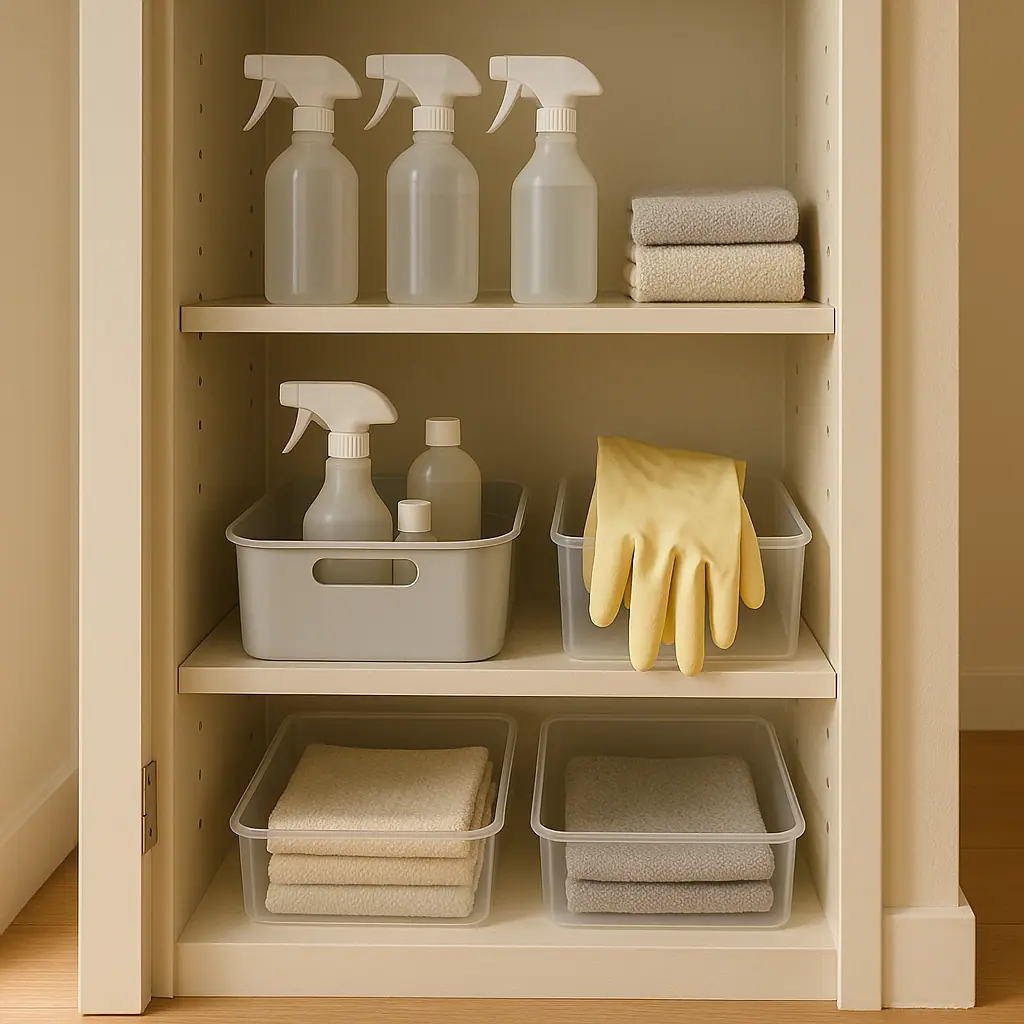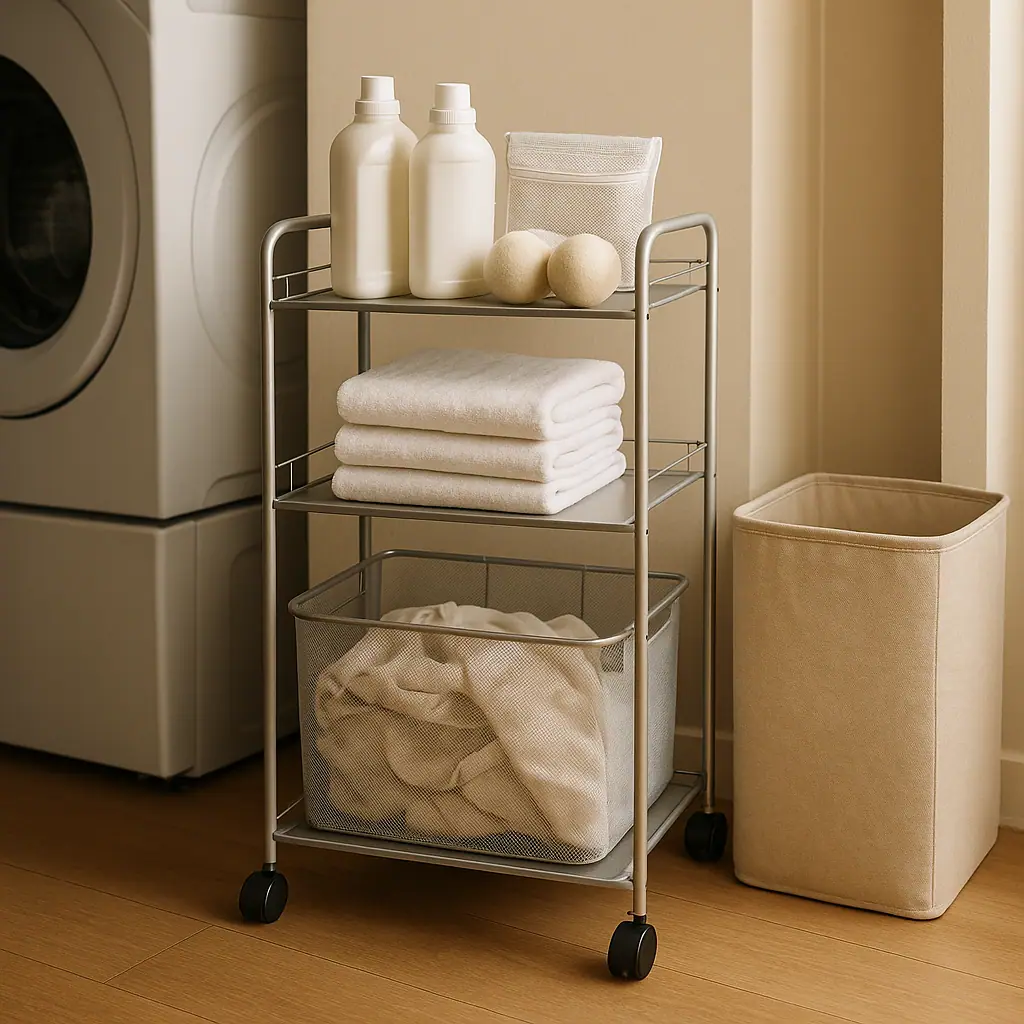
The best rolling carts for laundry supplies in small spaces are not always the tallest carts or the carts with the most shelves. In an apartment laundry nook, a good cart should make the next load easier without blocking doors, hoses, vents, plugs, or the walking path you already need.
Think of the cart as a small movable laundry station, not as a second closet. It should hold the products you reach for during a normal week, keep heavier bottles low, and roll out only when that movement is actually useful. If the cart becomes crowded with refills, cleaners, tools, and random household items, it stops solving the laundry problem and starts creating another tight corner to manage.
Why This Matters in a Small Laundry Space
A rolling cart can be helpful because many apartment laundry areas are narrow, shared, or awkwardly placed. A slim cart can turn the empty space beside a washer, dryer, hamper, or utility shelf into a clear supply zone. It can also roll out for stain treatment, folding, or quick cleaning and then tuck away again.
The risk is that a cart can look useful online while failing in the real room. If it is too deep, it may block appliance doors. If it is too tall and top-heavy, it may feel wobbly when pulled. If it has open sides and tiny casters, bottles may tip, wheels may catch, and the cart may become annoying enough that you stop using it.
For any storage piece that holds weight, the conservative habit is to check the product page or instructions rather than guessing. IKEA's customer support guidance says product weight limits, when provided, belong on the product page or in assembly instructions, and products should be used as intended: IKEA weight limit guidance.
Start With the Gap, Not the Cart
Before choosing a rolling cart for laundry supplies, measure the space where the cart will live on a normal day. A cart that fits only when the doors are open, the hamper is moved, or the appliance door is closed may not be practical enough for daily use.
Measure the working path
Measure the width, depth, and height of the gap, then subtract a little breathing room. A cart needs clearance for fingers, baseboards, door trim, floor transitions, and the small side-to-side movement that happens when you pull it out.
- Width: leave enough side clearance that the cart does not scrape the wall, machine, or closet frame.
- Depth: make sure the cart does not stick out into a hallway, folding area, or appliance door swing.
- Height: avoid carts that crowd shelves, valves, counters, or the underside of a stacked unit area.
- Floor path: check thresholds, rugs, uneven tile, and tight turns before assuming the cart will roll smoothly.
Name the cart's job
A laundry cart should have one primary job. It might hold daily detergent and stain tools, support a tiny folding routine, organize dryer supplies, or carry products between a closet and a shared laundry room. When the job is clear, the best cart style becomes much easier to choose.
What to Check First for Rolling Laundry Carts
Start with stability. A narrow cart is useful only if it feels steady when loaded with real laundry products. Heavy liquid detergent, bleach alternatives, scent boosters, and bulk refills can add weight quickly, so the bottom shelf should be the place for the heaviest items.
Also check whether the cart has raised edges, baskets, or lips on each tier. Flat shelves look clean, but laundry bottles can slide when the cart moves. A shallow rim is often enough to make the cart feel calmer during normal use.
If there are children in the home or visiting regularly, avoid tempting storage that encourages climbing or pulling. The U.S. Consumer Product Safety Commission's Anchor It safety center focuses on preventing furniture and TV tip-overs, and the same cautious mindset applies to tall, narrow storage: keep heavier items low and do not treat a movable cart like a climbing surface or stable furniture piece. See the CPSC safety center here: CPSC Anchor It guidance.
Best Rolling Cart Types for Laundry Supplies
The best cart depends on how your laundry area works. These are the most useful styles for small spaces.
Slim three-tier cart
This is the classic choice for a narrow gap beside a washer, dryer, or utility shelf. Choose one with raised sides, easy-grip handles, and shelves tall enough for the bottles you actually use. Keep large bottles on the bottom tier, daily stain tools at hand level, and lightweight items like mesh bags or dryer balls on top.
Short two-tier cart
A lower cart can be calmer in a very tight apartment because it is less likely to feel top-heavy. It works well under a counter, beside a hamper, or in a closet where you want a small pull-out supply tray rather than a tall tower.
Cart with drawers or closed bins
Drawers help if you store small items such as clothespins, garment bags, lint rollers, refill pods, or repair supplies. The tradeoff is visibility. If drawers become mystery storage, label lightly or keep categories simple.
Rolling basket cart
A basket-style cart can help with towels, cleaning cloths, or laundry waiting to be folded. It is less ideal for liquid products unless the shelves are flat and stable enough to keep bottles upright.
How to Set Up a Rolling Cart Step by Step
Use this setup when you want the cart to stay useful after the first week.
- Empty the laundry supplies first. Pull out detergent, stain removers, dryer items, mesh bags, refills, lint tools, and odd extras before deciding what the cart should hold.
- Choose the active products. Put only normal weekly-use items on the cart. Backstock can live in a separate bin or lower cabinet.
- Put heavy items on the bottom tier. Large bottles and refills belong low so the cart stays easier to steer and less top-heavy.
- Use the middle tier for repeat actions. Stain remover, mesh bags, dryer balls, and a small cloth are good middle-tier candidates because they are used often but should not sprawl.
- Keep the top tier light. Use it for a small sorting dish, clothespins, garment bags, or a temporary laundry-day landing spot.
- Test the cart loaded. Roll it out, turn it, open appliance doors, and check whether anything shifts or blocks access.
- Remove one category if it feels crowded. A rolling cart should make laundry day easier, not hold every utility supply in the apartment.
Flexible in awkward gaps
A slim cart can use space that fixed shelves cannot, especially beside machines or inside a narrow utility closet.
Easy to reset after laundry day
When weekly products live together, it is faster to return caps, stain tools, mesh bags, and dryer supplies to one clear zone.
Helpful for renters
A freestanding cart usually avoids drilling, permanent shelves, and complicated installation, as long as it fits the space safely.
Can become top-heavy
Tall narrow carts need careful loading, with heavy products low and lightweight supplies higher.
Wheels do not suit every floor
Small casters can catch on grout, thresholds, rugs, or uneven rental flooring, so the loaded cart should be tested before relying on it.
Common Mistakes to Avoid
The first mistake is buying the cart before measuring the real working area. A cart that technically fits the gap may still block the washer door, the dryer door, a closet track, or the place where your body needs to stand while loading laundry.
The second mistake is storing every refill on the cart. Bulk products are usually better in a low backstock bin. The cart should carry active supplies, not the whole laundry inventory.
The third mistake is ignoring wheel quality. If the cart must roll often, look for casters that move smoothly when loaded. If the cart will mostly stay parked, wheel quality matters less than stability, shelf height, and whether the cart is easy to clean.
A Simple Rolling Cart Checklist
Use this checklist before keeping a cart in the laundry zone.
- Does it fit with doors open? Check appliance doors, closet doors, hamper movement, and walking space.
- Can heavy bottles sit low? Keep the bottom tier for the heaviest products.
- Are shelves tall enough? Measure bottles before assuming they will stand upright.
- Do the tiers have raised edges? A small lip can prevent bottles and tools from sliding during movement.
- Can the cart be cleaned easily? Laundry products drip, so smooth shelves or removable bins are useful.
- Is backstock separate? Refills should not crowd the working cart unless there is no safer alternative.
When to Skip the Rolling Cart
Skip the cart if the laundry area is already hard to enter, if the cart would block appliance access, or if the only available spot is a narrow walkway. A shallow shelf tray, under-sink bin, over-door pocket for light items, or one backstock container may be calmer.
Also skip a tall cart if it will hold heavy bottles in a home where children may pull on it. In that case, a low bin in a closed cabinet or a short cart that stays behind a door may be a safer choice.
Frequently Asked Questions
What size rolling cart is best for laundry supplies?
The best size is the one that fits your actual gap with clearance left over. Measure width, depth, height, and door swing before choosing a cart.
Should detergent go on the top or bottom shelf?
Put heavy detergent bottles on the bottom shelf whenever possible. This keeps the cart steadier and makes lifting easier.
How often should I review the cart?
Review it after laundry day for the first few weeks. If items keep landing somewhere else, the cart may need fewer categories or a different position.
Can a rolling cart replace laundry shelves?
Sometimes. A cart works well for active supplies, but shelves or cabinets may still be better for backstock, bulky refills, or items that should not move around.
Final Thoughts
The best rolling carts for laundry supplies in small spaces are simple, stable, and specific. They fit the real gap, hold weekly-use items, keep heavy bottles low, and leave appliance access easy to see.
Start by measuring the laundry zone and choosing one job for the cart. If it makes the next load easier without blocking the room, it has earned its space.