Towel storage ideas when you have no linen closet should start with the towels you actually use, not with a long shopping list. In a small apartment, towels can drift into bathroom shelves, laundry baskets, bedroom corners, and random over-door hooks because there is no single calm place for them to land.
The goal is not to copy a perfect linen closet in miniature. The goal is to give clean towels, damp towels, guest towels, and backup towels clear jobs. Once each group has a home, the whole system becomes easier to reset after laundry day and easier to maintain in a rental.
Why Towel Storage Ideas When You Have No Linen Closet Matter
Without a linen closet, towels often become invisible clutter. A stack on a chair feels temporary. A basket under the sink becomes hard to check. A hook on the back of a door seems useful until every towel is crowded together and nothing dries well.
A better towel system gives each towel category a plain purpose. Bath towels need an easy clean-storage spot. Hand towels need a small refill zone near the bathroom or kitchen. Damp towels need air and space before they return to a hamper. Guest towels, if you keep them, need a tidy but low-priority home.
This matters because towels are bulky for their size. They take up more visual space than socks, dishcloths, or toiletries, and they can quickly make a small bathroom or laundry corner feel crowded. A calm setup usually means fewer towels, better folding, and one storage zone you can reset in minutes.
Start With the Towels You Actually Use
Before choosing bins, shelves, baskets, or hooks, count the towels that are active in your home. Separate them into daily bath towels, hand towels, washcloths, cleaning cloths, guest towels, and worn-out towels that should become rags or leave the apartment.
Choose a realistic towel count
Many small homes work better with a smaller towel rotation. A practical starting point is two bath towels per person, a few hand towels per bathroom or sink area, and a small backup set for guests or laundry delays. The exact number depends on laundry cadence, household size, and whether towels have enough time to dry.
- Daily towels: keep these closest to the shower, bath, or bedroom routine.
- Backup towels: store these higher, lower, or farther away because they are not used every day.
- Guest towels: keep only what you realistically need for your normal guests.
- Old towels: move worn towels to a labeled cleaning-cloth bin or remove them so they stop crowding clean storage.
Separate clean, damp, and dirty towels
A linen closet can hide a lot of confusion. Without one, the system has to be more honest. Clean towels need a dry storage spot. Damp towels need open air before they go into laundry. Dirty towels need a hamper or laundry zone that is not mixed with clean stacks.
Best Storage Zones When You Have No Linen Closet
The best towel storage ideas when you have no linen closet usually use more than one small zone. Instead of forcing every towel into one crowded cabinet, assign towels to the place where they make the most sense.
Bathroom daily zone
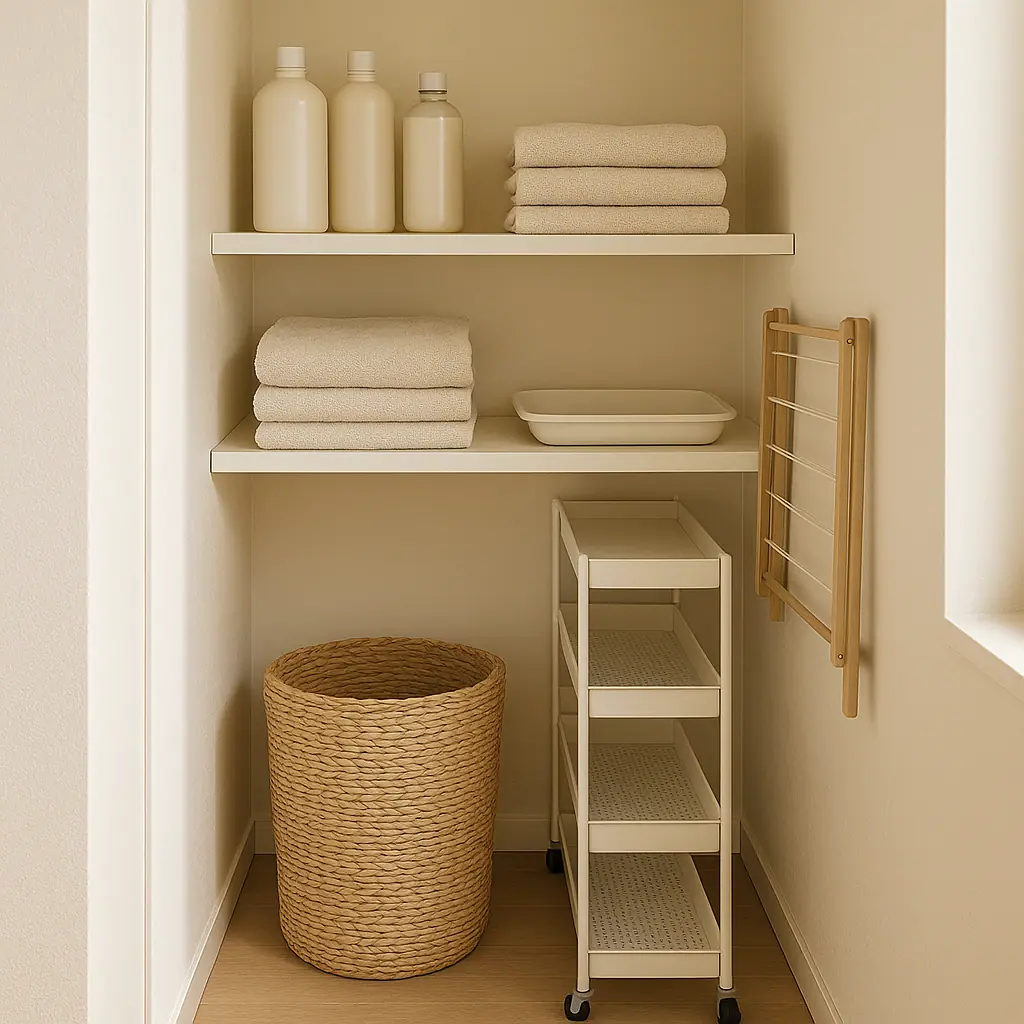
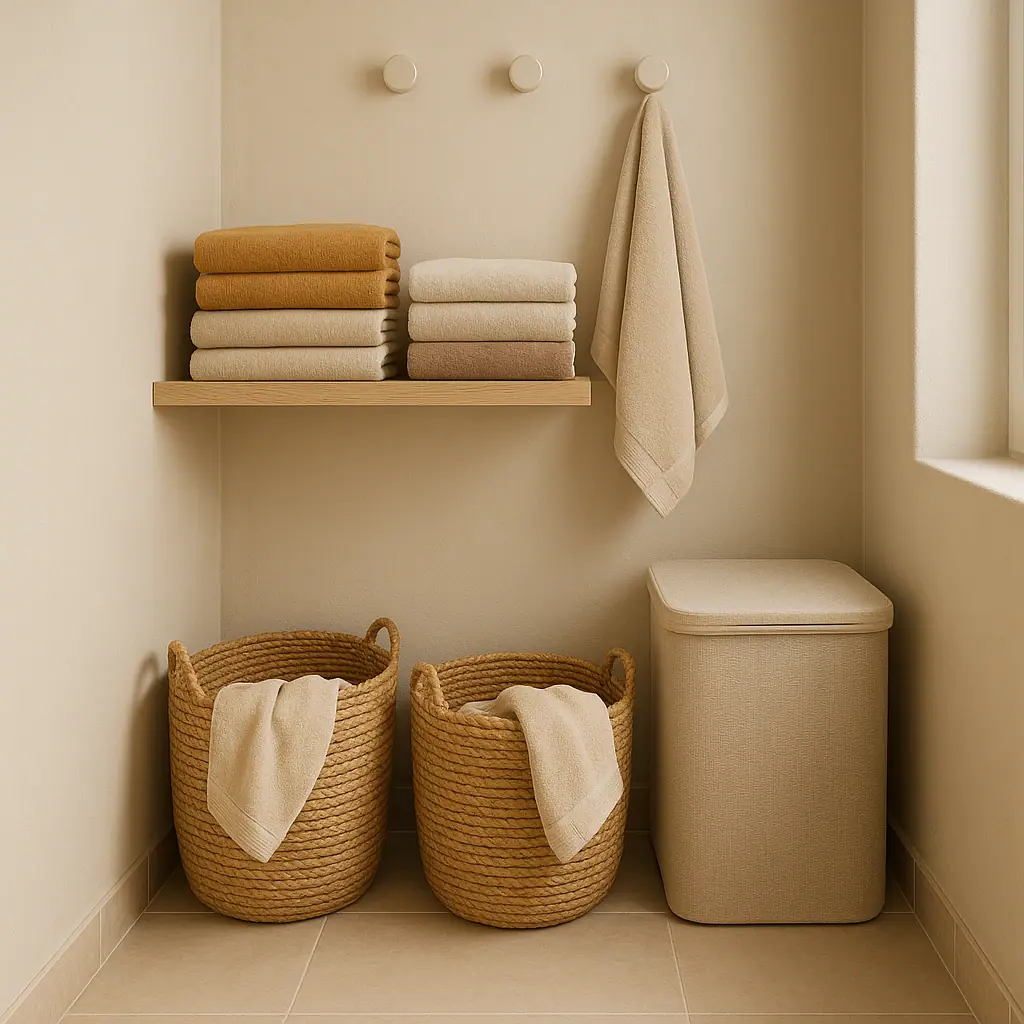
A small wall shelf, freestanding shelf, narrow cabinet, or lidded basket can hold daily bath towels near the shower. Keep the stack short enough that towels slide out easily. If the room gets humid, avoid packing towels tightly against the wall or under a sink with plumbing leaks or cleaning products.
Bedroom or closet backup zone
If the bathroom is tiny, store backup towels in a bedroom closet, dresser drawer, under-bed bin, or high wardrobe shelf. This works well because backup towels do not need prime bathroom space.
Laundry reset zone
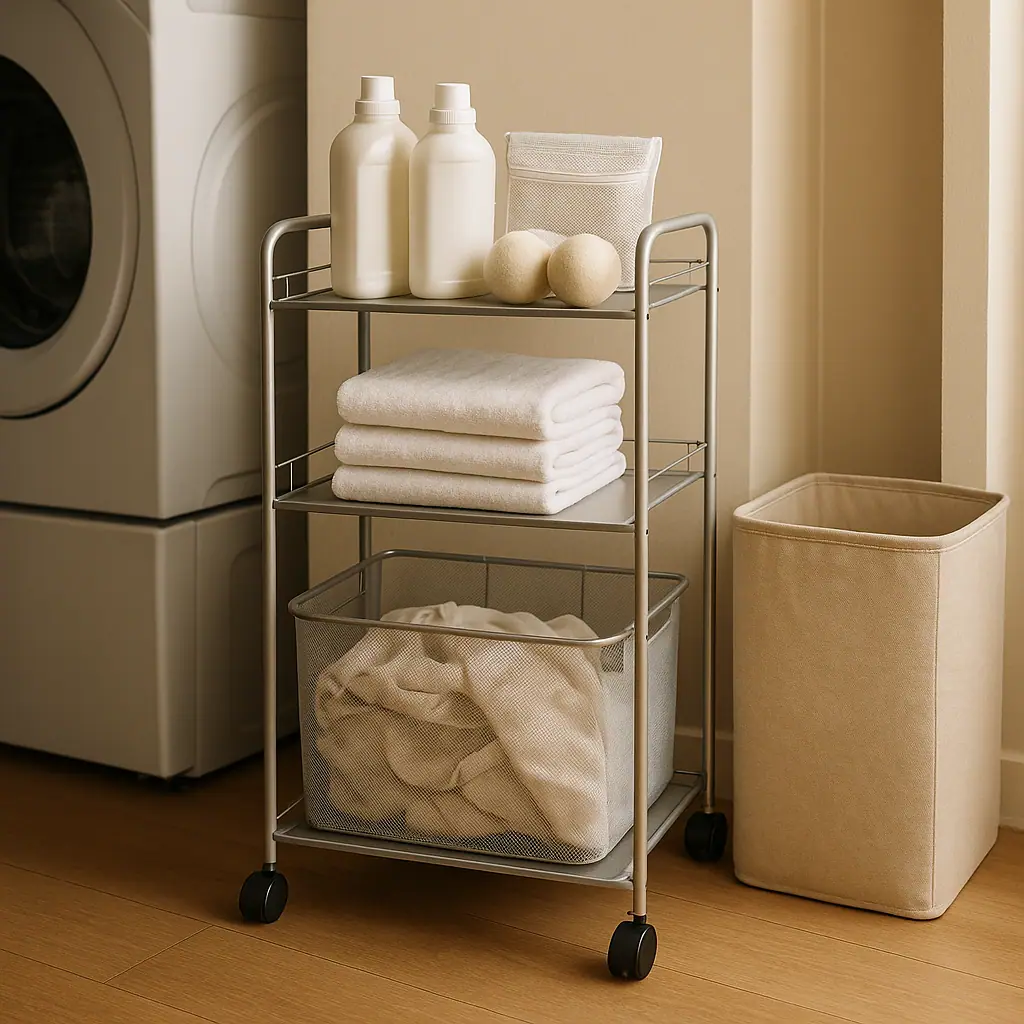
A basket or shelf near the laundry area can hold freshly washed towels until they are folded and returned. This zone should be temporary. If towels live there permanently, it becomes a second clutter spot instead of a reset station.
Guest-ready zone
If guests stay over, keep a small guest towel set in one basket, bag, or shelf section. The goal is to make hosting easier without letting rarely used linens take over everyday storage.
What to Check Before Adding Shelves, Hooks, or Baskets
Small-space towel storage can involve weight, moisture, doors, and rental surfaces. That means it is worth checking the boring details before you install anything or load a shelf heavily.
For shelves, carts, and furniture, check the product page or assembly instructions for tested limits instead of guessing. IKEA's customer support guidance notes that some products have tested weight limits and that specifications may be listed on the product page or assembly instructions: IKEA weight capacity guidance.
After checking load limits, look at the daily path through the room. A towel shelf that makes the bathroom door hit, blocks a cabinet, crowds a toilet area, or narrows a walkway may not be worth the storage it adds.
If you use tall freestanding storage, keep heavier items low and be cautious in homes with children or frequent young visitors. The U.S. Consumer Product Safety Commission's Anchor It campaign focuses on furniture and TV tip-over prevention and recommends following manufacturer instructions and securing top-heavy furniture when needed: CPSC Anchor It safety guidance.
How to Set Up Towel Storage Step by Step
Use this simple process before buying more storage. It works for bathrooms, bedroom closets, laundry nooks, and shared apartments.
- Empty the towel pile. Gather every bath towel, hand towel, washcloth, guest towel, beach towel, and old cleaning towel in one place.
- Sort by job. Make groups for daily use, backups, guests, cleaning cloths, and towels to donate or discard if they are no longer useful.
- Choose the daily zone first. Put the towels used most often near the shower, sink, or getting-ready area.
- Move backups out of prime space. Store extra towels in a closet, dresser, under-bed bin, or laundry shelf instead of crowding the bathroom.
- Add one drying rule. Decide where damp towels hang before laundry so they are not tossed into a closed basket while wet.
- Test the setup for one week. Notice where towels naturally land after showers, laundry, and cleaning.
- Remove one category if it feels crowded. A smaller towel rotation is often easier than adding another bin.
Pros and Cons of Common Towel Storage Options
Most homes need a mix of open and closed storage. Use the pros and cons below to choose the option that fits your room, lease, and towel count.
Baskets are flexible
A basket can move between the bathroom, bedroom, and laundry area without permanent installation.
Wall shelves save floor space
A carefully installed shelf can hold folded towels without taking over a narrow bathroom floor.
Bedroom storage reduces bathroom crowding
Backup towels can live outside the bathroom so the smallest room holds only the towels used daily.
Open stacks can look messy
Visible towels need a simple fold and a realistic stack height or they become visual clutter fast.
Closed bins can hide problems
If towels are stored too tightly or put away damp, a closed bin can make the issue harder to notice.
Common Towel Storage Mistakes to Avoid
The first mistake is using every available surface. The top of the toilet tank, the laundry machine, a chair, a hamper lid, and a bathroom counter may hold towels for a day, but they do not create a dependable system.
The second mistake is mixing active towels with backups. Daily towels should be easy to reach. Backup towels can live farther away. When both groups share one crowded pile, the whole stack gets disturbed every time someone showers.
The third mistake is ignoring drying space. Storage is only half the towel routine. If damp towels have no place to hang, the clean-storage system will keep breaking because towels will land wherever there is air.
A Simple Towel Storage Checklist
Use this checklist when you are deciding whether a towel zone is worth keeping.
- Can daily towels be reached without moving backups? If not, split the categories.
- Does the stack stay short and stable? If towels fall forward, reduce the count or change the fold.
- Is there a clear damp-towel spot? Hooks, bars, or a drying rack should handle towels before laundry.
- Can the storage breathe? Avoid tightly packed towels in damp or hard-to-check spaces.
- Does it respect the lease? Check rules before drilling, mounting, or using adhesives on painted surfaces.
- Can you reset it after laundry day? If folding and returning towels takes too long, simplify the categories.
When to Get Extra Help
Get extra help if a storage idea requires drilling into tile, mounting heavy shelves, anchoring furniture, or placing towels near plumbing, heaters, vents, or electrical items. In a rental, it is also wise to check the lease before making changes that may leave marks.
For product-specific questions, use the manufacturer's instructions rather than a general article. Exact load limits, cleaning rules, wall fasteners, adhesive limits, and installation steps can vary by product and surface.
Frequently Asked Questions
What should I check first if I have no linen closet?
Check how many towels you actually use in a normal week. Then choose one daily towel zone and one backup zone instead of trying to store everything in the bathroom.
How often should I review my towel storage?
Review it after laundry day for the first few weeks. If clean towels do not return easily or damp towels keep landing on the floor, the system needs a smaller count or a better drying spot.
Can I store towels under the bathroom sink?
Sometimes, but only if the area is clean, dry, easy to inspect, and not crowded with cleaners or plumbing issues. Use a small bin and check it regularly.
Can I undo these storage changes later?
Yes. Most towel systems are easy to adjust. Start with movable baskets, drawer space, or existing shelves before choosing mounted storage.
Final Thoughts
The best towel storage ideas when you have no linen closet are calm, specific, and easy to repeat. Keep daily towels close, backups limited, damp towels aired out, and product limits checked before you load shelves or furniture.
Start with one small change: count your active towels and move backups out of the daily zone. That one decision often makes the whole bathroom or laundry corner feel easier to use.