Learning how to organize a laundry nook in an apartment starts with one calm decision: the nook should support laundry day, not become a backup closet for everything that has no home. In a small apartment, a washer area, hallway alcove, stacked machine closet, or shared utility corner can fill up quickly because every item feels almost related to laundry.
The goal is not to create a showroom laundry room. The goal is to make the next load easier to start, finish, fold, and put away. A useful laundry nook gives detergent, stain tools, hampers, drying items, and cleaning extras clear limits so the space stays safe, reachable, and simple to reset.
Why This Matters in a Small Apartment
A laundry nook is often one of the tightest working zones in an apartment. It may sit behind folding doors, beside a kitchen, inside a bathroom, in a closet, or in a narrow hall. Because the space is small, clutter does more than look messy. It can block doors, hide leaks, make bottles harder to reach, and turn a simple chore into a repeated annoyance.
Storage choices also need a little caution. Tall shelves, narrow cabinets, and stacked supplies should be stable, and heavy items should not sit high where they are awkward to lift. The U.S. Consumer Product Safety Commission tracks tip-over hazards involving furniture and appliances, so any added storage around a utility area should stay conservative: CPSC tip-over report.
That does not mean the nook has to feel complicated. A small, steady setup usually works better than a tall tower of products. Keep the items you touch every week in the easiest spots, put occasional supplies lower or farther back, and leave enough open space to notice when something spills, leaks, or no longer belongs.
Start With the Laundry Nook You Actually Have
Before buying bins, measure and observe the exact nook. The useful questions are plain: how wide is the shelf, how deep is the closet, which way do the doors open, and where do your hands naturally go when starting a load?
Name the jobs of the nook
Most apartment laundry nooks need only a few jobs. Naming those jobs first prevents the space from collecting random household overflow.
- Wash zone: detergent, scent-free backup if used, stain remover, mesh bags, and a small scoop or cap area.
- Dry zone: dryer sheets, wool balls, drying rack clips, hanger space, or a lint reminder.
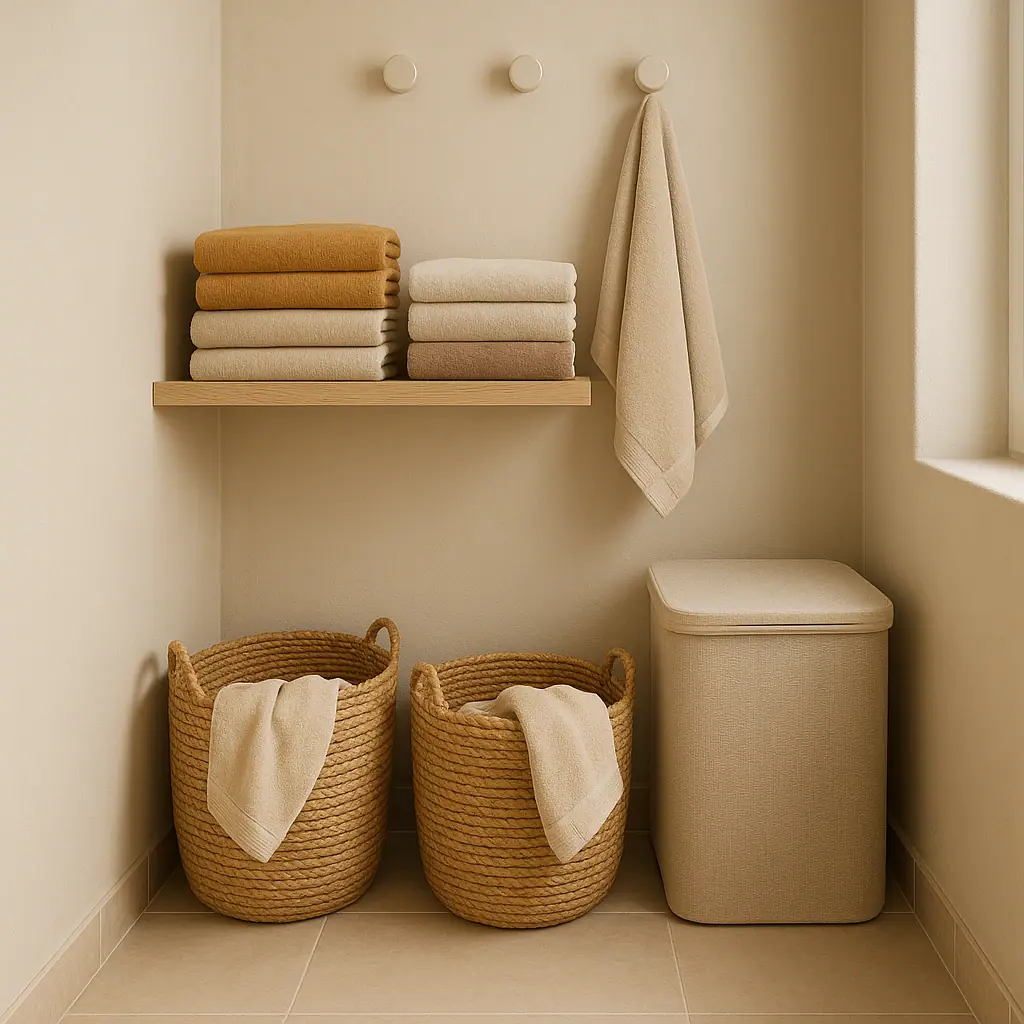
- Sort zone: one hamper, divided hamper, or small basket system that matches how you actually wash clothes.
- Fold zone: a clear surface, nearby basket, or temporary landing spot for finished laundry.
- Reset zone: a cloth, small trash bag, lint disposal spot, and any safe cleaning item used only for the laundry area.
Keep the active shelf narrow
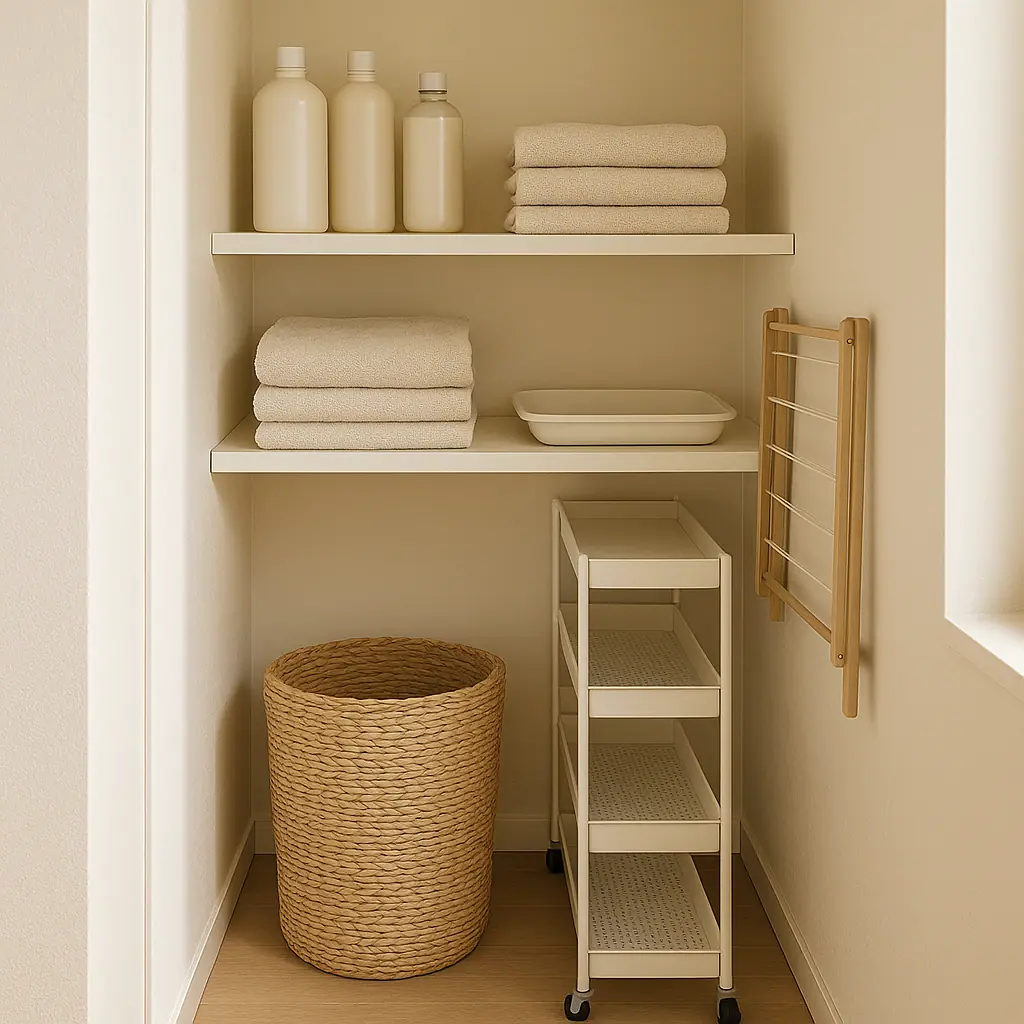
The active shelf should not hold every laundry product you own. It should hold the products you reach for during a normal week. Backups can live in a lower bin, a separate utility cabinet, or a clearly marked backstock spot. This keeps the working shelf light and easier to wipe.
What to Check First Before You Organize
Start with limits, not products. Check your lease before adding mounted storage, check the appliance manual before blocking clearance, and check the product instructions before putting weight on shelves, racks, hooks, or adhesive items. If a storage piece came with anchoring instructions, do not ignore them because the nook is small.
Manufacturer support pages can help you find assembly and anchoring instructions for specific products. IKEA, for example, tells customers to use product instructions and appropriate wall anchoring guidance when furniture needs to be secured: IKEA assembly instructions.
Then check the surfaces. Is the wall tile, painted drywall, wood, laminate, metal, or cabinet side? Is the floor level? Is there a vent, hose, outlet, or water line that must stay visible and reachable? Apartment storage should never hide a problem area so well that you cannot inspect it.
How to Organize a Laundry Nook in an Apartment Step by Step
Use this method when the laundry nook feels crowded, but you want a setup that is easy to maintain.
- Empty only the laundry nook. Do not pull apart the whole apartment. Remove the items from the shelf, floor, cart, or closet area you are solving today.
- Sort by laundry job. Make small groups for washing, drying, stain care, sorting, folding, and reset supplies.
- Remove unrelated storage. Tools, paper goods, decor, old cords, pet supplies, and random cleaners should stay only if this nook is truly their best and safest home.
- Put heavy supplies low. Large detergent bottles, bulk refills, and full baskets are easier and safer to handle at waist height or below.
- Give the active products one shelf or tray. Keep weekly detergent, stain treatment, and mesh bags together so laundry day starts without searching.
- Create one hamper decision. Choose either one simple hamper or a divided system. Too many baskets can make a small nook harder to use.
- Leave clearance around appliances. Do not block vents, plugs, hoses, door swing, or access panels with bins or rolling carts.
- Add a five-minute reset. After laundry day, return bottles to the active tray, empty lint, wipe drips, and move clean clothes out of the nook.
Best Storage Choices for an Apartment Laundry Nook
The best storage choice depends on the nook shape. A narrow closet needs different support than an open hallway corner or a stacked-machine alcove.
Shallow shelf trays
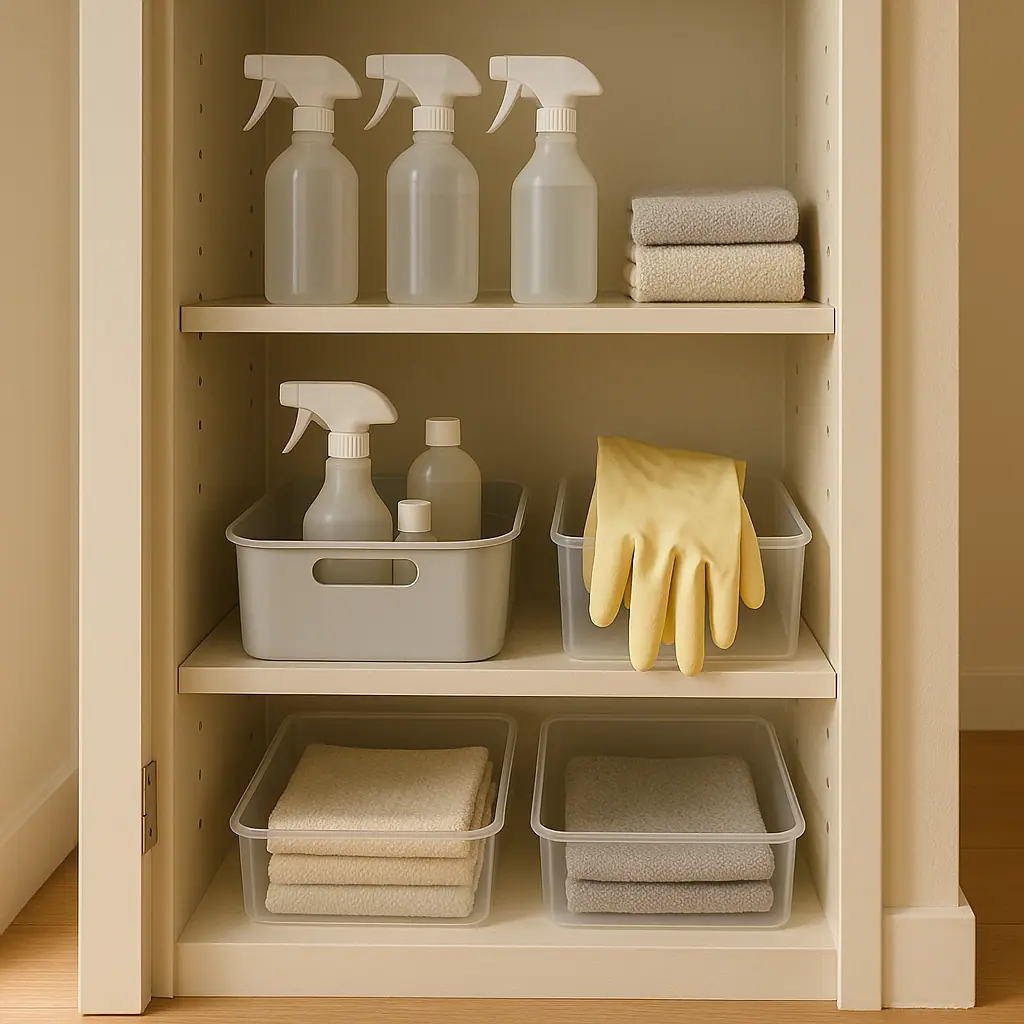
A shallow tray keeps detergent caps, stain sticks, mesh bags, and small laundry tools from spreading across the shelf. Choose one that can be lifted down easily for wiping.
Rolling cart with restraint
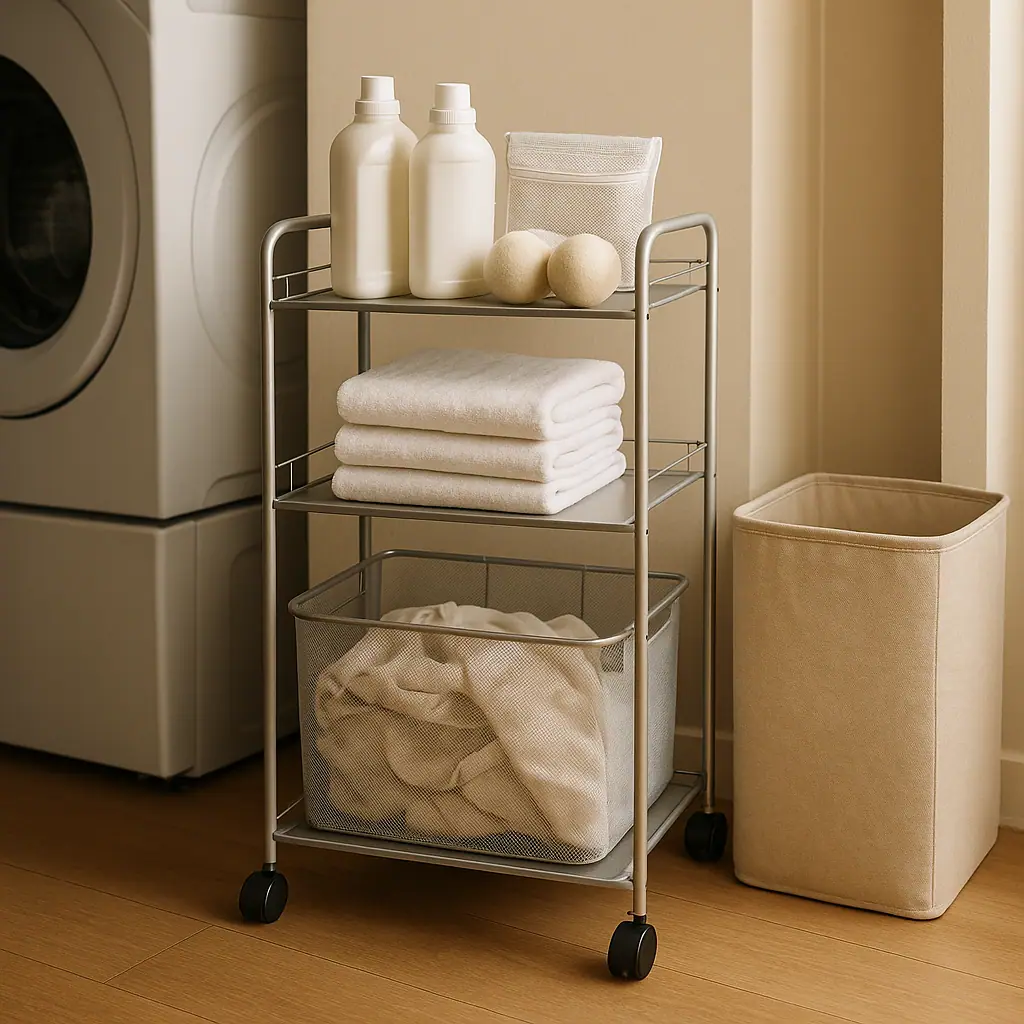
A slim cart can work beside a machine if it does not block hoses, vents, or doors. Keep heavier bottles on the bottom tier and avoid using the cart as a leaning tower.
Over-door storage
Over-door pockets can hold lightweight items such as clothespins, mesh bags, or dryer balls. Avoid loading them with heavy bottles that make the door hard to use.
One backstock bin
Apartment laundry areas often get crowded because every refill lives in the active nook. One labeled backstock bin keeps extras together and makes it obvious when you have enough.
Weekly laundry becomes easier to start
When detergent, stain tools, and sorting supplies have clear homes, you spend less time moving items before each load.
The nook stays safer to inspect
Leaving hoses, vents, outlets, and appliance doors visible makes it easier to notice leaks, lint, spills, or blocked access.
Backstock stops crowding the active shelf
Separating refills from daily-use products keeps the working area lighter and easier to clean.
It may expose too many duplicate products
Once everything is grouped by job, extra detergents, sprays, and half-used bottles become harder to ignore.
Mounted storage needs extra checking
Renters need to review lease rules, wall type, product instructions, and weight limits before adding shelves or wall-mounted racks.
Common Laundry Nook Mistakes to Avoid
The first mistake is storing too much above shoulder height. High shelves are tempting in small apartments, but large bottles and full baskets become awkward overhead. Keep heavy or spillable items low and reserve higher space for light, occasional supplies.
The second mistake is using the nook as a general cleaning closet without boundaries. A few laundry-area reset supplies make sense. A crowded mix of mops, bathroom cleaners, paper towels, batteries, tools, and seasonal extras makes the nook harder to use for its main job.
The third mistake is hiding access points. A tidy bin is not helpful if it blocks the outlet, water shutoff, drain hose, lint area, or appliance door. Useful storage should make the nook calmer without making inspection harder.
A Simple Laundry Nook Checklist
Use this checklist after laundry day or whenever the nook starts feeling tight.
- Can I start a load without moving unrelated items? If not, remove anything that does not support laundry.
- Are heavy bottles below shoulder height? Keep bulk refills and full containers low and stable.
- Can I see hoses, vents, plugs, and door clearance? Storage should not hide appliance access or airflow.
- Is there one place for active products? A tray, shelf section, or small bin should hold weekly-use supplies.
- Is backstock separate? Extras should not crowd the working shelf.
- Can the nook be reset in five minutes? If not, the system may have too many containers or too many jobs.
When to Get Extra Help
Get extra help before mounting shelves, anchoring cabinets, changing appliance placement, stacking storage near outlets, or using adhesive products on uncertain surfaces. A landlord, building manager, product manual, or manufacturer support page is a better source than guessing.
Also pause if you see moisture, mildew smell, heat buildup, loose shelving, damaged cords, or appliance movement. Organization can make a nook calmer, but it should not cover a maintenance issue. Keep the setup simple enough that you can still see what is happening in the space.
Frequently Asked Questions
What should I check first in an apartment laundry nook?
Check clearance, access, and weight. Make sure bins, carts, or shelves do not block appliance doors, vents, plugs, hoses, or the path you need to use on laundry day.
How often should I review the laundry nook?
A quick review after laundry day is enough for most apartments. Return products to their tray, clear lint or trash, move clean clothes out, and check whether backstock is crowding the shelf.
What should I do if I am not sure a shelf or cart is safe?
Do not guess. Check the product instructions, weight limits, lease rules, and wall or floor surface. If the storage will hold heavy items, ask the manufacturer, landlord, or a qualified person before relying on it.
Can I undo a laundry nook system later?
Yes. A good laundry nook system is easy to adjust. If a cart blocks access or a bin hides too much, remove it and return to simpler zones.
Final Thoughts
How to organize a laundry nook in an apartment comes down to clear jobs, conservative storage, and a reset you can repeat. Keep weekly laundry supplies close, move backstock out of the active shelf, and avoid storage that blocks inspection or access.
Start with one small reset today. Empty the nook, group items by laundry job, and put only the active supplies back in the easiest spots. If the next load starts with less shuffling, the nook is already calmer.