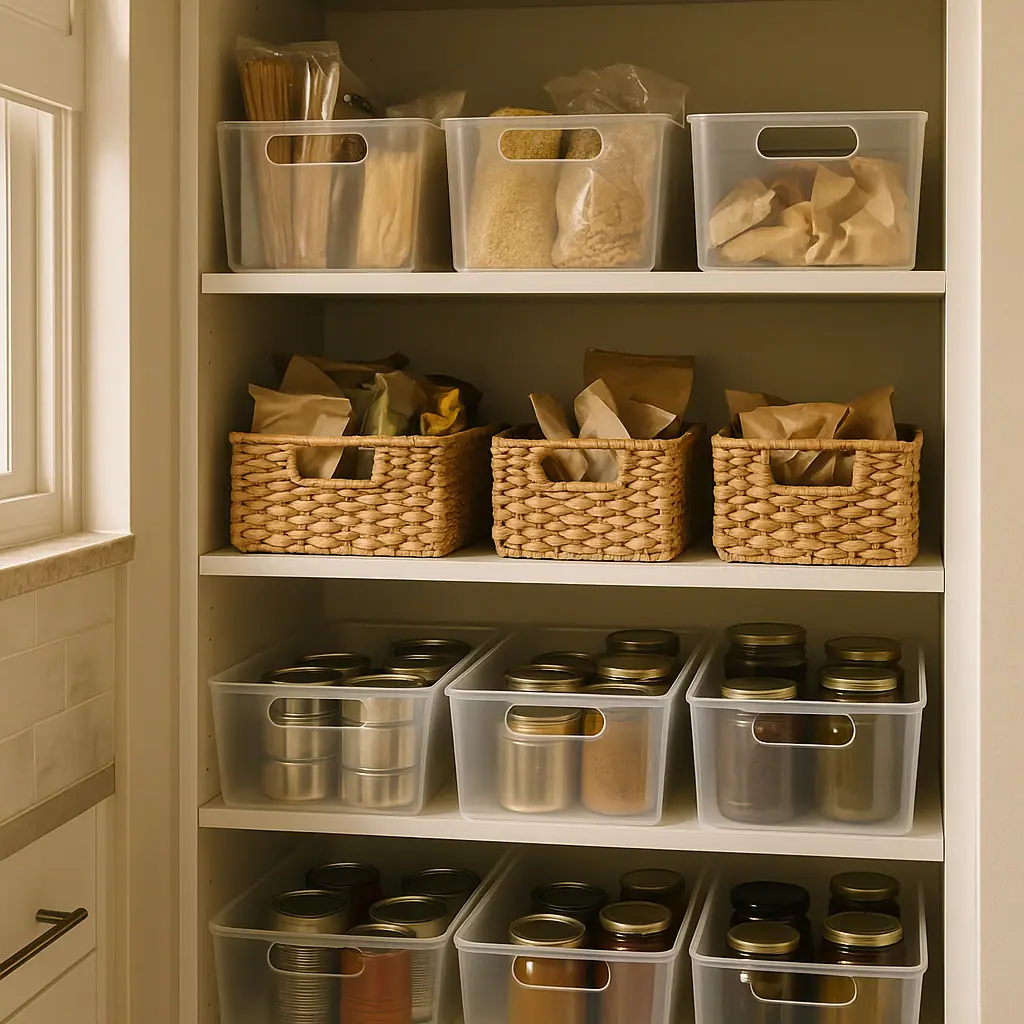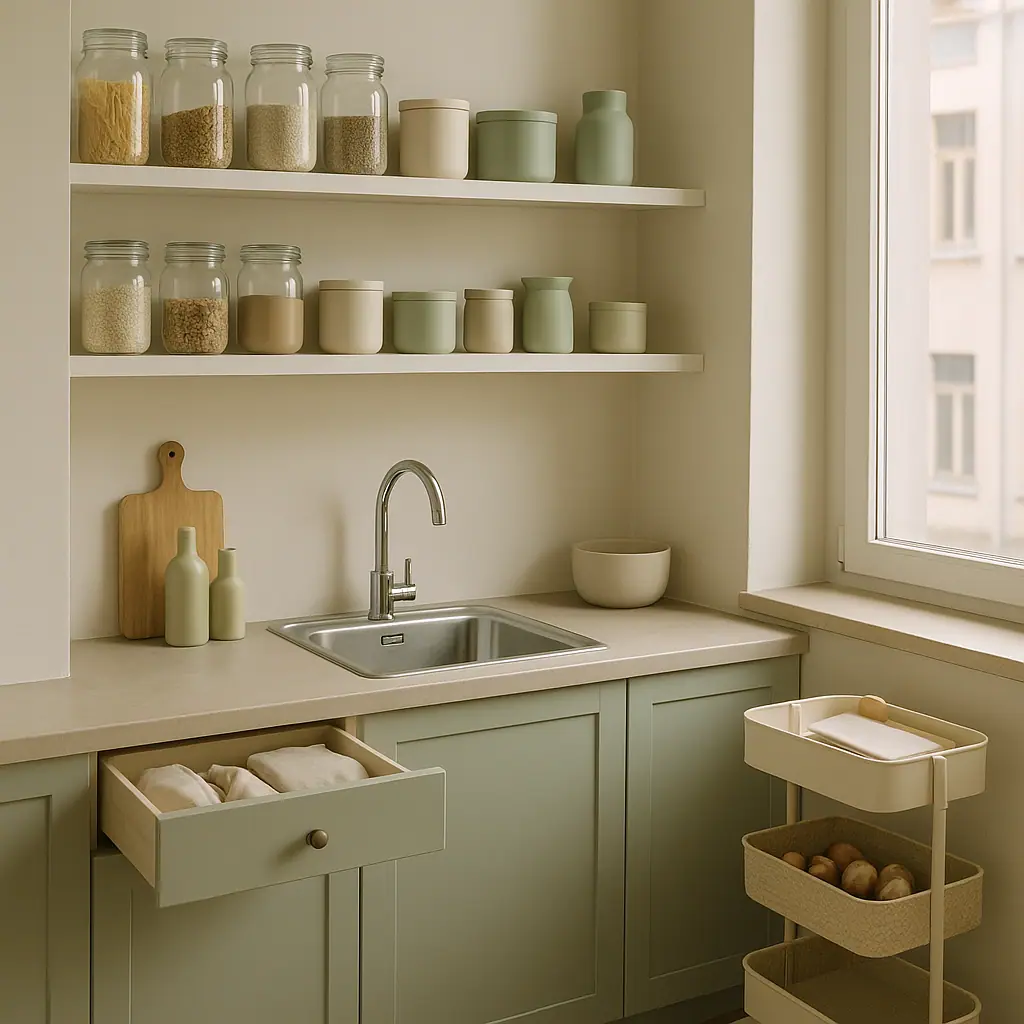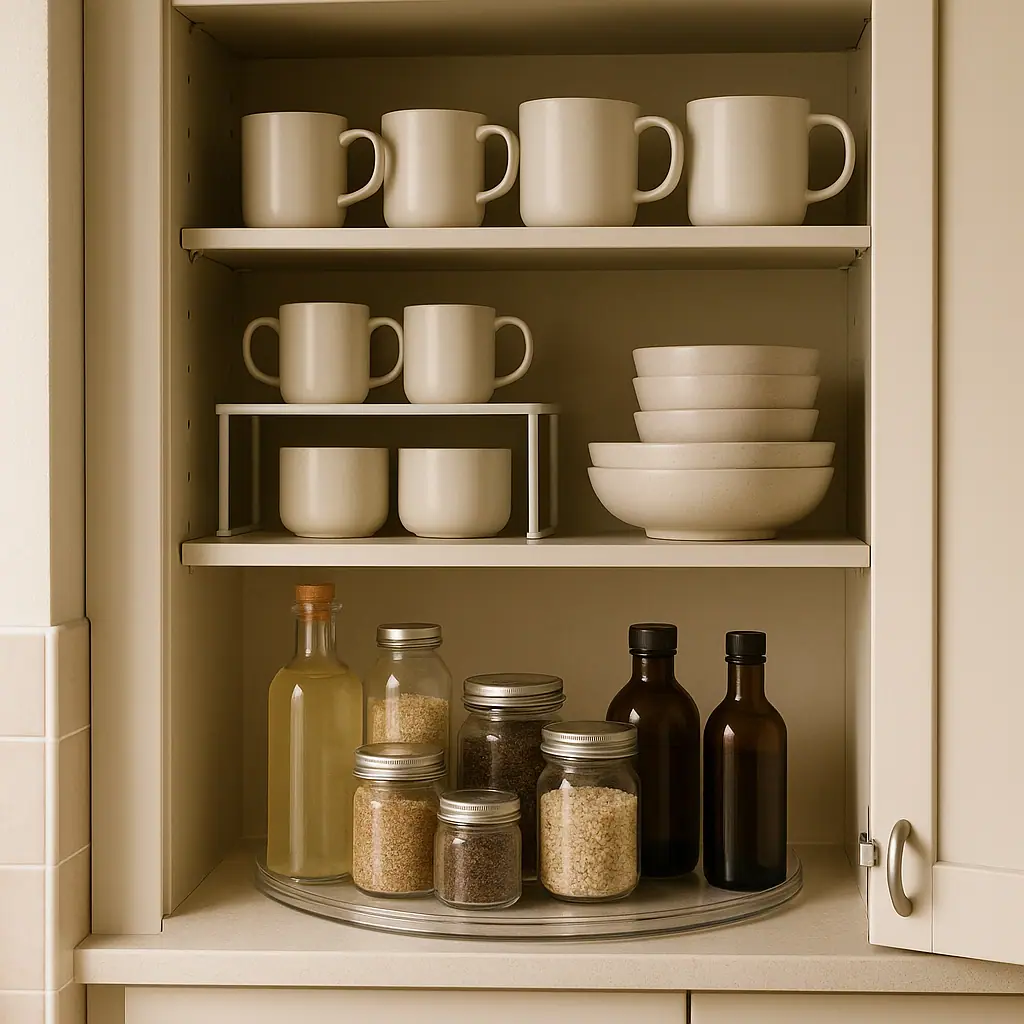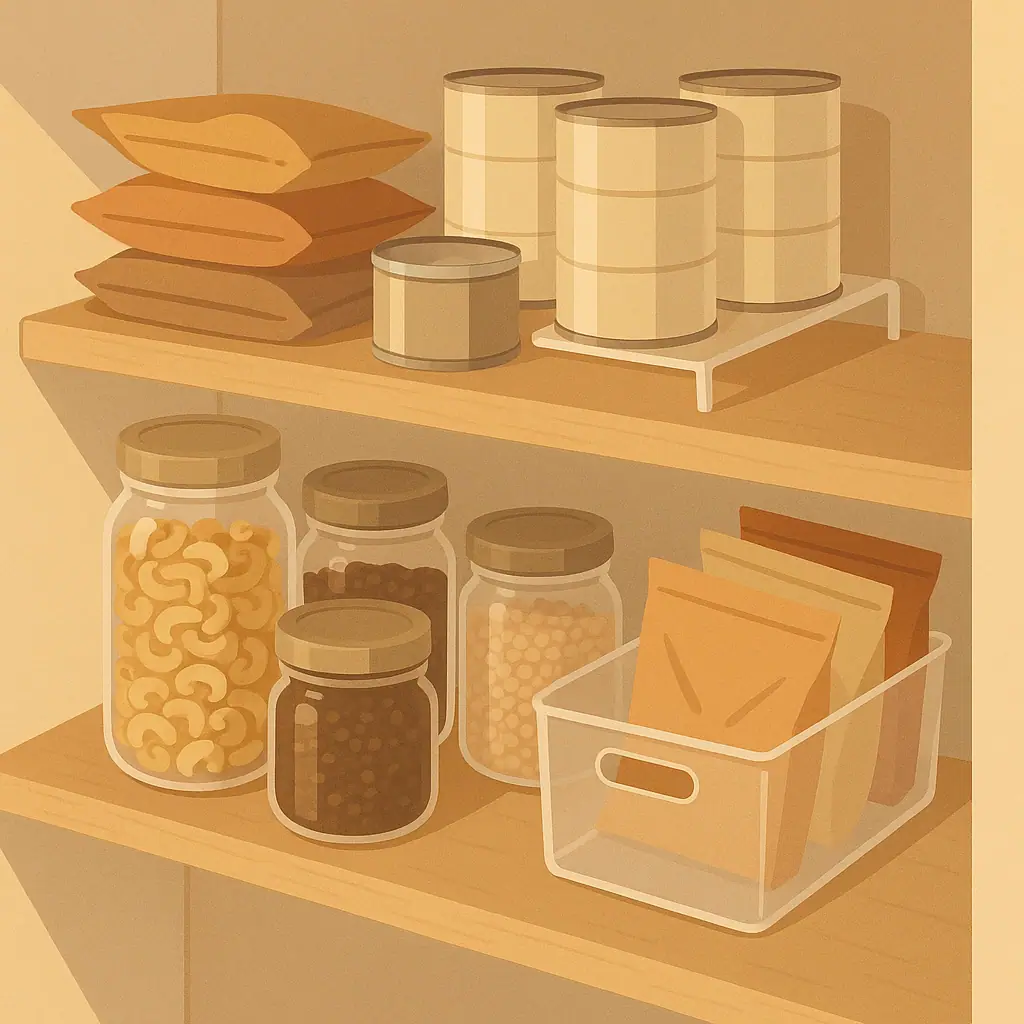
Learning how to organize a tiny pantry shelf starts with a simpler goal than making the shelf look perfect. The shelf needs to help you see what you own, reach the food you use most, and reset the space after grocery day without starting over every week.
In a small apartment, one pantry shelf may need to hold breakfast items, snacks, cans, baking basics, or backup ingredients. If everything is pushed into one row, the back of the shelf becomes invisible. If everything is divided into too many containers, the shelf can become harder to maintain than it was before.
Why a Tiny Pantry Shelf Needs Clear Jobs
A tiny pantry shelf works best when it has one or two clear jobs. That might mean breakfast plus snacks, cans plus jars, or baking supplies plus dry staples. When one shelf tries to hold every food category in the kitchen, the daily items usually end up blocking the occasional ones.
The first check is not what organizer looks nicest. It is what you reach for most often. Put daily items in the easiest visible zone. Put backup items behind or above them only if you can still see the label or the container shape. Keep heavy cans and glass jars low enough that you can lift them without pulling down a stack.
Food storage also deserves a practical safety check. FoodSafety.gov explains that its FoodKeeper resource helps people understand food and beverage storage so items stay fresh longer when stored properly: FoodSafety.gov FoodKeeper.
Use that idea as a pantry habit, not as a complicated system. If an item has storage instructions, expiration guidance, or a package that needs to stay sealed, let those rules matter more than the container you wanted to use.
Start With a One-Shelf Pantry Sort
Before changing the layout, take every item off the shelf and wipe the surface. This is the moment to remove empty boxes, stale snacks, duplicate opened packages, and items that belong in the refrigerator, freezer, spice area, or cleaning zone.
Group by real use
Make small groups based on how the shelf is actually used. A tiny pantry shelf usually behaves better with four simple groups than with twelve narrow categories.
- Daily reach: breakfast food, coffee add-ins, lunch snacks, or anything opened most mornings.
- Meal helpers: cans, jars, pasta, rice, broth, sauces, or quick dinner ingredients.
- Backup stock: unopened duplicates that should not crowd the front row.
- Special use: baking supplies, guest snacks, or items used only a few times a month.
Choose the front row carefully
The front row should hold the items that earn that easy access. If an item is used once a month, it should not sit in the most reachable spot just because it was bought recently. A calm pantry shelf rewards frequency, not packaging size.
For renters, this is also where restraint helps. Avoid attaching heavy shelves, hanging baskets, or adhesive systems inside a cabinet unless the product instructions, cabinet surface, and lease situation all make sense. When storage involves furniture stability or climbing risk, the Consumer Product Safety Commission's Anchor It guidance emphasizes following manufacturer instructions and securing top-heavy furniture when needed: CPSC Anchor It safety guidance.
How to Organize a Tiny Pantry Shelf Step by Step
Once the shelf is empty and grouped, build the shelf from the back forward. This prevents the common problem of filling the front beautifully while the back turns into a hidden pile.
- Measure the shelf depth and height. Write down the usable width, depth, and clearance. Do this before choosing bins, risers, or turntables.
- Place the tallest stable items in the back. Put cereal boxes, tall jars, or backup packages where they can still be seen. Do not stack glass or heavy cans above shoulder height.
- Use one helper product at most. A small riser, clear bin, or turntable can help, but using all three on one tiny shelf often wastes space.
- Keep opened food contained. Use a simple bin or tray for small opened packages so crumbs and loose packets do not spread across the shelf.
- Leave a hand space. Keep enough room to pull one item out without knocking over the next item. A shelf that is filled to the edge is harder to use.
- Test the shelf for one week. Notice what gets returned easily and what keeps landing outside the pantry. Adjust from that evidence.
Best Tools for a Tiny Pantry Shelf
The right organizer depends on the shelf problem. A deep shelf needs visibility. A short shelf needs vertical clearance. A narrow shelf needs fewer categories. Buy for the friction, not for the photo.
When a clear bin helps
A clear bin is useful for loose packets, snack bags, baking add-ins, or small backup items that would otherwise slide around. It works best when the bin has one job and can be pulled out like a drawer.
When a shelf riser helps
A shelf riser can make cans or small jars visible in two levels. It helps only if the cabinet has enough height and the items on top are light enough to reach safely.
When a turntable helps
A turntable is useful for sauces, jars, nut butters, or small bottles in a corner or deep cabinet. It is less useful for bags, boxes, or anything too tall to spin without hitting the shelf above.
Common Pantry Shelf Mistakes to Avoid
Most tiny pantry shelf problems come from trying to solve visibility, capacity, and shopping habits all at once. A smaller shelf needs fewer decisions, not more layers.
Easy to reset
One shelf with clear zones can be wiped, checked, and restocked in a few minutes after grocery day.
Less hidden food waste
Visible front and back rows make it easier to use opened items before buying duplicates.
Better renter fit
A simple bin, riser, or turntable can improve storage without drilling, permanent hardware, or cabinet changes.
Can become over-divided
Too many bins and labels can make a tiny shelf harder to maintain than a plain grouped layout.
Needs a grocery-day check
The system only stays useful if duplicates and opened packages are reviewed before new food is added.
A Simple Tiny Pantry Shelf Checklist
Use this short checklist whenever the shelf starts feeling crowded again. It keeps the routine practical and prevents the shelf from becoming a catch-all.
- Can I see the back row? If not, remove one category or use a low riser for small cans.
- Are daily items easiest to reach? Move occasional ingredients behind or above them.
- Is anything too heavy or unstable? Keep heavy cans, jars, and glass low and easy to lift.
- Do opened packages have a home? Use one tray or bin for loose packets and snack bags.
- Is there room for the next grocery trip? Leave a small landing area instead of filling every inch.
Frequently Asked Questions
What should I check first when organizing a tiny pantry shelf?
Check what you use most often. Daily items should be easiest to reach, while backups and occasional ingredients can sit farther back if they remain visible.
Are pantry bins always worth it for a small shelf?
No. A bin helps when it contains loose items with the same job. If the bin hides labels, wastes shelf height, or mixes unrelated food, a simpler row may work better.
How often should I reset a tiny pantry shelf?
A quick reset after grocery day is usually enough. Check opened packages, move older food forward, and remove anything that no longer belongs on that shelf.
What should I do if I am unsure about food storage?
Follow the package directions first, then verify with trusted food safety resources when needed. Do not move food into decorative containers if that makes storage instructions, dates, or allergens harder to track.
Final Thoughts
How to organize a tiny pantry shelf comes down to visibility, reach, and repeatability. Give the shelf a clear job, keep the most-used items in the easiest position, and avoid buying organizers before you understand the actual friction.
The best tiny pantry shelf is not the fullest shelf. It is the one you can open, understand, use, and reset without turning a small kitchen into another project.