Learning how to organize food when you do not have a pantry starts with one calm question: where does each kind of food make daily life easier? A small kitchen may not have a walk-in pantry, a tall cabinet, or even one spare shelf, but it can still have a clear food system.
The goal is not to hide every package in matching containers. The goal is to keep food visible, reachable, and easy to rotate before grocery day turns into another crowded pile. When the system is simple enough to reset, a no-pantry kitchen can feel much less scattered.
Why No-Pantry Kitchens Need Clear Food Zones
When you do not have a pantry, food tends to spread into every available opening: one cabinet, a counter corner, a fridge top, a cart, a drawer, or a shelf near the table. That can work for a few days, but it becomes confusing when snacks, cans, breakfast food, and dinner ingredients all share the same vague home.
Clear zones solve that problem without requiring more furniture. A zone is simply a defined job for a small area. One shelf might hold breakfast and coffee add-ins. One drawer might hold snacks. One lower cabinet might hold cans and jars. A narrow cart might hold overflow only if it stays easy to move and clean.
Food storage also needs a safety-aware rhythm. FoodSafety.gov explains that the FoodKeeper helps people understand how to store food and beverages so items can stay fresh longer when stored properly: FoodSafety.gov FoodKeeper.
Use that idea as a practical habit. Keep dates, storage directions, allergens, and opened-package details visible enough that the organization system supports food use instead of hiding important information.
Start With the Food You Use Most Often
Before moving containers around, sort food by routine. A no-pantry setup should serve the way the kitchen is actually used, not the way a large pantry would be arranged.
Make a daily food zone
The daily zone holds items used most mornings or evenings. That might include cereal, oatmeal, coffee filters, tea, lunch snacks, rice, pasta, or the ingredients used in regular quick meals. Put this zone where you can reach it without moving a stack of backup groceries.
Create a backup zone
Backup food needs a home too, but it should not crowd the daily zone. Unopened duplicates, extra cans, sealed pasta, spare snacks, and bulk packages can live farther back, higher up, or in a less convenient cabinet if they are still easy to review before shopping.
If a storage choice involves adding shelves, stacking furniture, or relying on a freestanding unit, follow the product instructions and keep heavy items low. The Consumer Product Safety Commission's Anchor It guidance emphasizes securing top-heavy furniture and following manufacturer instructions when furniture stability matters: CPSC Anchor It safety guidance.
What to Check Before Choosing Storage Spots
How to organize food when you do not have a pantry depends on the storage spots you already have. Walk through the kitchen and nearby dining area with a notebook or phone note before buying anything.
Check heat, moisture, and reach
A storage spot should be practical, not just empty. Avoid placing food where it gets warm, damp, dusty, or hard to clean. Keep heavy jars, cans, and glass containers low enough that you can lift them with control. Keep daily food between waist and eye level when possible, especially if several people share the kitchen.
Check package information
Not every food should be decanted into a clear container. If the original package has cooking directions, allergen details, expiration dates, or storage instructions you need, keep the package or transfer the information clearly. A tidy jar is not helpful if no one knows what is inside or when it should be used.
- Cabinet shelves: best for cans, jars, dry goods, and dinner ingredients that need stable storage.
- Drawers: useful for snack bags, packets, wraps, tea, and small breakfast items.
- Open shelves: better for attractive daily staples, not messy overflow or heavy backup stock.
- Rolling carts: helpful for overflow only when they do not block walkways or become a mixed catch-all.
- Counter corners: useful for one daily routine, such as breakfast or coffee, but easy to overcrowd.
How to Organize Food When You Do Not Have a Pantry Step by Step
Build the system one zone at a time. A no-pantry kitchen becomes frustrating when every food category is moved at once and nothing has been tested in real life.
- Empty one candidate area. Start with one cabinet, drawer, shelf, or cart. Do not empty the whole kitchen unless you have time to finish.
- Group food by use. Make simple piles: breakfast, snacks, dinner helpers, cans and jars, baking, drinks, backup stock, and opened packages.
- Put daily items in the easiest zone. The foods used most often should not sit behind backup items.
- Keep backup food together. Store unopened duplicates in one visible place so grocery day starts with a quick check.
- Give opened food a tray or bin. Loose packets and half-used bags need one contained home so crumbs and duplicates do not spread.
- Label only when it helps behavior. A label like "breakfast" or "backup cans" is more useful than labeling every jar.
- Leave a little empty space. A no-pantry system needs room for the next grocery trip, not just the food you own today.
- Test for one normal week. Notice what gets returned easily and what keeps landing on the counter. Adjust the zone before buying more products.
Best No-Pantry Storage Ideas That Stay Manageable
The best no-pantry storage ideas are modest. They create reach and visibility without turning the kitchen into a storage showroom.
Use a cabinet as a mini pantry
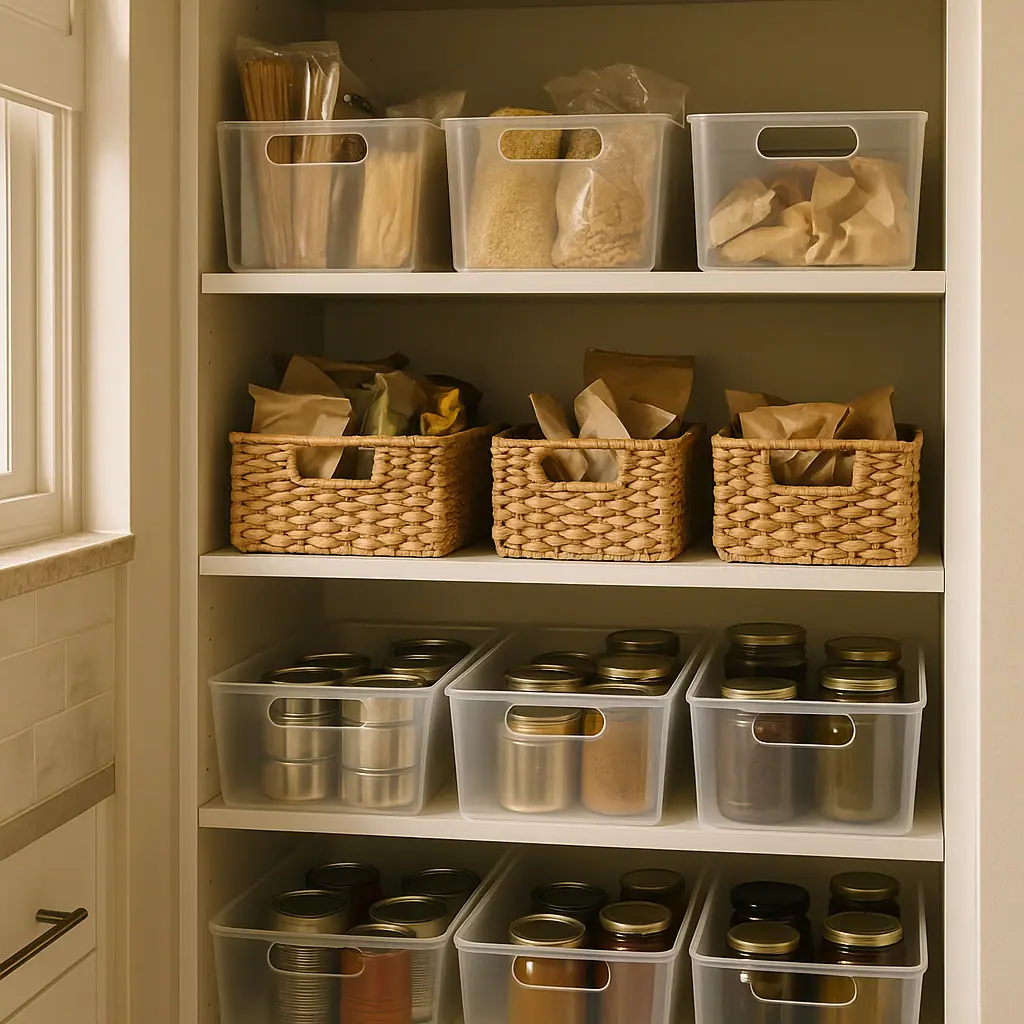
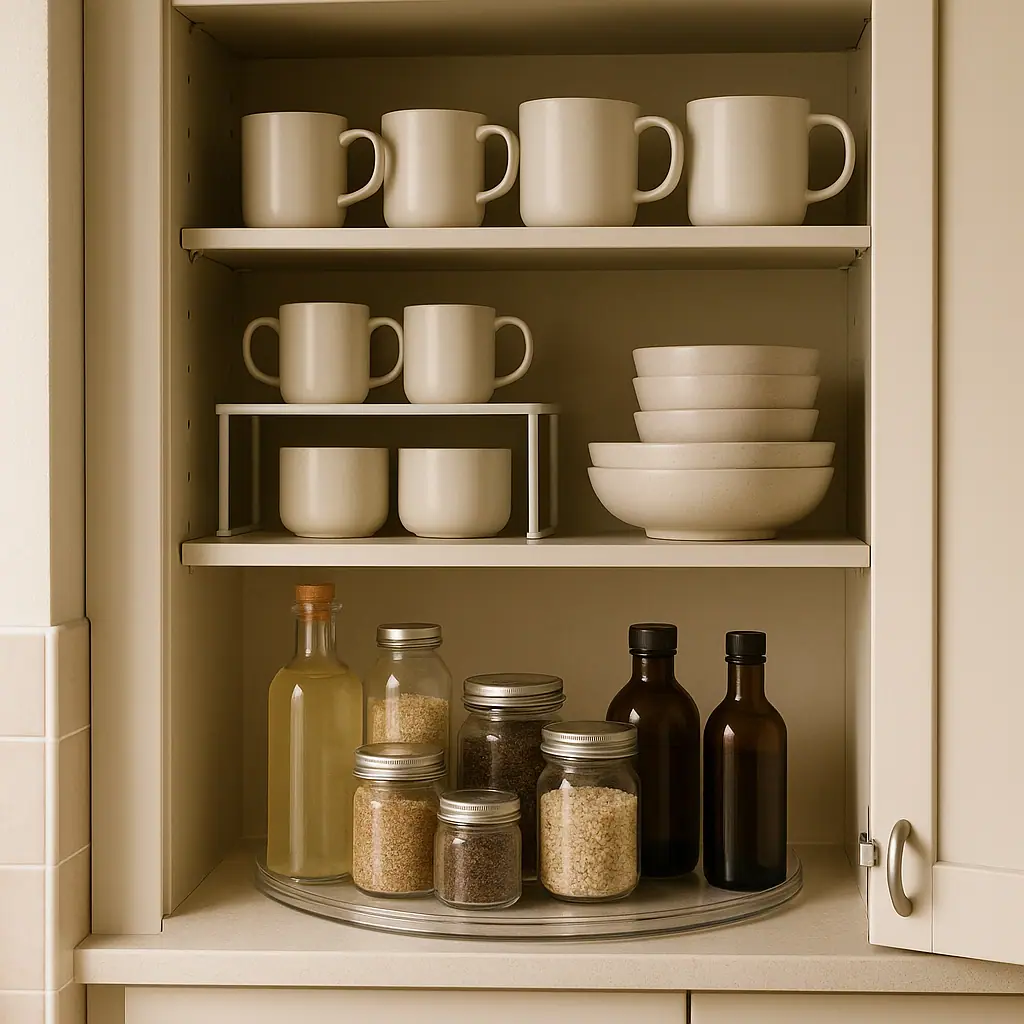
Choose one cabinet for the most pantry-like job. Put daily items in front and backup items behind or above. A low bin can corral small packets, while a riser can make short cans easier to see if the shelf has enough height.
Turn one drawer into a snack or breakfast drawer
A drawer can work well for food that lies flat: granola bars, oatmeal packets, tea, wraps, lunch snacks, or small sealed bags. Use one or two shallow bins if items slide around, but avoid dividing the drawer into so many sections that no package fits comfortably.
Use vertical space with restraint
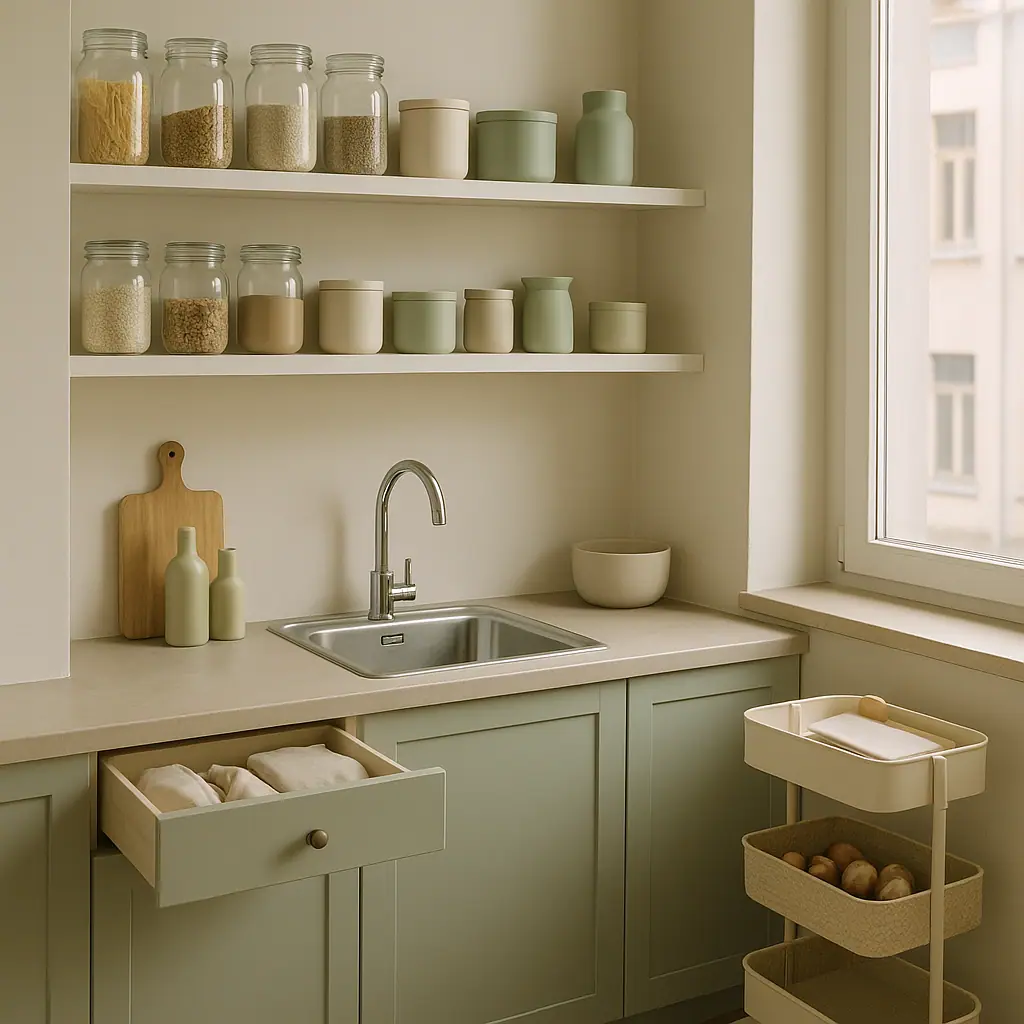
Open shelving can help when cabinets are limited, but it should hold a narrow category. Keep heavy food low, avoid stacking glass high, and leave enough room to wipe the shelf. If the shelf starts holding unrelated overflow, it will look messy and become harder to maintain.
Make a grocery-day landing zone
A small no-pantry kitchen needs a place where new food can land temporarily while you rotate older items forward. This could be a clear section of the daily cabinet, a shallow bin for unopened snacks, or a short shelf on a cart. Without a landing zone, new groceries often bury older food.
Common No-Pantry Mistakes to Avoid
Most no-pantry mistakes come from trying to create a pantry look instead of a pantry function. A small kitchen needs fewer categories, safer reach, and a reset routine that works after a tired grocery trip.
Works with existing space
A zone-based setup can use cabinets, drawers, shelves, or carts without requiring a separate pantry closet.
Reduces duplicate buying
When backup food has one visible home, it is easier to check what you already own before shopping.
Easy to adjust
No-pantry zones can change as routines change, especially in rentals or shared apartments.
Can spread too widely
If every surface becomes food storage, the kitchen feels cluttered and items are harder to track.
Needs regular grocery checks
A no-pantry system depends on rotating older food forward and removing stale or duplicate items.
A Simple No-Pantry Checklist
Use this checklist when the kitchen starts feeling crowded again. It keeps the system practical without turning organization into a full weekend project.
- Is daily food easiest to reach? Move the most-used items out from behind backup stock.
- Does each zone have one job? Breakfast, snacks, dinner helpers, and backup food should not all blur together.
- Can I see opened packages? Put half-used bags and packets in one tray or bin so they get used first.
- Are heavy items low? Keep cans, jars, and glass where they can be lifted safely.
- Are dates and directions visible? Do not hide information that helps with safe storage or cooking.
- Is there space for new groceries? Leave a small landing area so restocking does not break the system.
Frequently Asked Questions
What should I organize first if I do not have a pantry?
Start with the food you use every day. Give breakfast, snacks, or dinner staples the easiest reachable space, then move backup food to a separate visible zone.
Can a rolling cart replace a pantry?
A rolling cart can help with overflow or one narrow category, but it should not block walkways or hold heavy, unstable stacks. Keep it easy to move and clean.
Should I decant food into matching containers?
Only when it makes food easier to use and you can preserve important information. Keep labels, dates, cooking directions, and allergen details where they remain clear.
How often should I reset a no-pantry kitchen?
A quick reset after grocery day is usually enough. Move older food forward, check opened packages, and make sure each zone still has one clear job.
Final Thoughts
How to organize food when you do not have a pantry is really about giving food a few honest jobs. You need a daily zone, a backup zone, a place for opened packages, and a short reset habit after groceries come home.
Start with one cabinet, drawer, shelf, or cart. If the food is easier to see, reach, rotate, and return after one week, the system is working.