Choosing between shelf risers vs lazy Susans for small kitchen cabinets starts with the cabinet, not the product. A riser can make short cans and bowls easier to see. A lazy Susan can make oils, sauces, jars, and spices easier to turn toward you. Both can help, but only when they solve the right kind of cabinet problem.
The calm choice is the one that reduces reaching, stacking, and forgotten items. If a product adds a second layer of clutter or makes you move three things to reach one jar, it is not really organizing the cabinet.
Why Shelf Risers vs Lazy Susans Matters in Small Kitchen Cabinets
Small kitchen cabinets often fail in two different ways. Some have tall shelves with too much empty air above short items. Others have deep corners where small jars, oils, condiments, or baking bottles hide behind one another. Shelf risers and lazy Susans solve different versions of that problem.
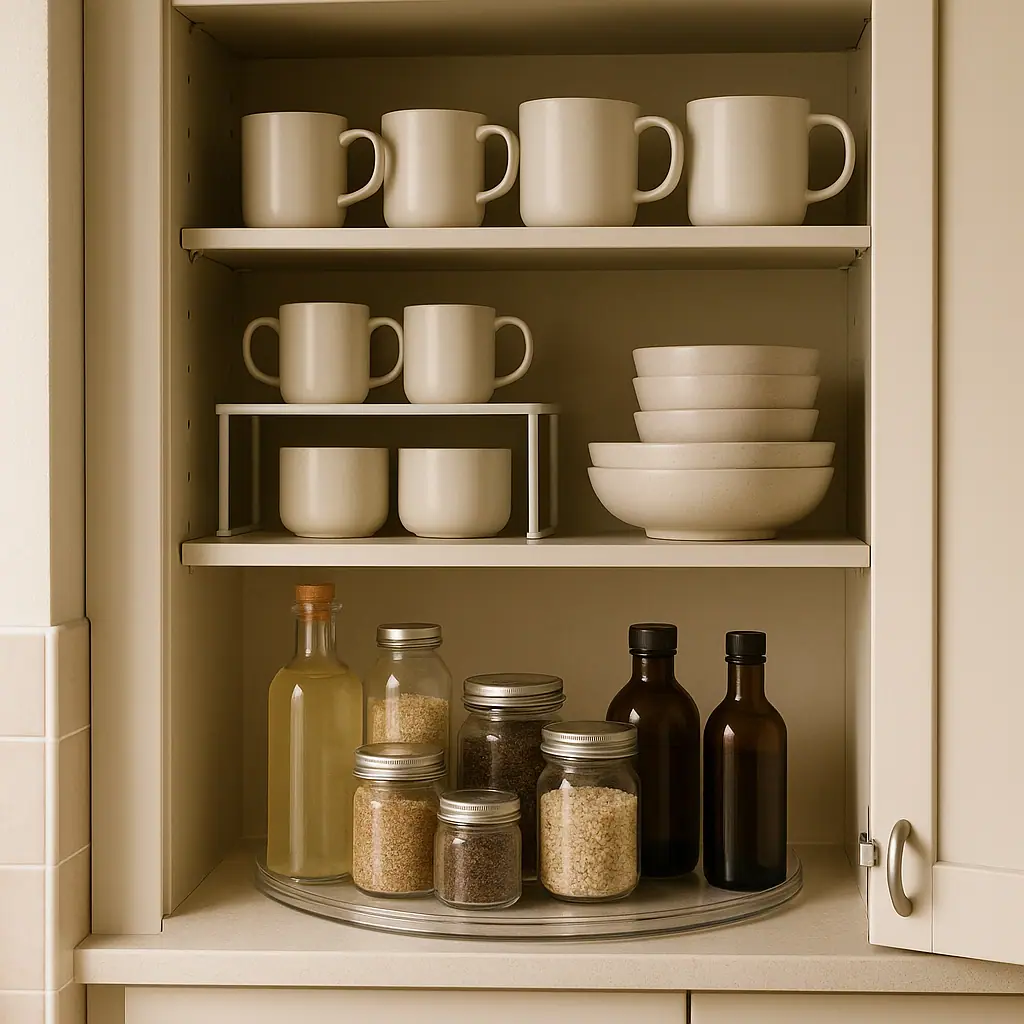
A shelf riser creates a second level. It works best when you have short, steady items that can sit in rows: mugs, bowls, small plates, canned goods, tea boxes, or low food containers. A lazy Susan creates rotation. It works best when items are narrow, upright, and easy to lose at the back of a cabinet.
Before buying either one, measure the cabinet width, depth, and shelf height. Then check the product instructions and support details for the organizer you choose. IKEA's product support page is a useful reminder that assembly guides and product-specific support should be consulted when a storage product has parts, limits, or setup steps: IKEA product support.
That check matters because small kitchens tempt people to stack more than a shelf or turntable is meant to handle. A tidy cabinet should still be easy to lift from, wipe down, and reset after grocery day.
Start With the Cabinet Problem You Actually Have
Do not start with the organizer that looks best online. Start by opening the cabinet and naming the friction point. The answer is usually visible after one normal week of cooking.
Choose shelf risers for wasted height
A shelf riser helps when the cabinet has enough vertical space but items are sitting in one flat layer. If mugs are spread across a tall shelf, or cans are blocking one another in a single row, a riser can turn unused height into a visible second tier.
Choose lazy Susans for hidden depth
A lazy Susan helps when items are easy to forget because they sit behind other items. Oils, vinegars, sauces, vitamins, baking extracts, spices, and small jars often work better on a turntable than on a riser because rotation brings the back forward.
- Use a riser when: items are short, stable, and similar in height.
- Use a lazy Susan when: items are narrow, upright, and often hidden at the back.
- Avoid both when: the cabinet is already packed tightly and needs editing first.
- Measure first: leave enough room for your hand to lift items out without scraping the shelf above.
What to Check Before Buying Shelf Risers or Lazy Susans
Shelf risers vs lazy Susans for small kitchen cabinets is partly a space decision and partly a maintenance decision. The best organizer is the one you can keep using after the first tidy afternoon.
Check dimensions and clearance
For a shelf riser, measure the cabinet shelf height and the height of the items that will sit below and above it. A riser that technically fits may still be annoying if mugs cannot clear the upper shelf or cans must be tilted sideways.
For a lazy Susan, measure the cabinet depth and door opening. A round turntable can waste corner space in a narrow cabinet, while a kidney-shaped or divided turntable may work better in deeper corners. Make sure the turntable can spin without hitting hinges, shelf pins, pipes, or cabinet lips.
Check weight and stability
Keep heavy glass, tall bottles, and dense canned goods low and easy to control. If you are using a freestanding shelf unit, tall furniture, or a separate storage cabinet near the kitchen, follow manufacturer instructions and think about stability. The Consumer Product Safety Commission's Anchor It guidance emphasizes following manufacturer instructions and securing top-heavy furniture when tip-over risk is relevant: CPSC Anchor It safety guidance.
Inside a normal cabinet, the same conservative habit still helps: avoid top-heavy stacks, do not overload small add-on organizers, and keep anything breakable where it can be lifted with two steady hands.
How to Decide Step by Step
Use this small test before buying anything. It takes less time than returning the wrong organizer.
- Empty one cabinet shelf. Do not reorganize the whole kitchen. Work with the cabinet that creates the most daily frustration.
- Group the items by shape. Put short stable items together, then put tall bottles and small jars together.
- Name the main problem. If empty height is the problem, test a riser. If hidden depth is the problem, test a lazy Susan.
- Measure the usable space. Include hinges, shelf lips, pipes, and the height of the items you use most.
- Do a cardboard test. Use a box, tray, or plate to mimic a second level or turntable footprint before buying.
- Keep one hand's width of access. If you cannot reach and lift comfortably, the organizer is too tight.
- Test for one grocery cycle. The right choice should still feel clear after new food comes home.
Shelf Risers vs Lazy Susans: Pros and Cons
Both options can be useful in small kitchen cabinets, but they create different habits. A riser rewards neat rows and steady stacking. A lazy Susan rewards categories that rotate together.
Shelf risers use vertical space
They can make short dishes, mugs, cans, and containers easier to see when cabinet height is being wasted.
Lazy Susans improve back-cabinet access
They bring small bottles and jars forward without forcing you to unload the whole shelf.
Both can be renter-friendly
Most versions sit inside the cabinet without drilling, which makes them useful for apartments and shared homes.
Risers can create awkward stacks
If the shelf is too short or items vary too much in height, a riser can make the cabinet harder to use.
Lazy Susans can waste corner space
A round turntable may leave unused gaps in a rectangular cabinet, especially if the items are large or square.
Common Kitchen Cabinet Mistakes to Avoid
The biggest mistake is buying both products before editing the cabinet. Shelf risers and lazy Susans work better after duplicates, expired food, chipped mugs, and rarely used gadgets are removed.
Another mistake is treating a riser like permission to stack endlessly. A second level is helpful only when each item still has a clear path out of the cabinet. If you must lift a stack of bowls to reach one saucer, the riser is doing too much.
Lazy Susans have their own trap. They can become round junk drawers when unrelated items share one turntable. Keep each turntable to one category, such as cooking oils, baking bottles, breakfast spreads, or spice jars.
A Simple Cabinet Checklist
Use this checklist when the cabinet starts feeling crowded again.
- Is the problem height or depth? Height points toward a shelf riser; depth points toward a lazy Susan.
- Can every item come out in one motion? If not, remove items or choose a smaller organizer.
- Are heavy items low? Keep dense cans, glass, and large bottles where they are easy to control.
- Does the organizer match one category? Mixed categories make both risers and turntables harder to reset.
- Can the shelf be wiped down? Leave enough space to clean crumbs, spills, and sticky rings.
- Will it survive grocery day? The system needs room for one normal restock without collapsing into clutter.
Frequently Asked Questions
Are shelf risers or lazy Susans better for small kitchen cabinets?
Neither is always better. Shelf risers are better for wasted vertical space and stable short items. Lazy Susans are better for deep shelves where small bottles and jars get hidden.
Can I use both in the same cabinet?
Sometimes, but only if the cabinet is wide and tall enough. In many small cabinets, using both creates too many layers. Try one solution first and test it for a week.
What should I measure before buying?
Measure cabinet width, depth, shelf height, door opening, and the height of the items you plan to store. Also check the organizer's product instructions for setup and use limits.
How often should I reset cabinet organizers?
A quick reset after grocery day is usually enough. Wipe the shelf, remove duplicates, return each category to its own zone, and check whether the organizer still saves movement.
Final Thoughts
Shelf risers vs lazy Susans for small kitchen cabinets is a practical choice, not a decorating contest. Choose the tool that solves the cabinet's real problem: risers for unused height, lazy Susans for hidden depth.
Start with one shelf, measure carefully, and test the category before buying more. A calm cabinet is not the fullest cabinet. It is the one where daily items are visible, steady, and easy to return.