Learning how to organize shoes in a small closet starts with one calm decision: the closet should support the shoes you actually wear, not store every pair in the same priority position. When shoes are stacked in a floor pile, hidden under hanging clothes, or spread across the apartment entry, the closet becomes harder to reset each week.
The best small-closet shoe system is simple to see, easy to clean, and honest about space. It gives daily shoes the easiest reach, keeps occasional shoes protected, and leaves enough floor clearance that the closet door and hanging clothes still work normally.
Why Shoe Storage Matters in a Small Closet
Shoes bring extra friction into a closet because they are bulky, shaped differently, and often used at different speeds. Sneakers, work shoes, sandals, boots, dress shoes, and slippers do not need the same kind of access. If they all share one crowded floor zone, the pairs you wear most often usually end up blocking everything else.
A better shoe system protects your morning routine. You should be able to open the closet, see the first few choices, pull one pair out, and return it without moving a stack. That is the real measure of a small-closet setup: not how many pairs it can technically hold, but how easy it is to keep using.
Start With Closet Systems and Wardrobe Storage Basics
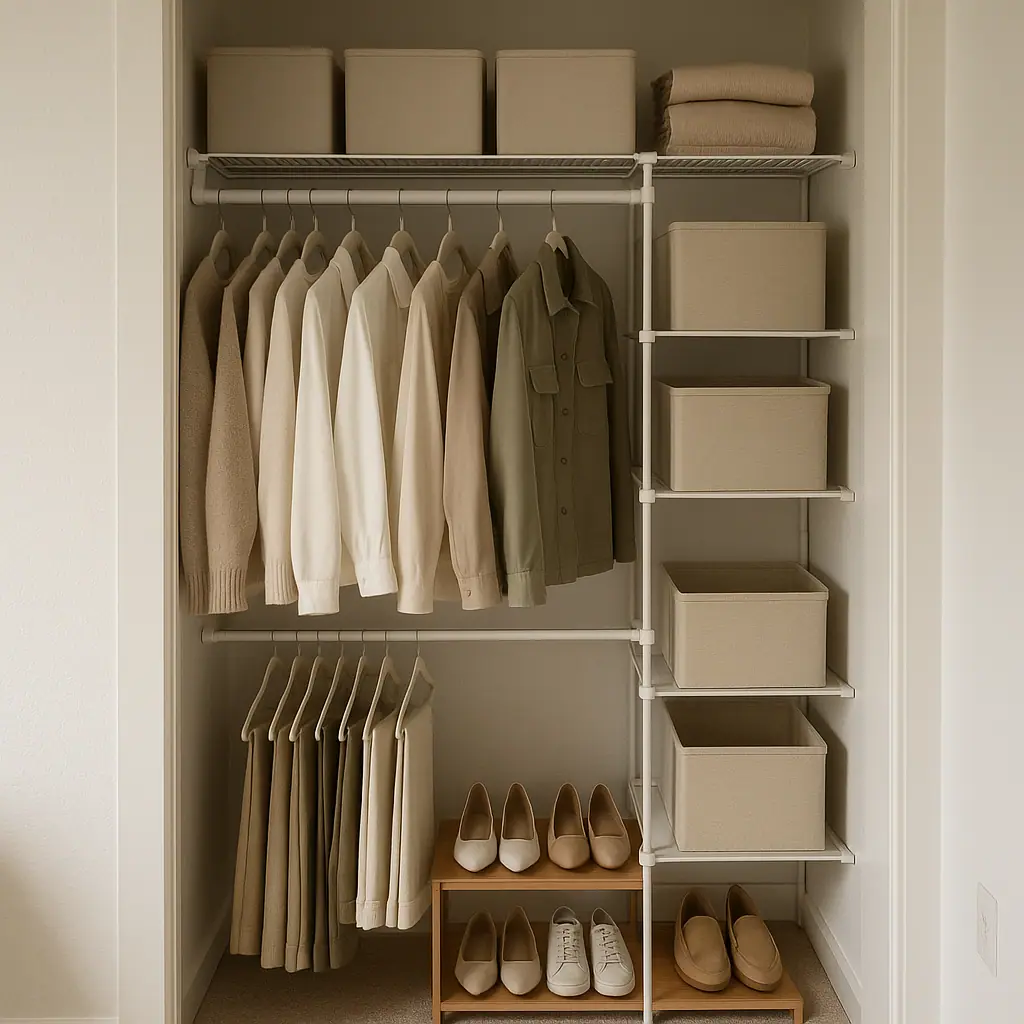
Before choosing a product, divide your closet into three simple storage levels: floor, shelf, and door. The floor is best for daily shoes or low-profile racks. Shelves work well for lighter, less-used pairs in bins or boxes. The door can help with slim shoes, but only if it closes cleanly and does not scrape the frame.
Use the easiest zone for weekly shoes
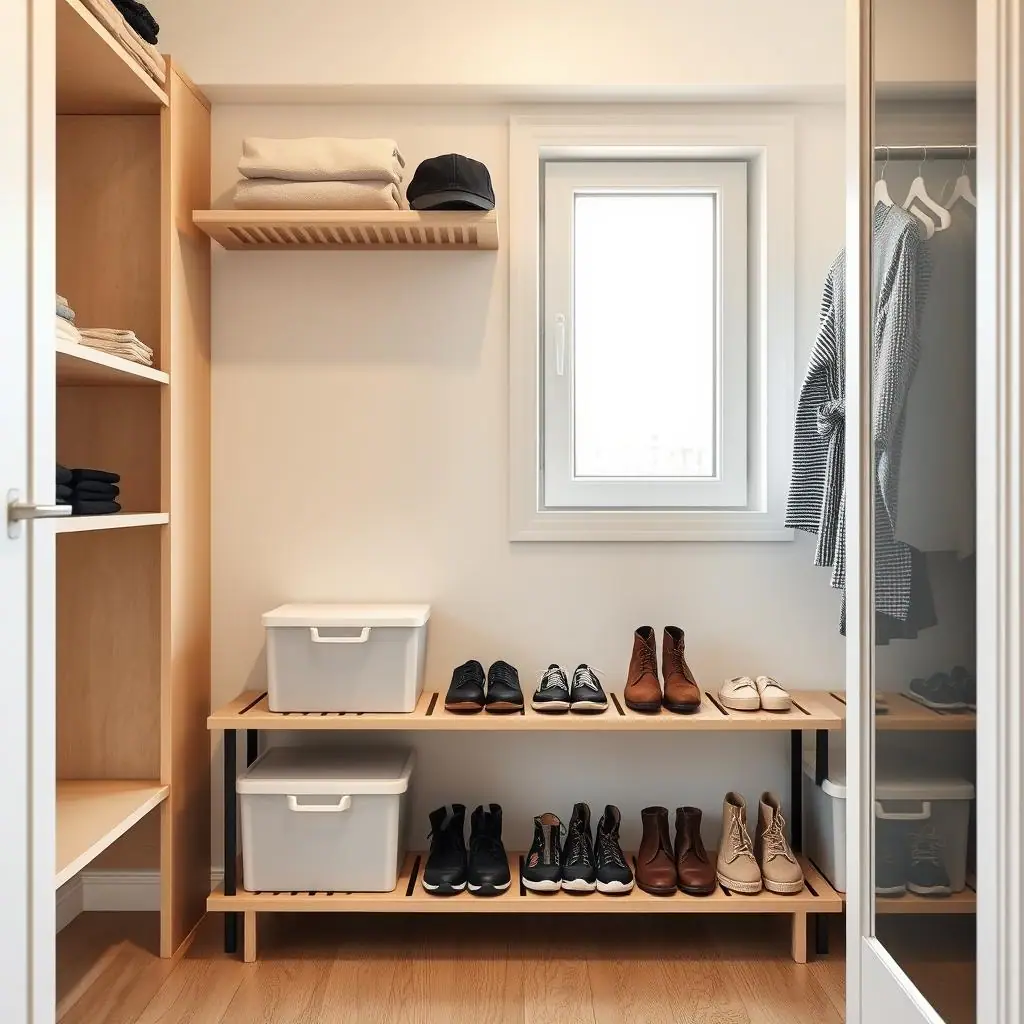
Your weekly shoes deserve the clearest storage. For many small closets, that means one low rack, one row of pairs on the floor, or a shallow bin that slides out. Keep this zone limited to the shoes you reach often so the system stays quick.
Move occasional shoes out of the traffic lane
Dress shoes, seasonal sandals, backup sneakers, or special-event shoes can live higher, deeper, or in labeled containers. They should still be findable, but they do not need to sit in the first row every day.
What to Check First for How to Organize Shoes in a Small Closet
Start by measuring the closet floor width, depth, and door clearance. A shoe rack that fits the width may still be frustrating if it blocks hanging clothes or stops the door from closing. Check the height under your shortest hanging garments, too; long coats and dresses can make a tall shoe rack impractical.
If you plan to use a tall freestanding rack, stacked cubbies, or storage furniture near children or pets, think about stability before capacity. The U.S. Consumer Product Safety Commission's Anchor It furniture safety guidance is a useful reminder to treat tall storage and tip-over risk seriously. For any specific organizer, follow the manufacturer's assembly instructions, weight limits, and anchoring guidance instead of guessing.
Also check your lease before installing anything permanent. ShelfCalm's renter-friendly default is to use removable systems first: freestanding low racks, over-door organizers that do not damage trim, clear boxes, or shelf dividers that do not require drilling.
How to Organize Shoes in a Small Closet Step by Step
- Empty only the shoe area: pull shoes from the closet floor, door, and nearby overflow spots, but do not empty the entire closet at once.
- Sort by current use: make groups for weekly shoes, occasional shoes, seasonal shoes, repair or cleaning, and shoes to donate or discard.
- Pair everything: match pairs before deciding on storage. Single shoes, damaged soles, or uncomfortable pairs should not take the best space.
- Choose one daily access zone: keep your most-used pairs in the easiest location, usually the lower front area of the closet.
- Use vertical storage carefully: add a low two-tier rack or slim cubbies only if they fit under hanging clothes without crushing fabric.
- Protect occasional shoes: use clear boxes, labeled fabric bins, or original boxes with a simple label for shoes you wear less often.
- Leave a landing space: keep a few inches of open floor or shelf space so returning shoes is not a puzzle.
- Set a reset day: once a week, return stray pairs to the closet and remove anything that migrated to the floor pile.
Storage Options That Work in Tight Closets
Low shoe racks are usually the easiest first choice because they keep pairs visible and do not require permanent installation. Look for a rack that fits the shoes you own, not just the number printed on the package. Boots, high-top sneakers, and bulky athletic shoes may need more height than slim flats.
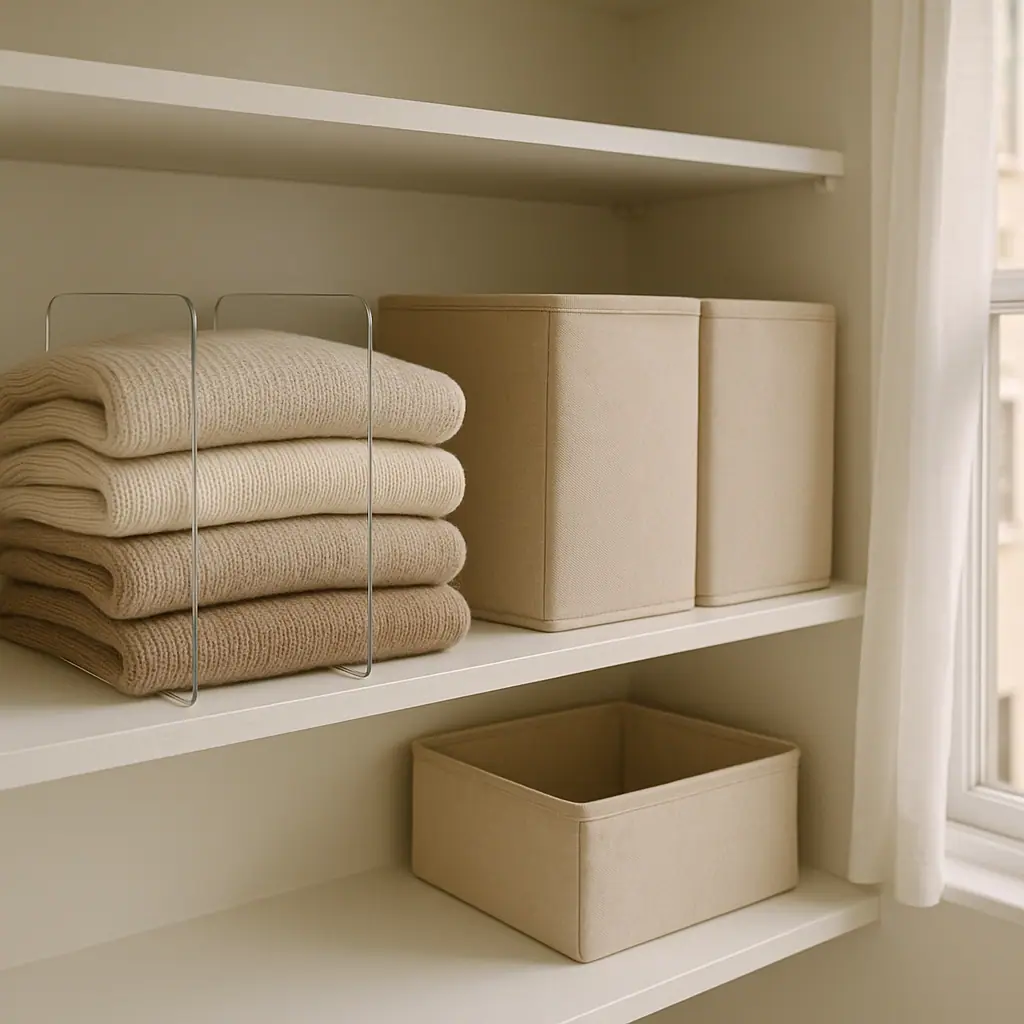
Clear shoe boxes help when occasional shoes need dust protection, but they work best when stacked only as high as you can reach comfortably. Over-door organizers can be useful for sandals, flats, slippers, and light sneakers. They are less calm when they bulge into the closet, make the door hard to close, or hide shoes behind hanging clothes.
Common Closet Systems and Wardrobe Storage Mistakes to Avoid
The first mistake is buying a large organizer before editing the shoe count. More storage can make clutter look official. Edit first, then choose the smallest system that gives each remaining pair a clear home.
The second mistake is storing heavy shoes too high. Boots and dense sneakers are easier to handle on the floor or a lower shelf. Higher shelves are better for lightweight, occasional pairs in clearly labeled boxes.
The third mistake is hiding daily shoes in closed bins. Closed storage looks tidy for a photo, but if the lid slows you down every morning, the shoes will probably return to the floor. Use closed storage for less-used shoes and open access for daily pairs.
Pros and Cons of Small-Closet Shoe Storage Options
Fast daily access
Open rows make it easy to see weekly shoes and return them without opening boxes or moving stacks.
Easy to clean under
A simple rack can be lifted or moved during a weekly closet reset, which helps with dust and grit.
Can look crowded
If every pair is visible, the closet may still feel busy unless you limit the daily zone.
Better for occasional pairs
Clear boxes and labeled bins protect dress shoes, seasonal sandals, and backup pairs from dust.
Uses overlooked space
A door organizer or upper shelf can move light shoes out of the floor zone.
Can slow the routine
Too many lids, pockets, or stacked boxes can make daily shoes harder to reach and easier to abandon elsewhere.
A Simple Shoe Closet Checklist
- Weekly pairs visible: keep the shoes you wear most in the easiest zone.
- Occasional pairs labeled: use boxes or bins only when the label is clear enough to find later.
- Heavy shoes low: store boots and dense sneakers where they are easy to lift safely.
- Door closes cleanly: test over-door storage before committing to it.
- No mystery pile: give each pair a place or remove it from the closet.
- Reset weekly: return stray pairs and wipe the floor before the pile rebuilds.
When to Get Extra Help
Get extra help if the shoe area depends on a tall freestanding unit, a high shelf, or a heavy organizer that feels unstable. It is better to ask someone to help measure, assemble, or move the piece than to force a setup that wobbles or blocks normal closet use.
You should also pause before using adhesive shelves, wall-mounted rails, or hardware in a rental. Check the lease, product instructions, and surface limits first. A shoe system should make the closet calmer without creating a repair problem later.
Frequently Asked Questions
What should I check first before organizing shoes in a small closet?
Check the closet floor width, door clearance, and the height under hanging clothes. Then count the shoes you actually wear each week.
How often should I review shoe storage?
A quick weekly reset is enough for most closets. Do a deeper edit at the start of each season when shoe needs change.
Are shoe boxes better than a rack?
Boxes are better for occasional or delicate shoes. A rack is usually better for daily shoes because it keeps pairs visible and easy to return.
Can I change the system later?
Yes. Start with a low-risk setup, use it for two weeks, and adjust if the daily shoes still end up outside the closet.
Final Thoughts
The calm way to organize shoes in a small closet is to match access to real use. Keep weekly shoes visible, move occasional shoes into labeled storage, keep heavy pairs low, and leave enough open space that returning shoes feels easy.
Start with one shelf or one floor row today. If that small zone stays clear for a week, you have a system worth building on.