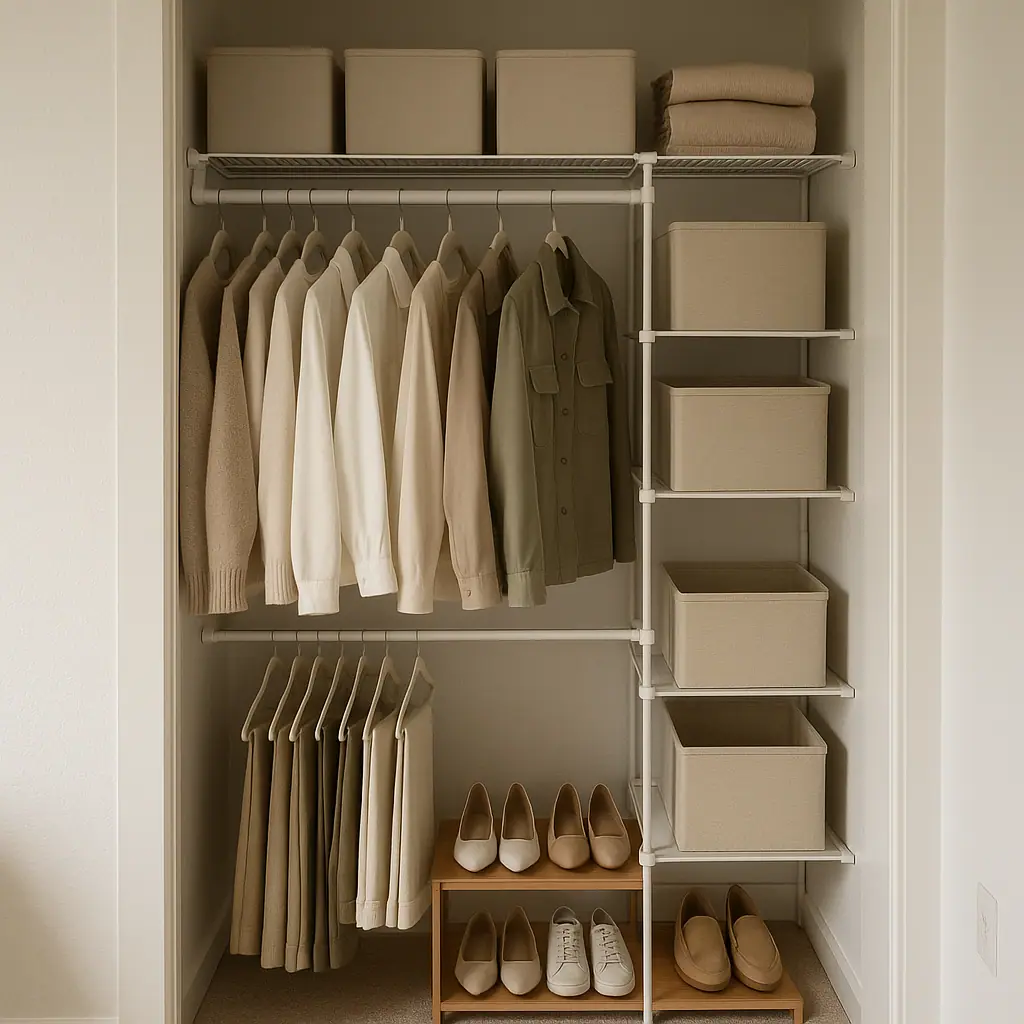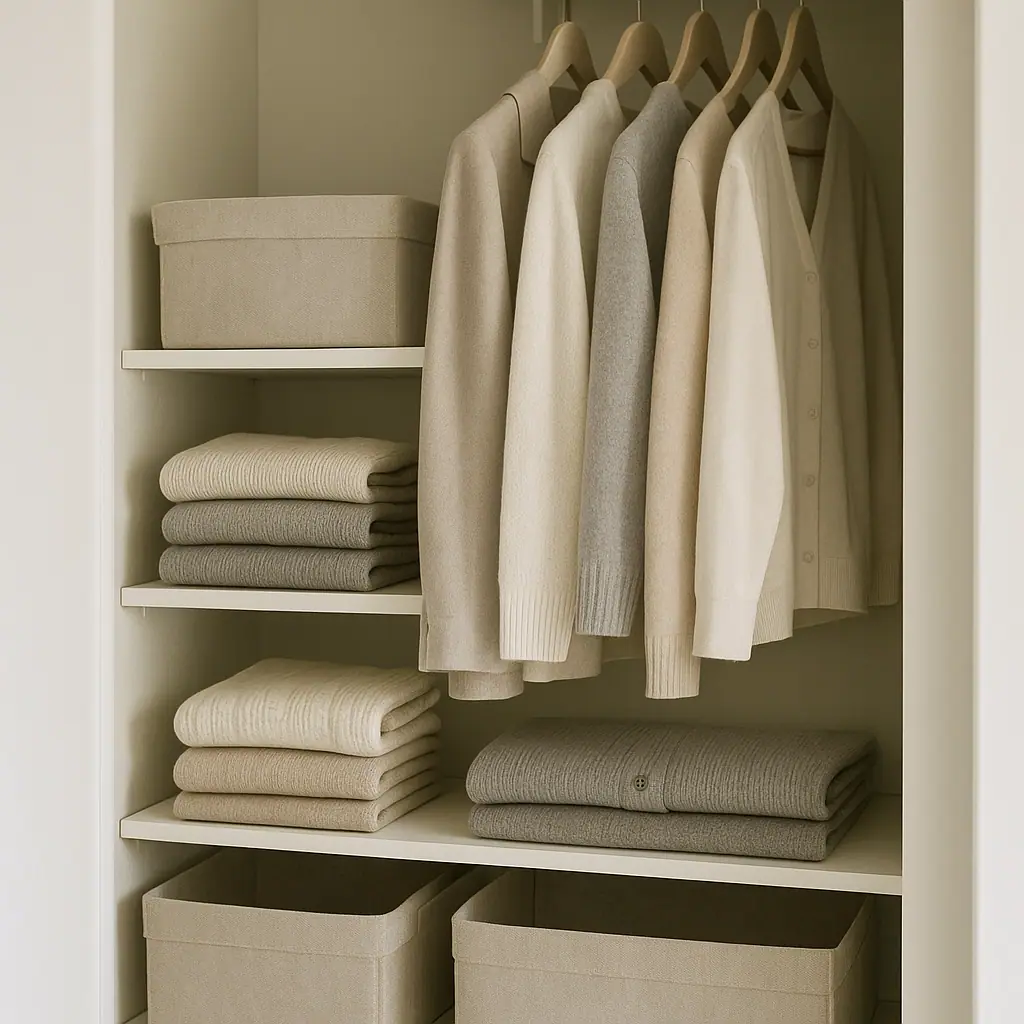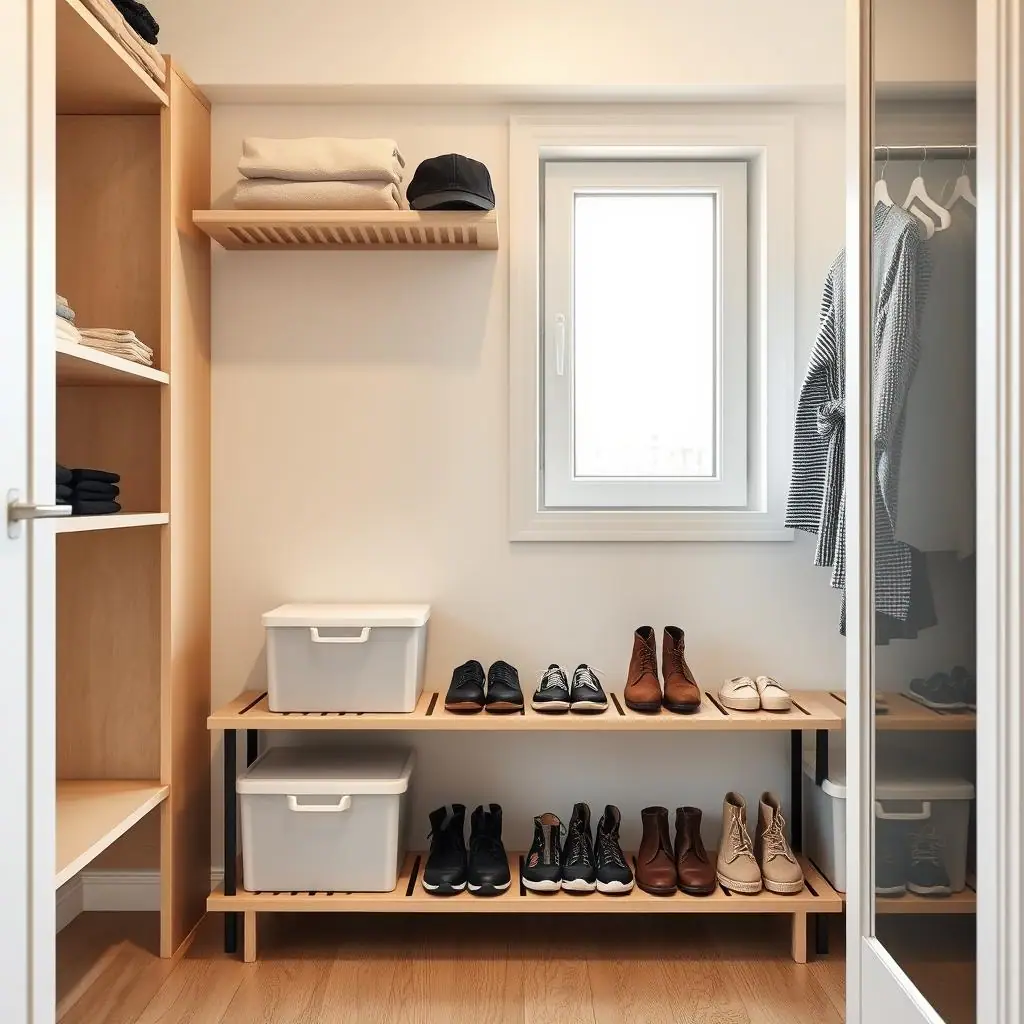
Shelf dividers vs storage bins for closet shelves is not really a question of which product is best. It is a question of what job that shelf needs to do every week. In a small apartment closet, the wrong container can make a shelf look tidy for one afternoon and frustrating again by laundry day.
The calmer choice starts with the items themselves. Folded sweaters, jeans, towels, handbags, seasonal accessories, and mixed small items each behave differently on an open shelf. A divider creates lanes. A bin creates a container. Once you know which problem you are solving, the decision becomes much easier.
Why Shelf Dividers vs Storage Bins for Closet Shelves Matters
Closet shelves often become the overflow zone for everything that does not have a drawer. That is why a shelf can look organized while still being hard to use. If every stack leans into the next stack, you spend time rebuilding piles. If every item disappears into an unlabeled bin, you spend time searching.
The right choice protects the shelf from two common problems: visual clutter and daily friction. A divider keeps a category visible and upright. A bin hides visual noise and lets you pull a whole group forward. Neither option fixes overstuffing by itself, so the first step is to reduce the shelf to what actually belongs there.
Start With the Shelf Job
Before buying anything, empty one shelf and give it a single purpose. A small closet usually works better when each shelf has a plain job such as daily knits, extra linens, workout clothes, handbags, or off-season accessories. The clearer the job, the easier it is to choose between shelf dividers and storage bins.
Choose dividers for visible stacks
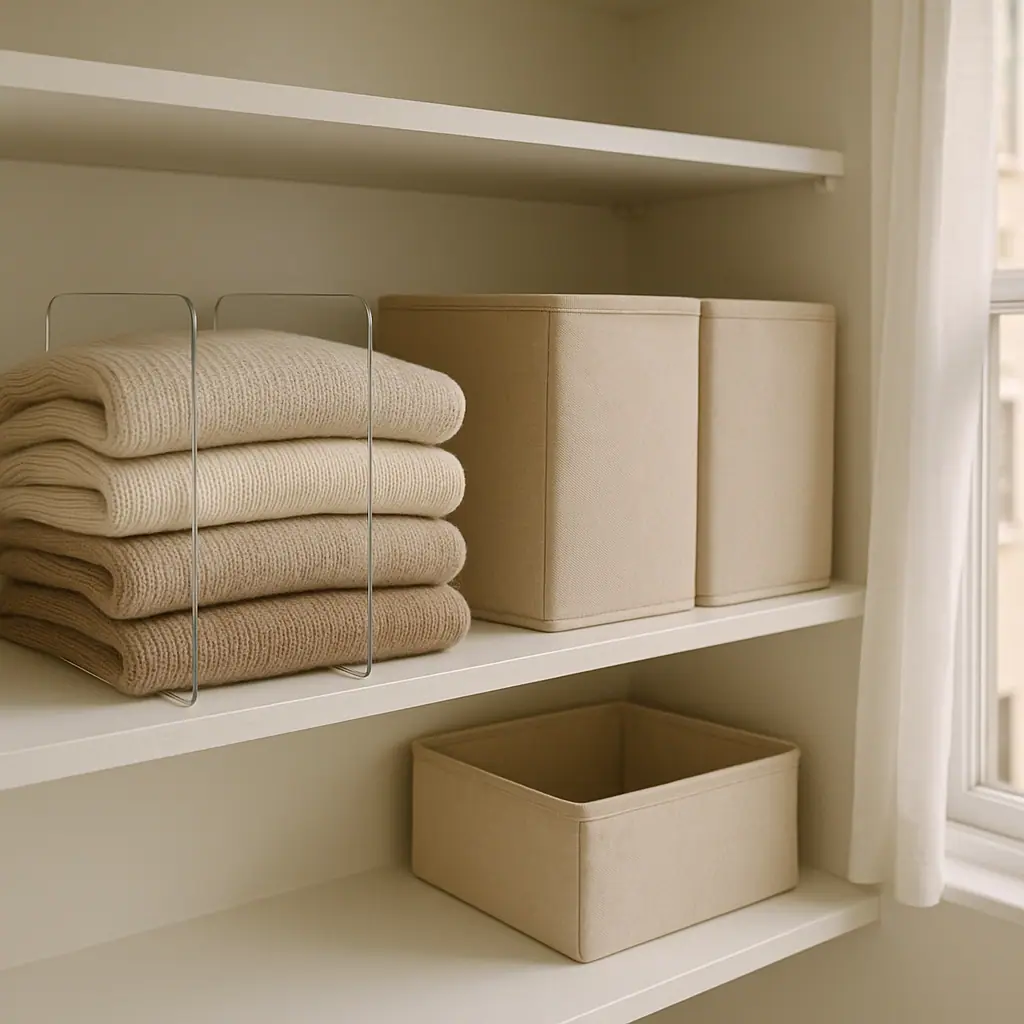
Shelf dividers work best when you want to see the category at a glance. They are useful for sweaters, folded denim, towels, sheets, small bags, or clutches that can stand in rows. The divider acts like a bookend, so one stack does not slide into another.
Choose bins for grouped storage
Storage bins work better when the shelf holds several small things that naturally scatter. Scarves, belts, hats, swimwear, extra socks, seasonal gloves, or spare bedding accessories are easier to manage as a group. A bin also helps when the shelf is high and you need to pull items down carefully instead of reaching behind other stacks.
What to Check First for Closet Shelves
Start with measurements, not product photos. Measure shelf width, depth, and usable height. Then check whether the shelf is fixed, adjustable, wire, wood, or laminate. Some dividers grip solid shelves better than wire shelves, while some bins waste space if they are too deep to pull out smoothly.
Also look at the furniture itself. Heavy storage should stay low, and tall furniture should be stable before you add more weight to upper shelves. For general furniture stability awareness, the Consumer Product Safety Commission's Anchor It safety campaign is a useful reference before you create any top-heavy storage setup.
That does not mean every closet shelf needs special hardware. It means you should avoid guessing about weight, balance, or shelf limits. If a product includes manufacturer instructions, follow those limits before loading bins with heavy items.
How to Decide Step by Step
- Sort the shelf into categories: keep only items that belong on that shelf, then group them by use.
- Test visibility: if you need to see each stack quickly, lean toward dividers.
- Test containment: if the items are small, loose, or seasonal, lean toward bins.
- Check reach: high shelves usually need lightweight bins with easy handles, not heavy containers.
- Leave breathing room: keep a little open space so the system can survive laundry day.
- Review after one week: if items return to the wrong place, the category may be too broad.
Common Closet Storage Mistakes to Avoid
The first mistake is using bins to hide a decision. A bin labeled miscellaneous becomes a junk drawer on a shelf. If a bin does not have a clear category, it will collect whatever is nearby.
The second mistake is using dividers for unstable piles. If clothes are too soft, too tall, or too overfilled, dividers may only create narrow leaning towers. Reduce the stack height or switch to a bin that can support the group.
The third mistake is buying matching sets before testing the shelf. One sample divider or one sample bin can tell you more than a full closet system. Live with the test for a few days, then repeat what works.
A Simple Comparison
Best for visible categories
They keep folded stacks, handbags, and linens separated without hiding what you own.
Easy to scan
You can see when a stack is getting too tall or when a category needs a reset.
Less useful for loose items
Small accessories can slip around unless they are contained in a smaller organizer.
Best for grouped clutter
They contain scarves, belts, off-season pieces, and mixed accessories in one pull-out zone.
Good for high shelves
Lightweight bins with handles make upper shelves easier to use when the contents are not heavy.
Can hide too much
Opaque bins need clear labels or they become places where forgotten items collect.
A Simple Checklist
- Use dividers if: the items are folded, visible, and used often.
- Use bins if: the items are loose, seasonal, or easier to move as a group.
- Use clear or labeled bins if: the shelf holds items you forget easily.
- Avoid heavy bins up high: keep weight low and easy to control.
- Review weekly: reset the shelf when laundry, groceries, or seasonal changes create overflow.
When to Get Extra Help
If the shelf is part of freestanding furniture, the closet system feels unstable, or you want to store heavy items above shoulder height, pause before loading it. Check product instructions, lease limits, and manufacturer guidance. When in doubt, choose a lighter setup and keep heavier items lower.
You should also ask for help if you cannot safely reach the shelf without stretching. A calm closet is one you can maintain without awkward lifting, balancing, or guessing.
Frequently Asked Questions
What should I check first before choosing dividers or bins?
Check the shelf's measurements, the type of items you store there, and how often you need to reach them.
Are shelf dividers better than storage bins?
Not always. Dividers are better for visible stacks, while bins are better for loose or grouped items.
How often should I review a closet shelf system?
Review it after the first week, then again whenever laundry, seasons, or daily routines change what lands on the shelf.
Can I use both on the same shelf?
Yes. A shelf can use dividers for folded clothing on one side and one labeled bin for small accessories on the other.
Final Thoughts
The best answer to shelf dividers vs storage bins for closet shelves is the one that makes the shelf easier to use next week, not just neater today. Start with one shelf, choose one clear job, and test the smallest useful solution before buying a full set.