The best closet organizers for renters who cannot drill are usually the ones that add order without asking the wall, door, or shelf to do more than it safely can. A rental closet needs a softer approach: movable pieces, clear zones, and product choices that can leave with you when the lease ends.
That does not mean settling for a messy closet. A small reach-in closet, hallway closet, or wardrobe can work well with freestanding shelves, hanging organizers, over-door storage, tension solutions, shelf dividers, and bins chosen for one clear job at a time.
The calm rule is simple: solve the closet problem you actually have before buying a system. If shoes are covering the floor, fix the floor. If folded clothes are tipping over, fix the shelf. If the hanging rod is packed too tightly, fix the rail before adding more containers.
Why No-Drill Closet Organizers Matter in Rentals
Renters often have limits around drilling, anchors, permanent shelves, adhesive residue, and painted surfaces. Even when a product looks renter-friendly, the instructions may include surface limits, weight limits, or removal steps that matter later.
No-drill storage also keeps the closet flexible. If your wardrobe changes by season, if you share the closet with a roommate, or if you may move apartments, removable organizers are easier to adjust than a fixed system.
Safety still matters. Avoid stacking heavy items high, loading weak rods, or using tall freestanding pieces that can tip. For general furniture stability awareness, the U.S. Consumer Product Safety Commission's Anchor It guidance is a useful reference before placing tall storage in bedrooms, closets, or hallways.
Start With the Closet Problem, Not the Product
Before choosing closet organizers, look at what is actually failing. A rental closet may look like it needs a full makeover when it only needs two better zones.
If the rod is crowded
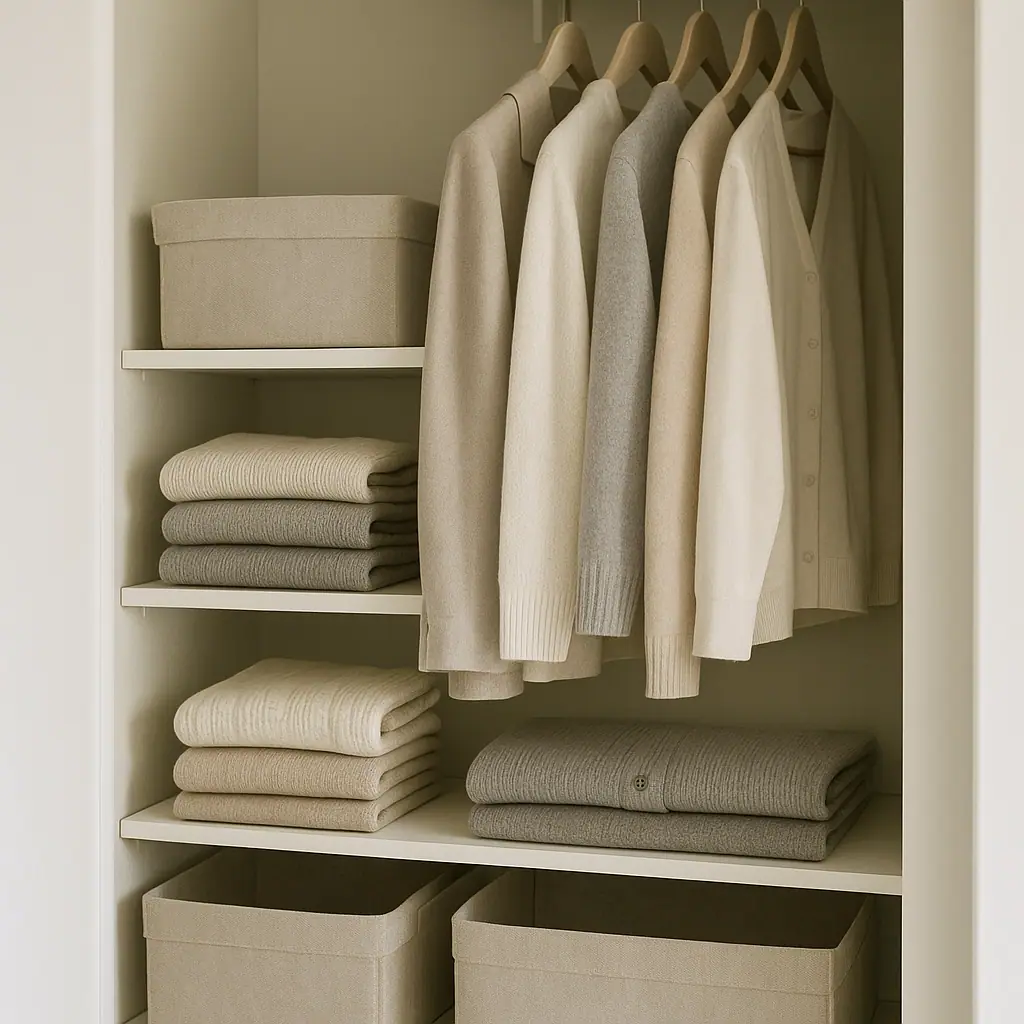
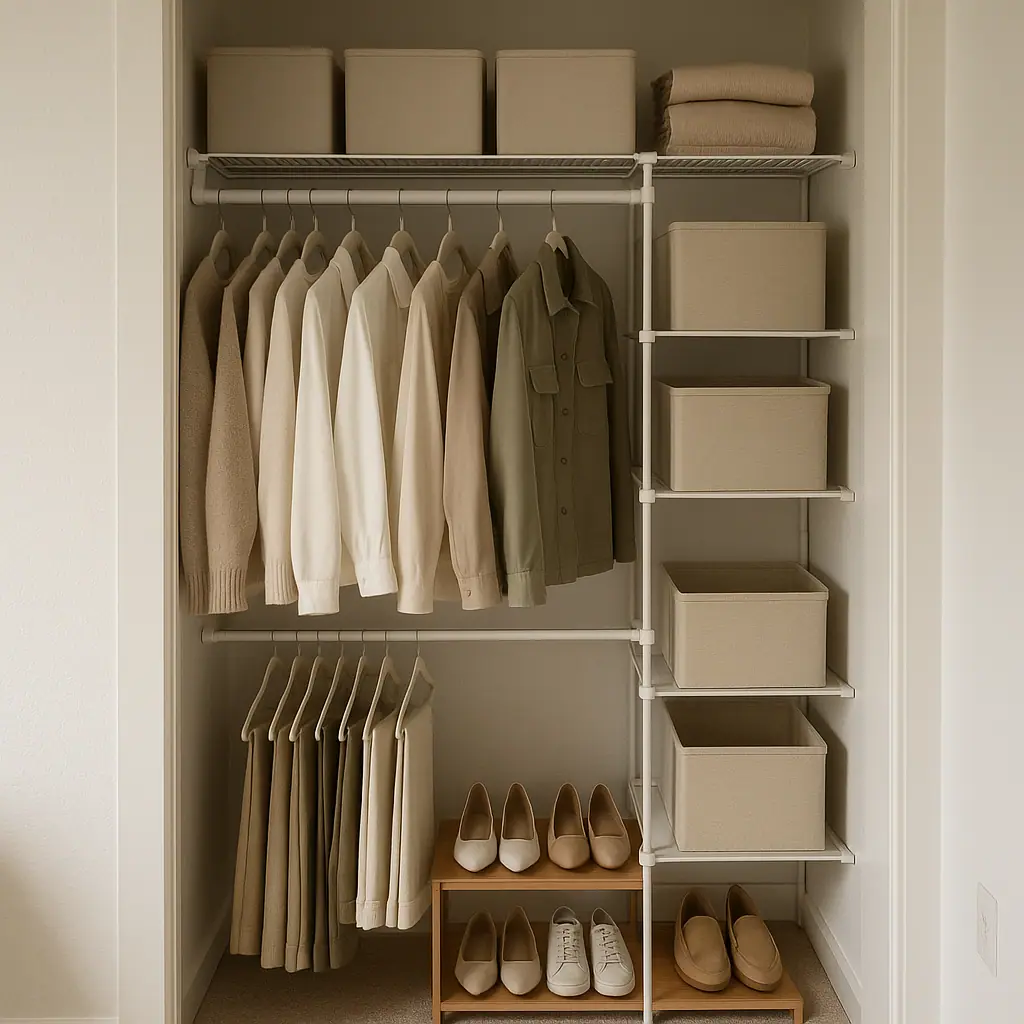
Start with slim matching hangers, fewer empty hangers, and a cleaner split between current clothing and occasional clothing. A hanging shelf can help with sweaters or soft accessories, but it also takes rod space, so use it only when folded storage is the main problem.
If the shelf is messy
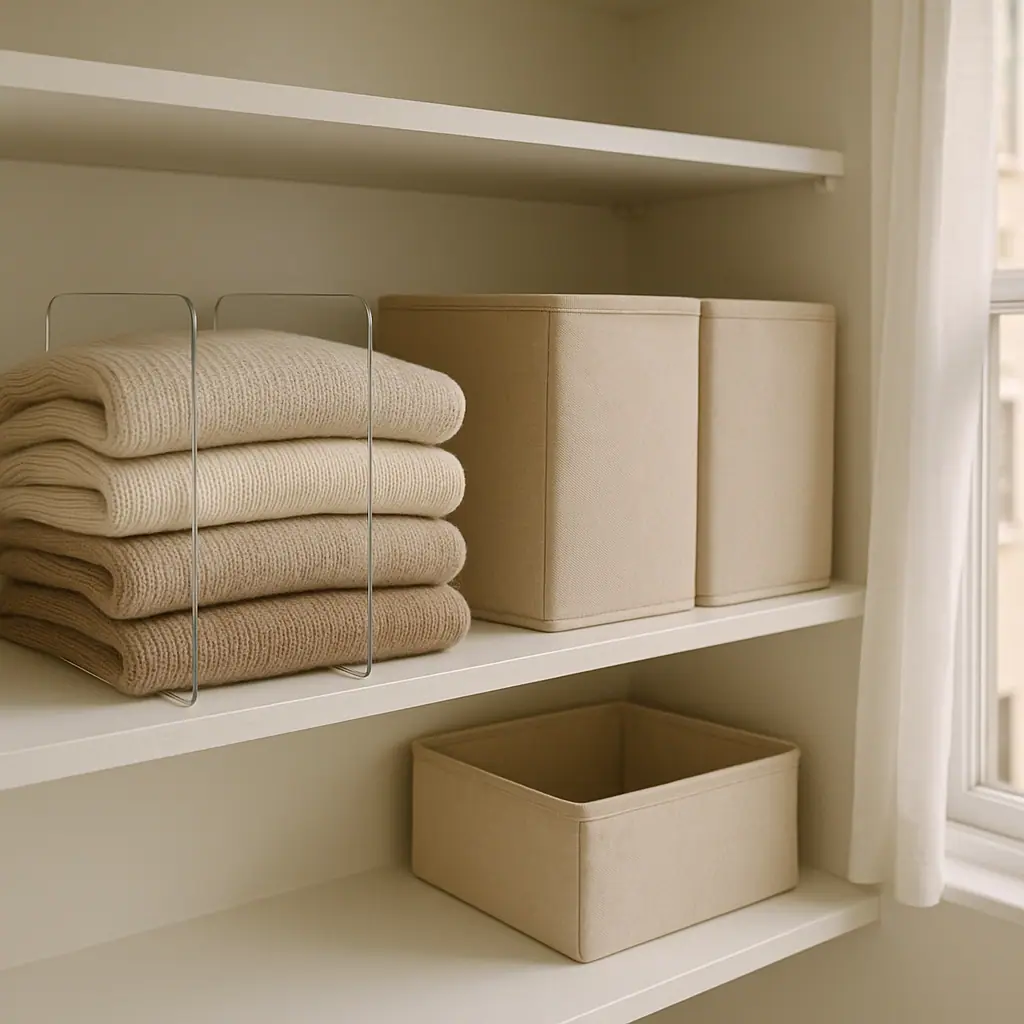
Use shelf dividers, low bins, or fabric boxes to stop piles from spreading. Clear bins make it easier to see categories, while soft bins can look calmer in an open closet. Keep heavy boxes low and light seasonal items higher.
If the floor is full
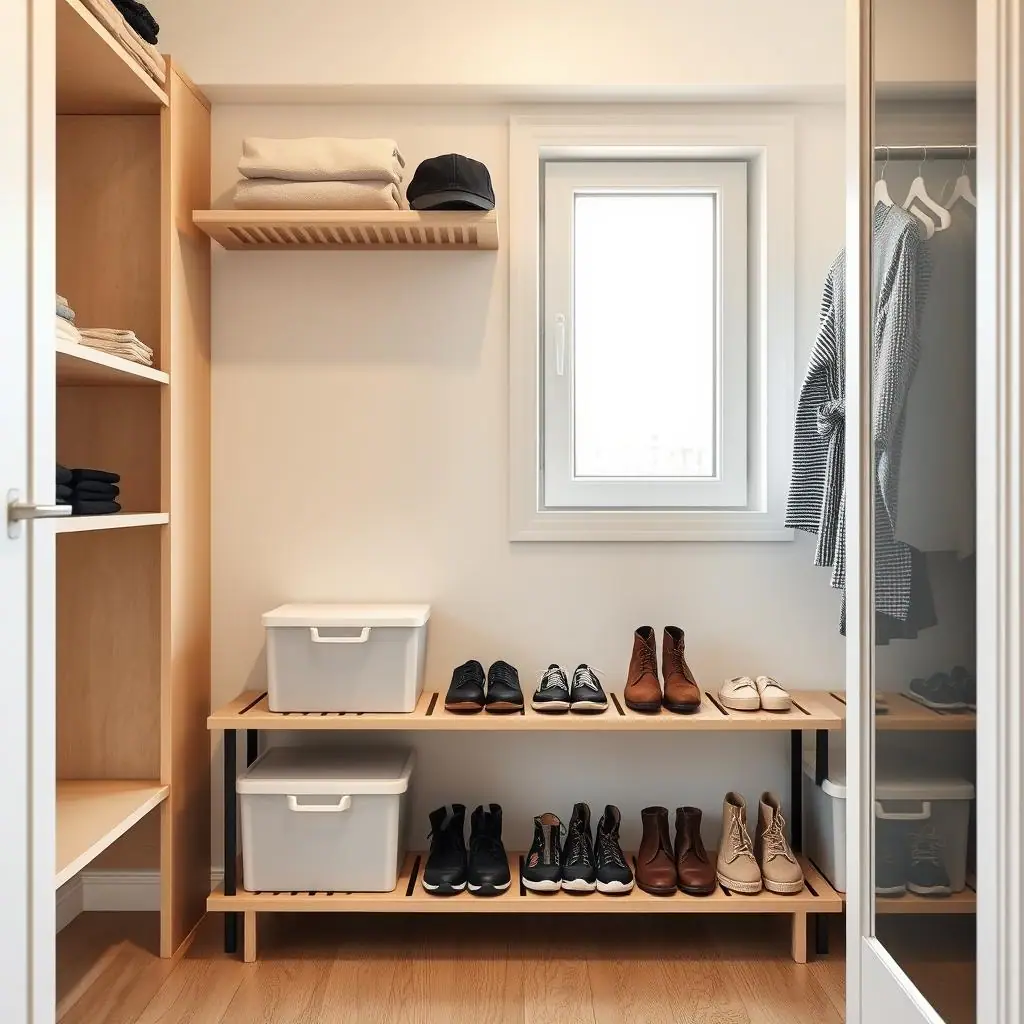
A low shoe rack, stackable shoe boxes, or one contained floor bin can make the closet easier to use. Leave enough space so sliding doors, hinged doors, or curtains still open without scraping storage.
If you are still deciding how much storage your closet should handle, ShelfCalm's guide to organizing a small reach-in closet step by step can help you map the rod, shelf, and floor before you shop.
The Best No-Drill Closet Organizer Types for Renters
These organizer types are useful because they work in many rentals and do not require permanent installation. The right choice depends on your closet dimensions, door style, and daily routine.
- Slim hangers: best for a crowded rail when you have already edited unused clothing. They create a cleaner line but should not be used as an excuse to overpack the rod.
- Hanging fabric shelves: best for sweaters, soft bags, scarves, or folded items when shelf space is limited. Choose a short version if the closet rod already carries heavy clothing.
- Shelf dividers: best for stacked jeans, sweaters, towels, or handbags that lean sideways. They work well on sturdy existing shelves and are easy to move later.
- Open bins: best for categories you touch often, such as workout clothes, winter accessories, or small bags. They are faster than lidded boxes for daily use.
- Clear lidded bins: best for seasonal or occasional storage. Use them for light items on upper shelves, not heavy items that are awkward to lift overhead.
- Low shoe racks: best for floor clutter. Measure the door swing and closet depth before buying so the rack does not block access.
- Over-door organizers: best when the closet door has enough clearance and the hooks do not interfere with closing. They work better for light accessories than for heavy packed pockets.
- Tension rods: best for lightweight categories or dividers in certain closet layouts. Check the product instructions and avoid using tension alone for heavy loads.
For renters trying to reduce storage pressure across the whole apartment, the guide to organizing a small apartment without buying more furniture can help you decide what belongs in the closet and what should move to another zone.
How to Choose Without Overbuying
A closet organizer is only helpful if it makes a repeated action easier. Use this sequence before you buy anything new.
- Measure the usable space: note shelf depth, rod width, floor depth, door clearance, and the height between the rod and floor.
- Name the main failure point: choose one problem, such as shoes spreading, sweaters tipping, or accessories disappearing.
- Pick the least permanent fix: try bins, hangers, dividers, or freestanding pieces before anything adhesive or mounted.
- Check the instructions: read load limits, surface notes, and removal guidance before using adhesive, tension, or over-door products.
- Test for one laundry cycle: if clean clothes return easily, the organizer is helping. If laundry piles up elsewhere, the system is too tight or too complicated.
Common Mistakes to Avoid
Buying a full system before editing
A closet full of unused clothes will not become easier just because the containers match. Edit first, then buy for the remaining categories.
Trusting adhesive products without checking surfaces
Adhesive hooks and shelves can be useful, but painted walls, textured surfaces, humidity, and weight can affect performance. Read the product instructions and lease rules before attaching anything.
Using over-door storage for heavy items
Over-door organizers are better for lightweight accessories, scarves, small bags, or flat shoes. Heavy pockets can strain the door, hinges, or organizer seams.
Filling every vertical inch
A small closet needs breathing room. If every shelf, rod, hook, and floor space is packed, the closet becomes harder to reset after laundry day.
Pros and Cons
Rental-friendly flexibility
Movable organizers can adjust as your wardrobe, lease, or closet layout changes.
Lower commitment
No-drill options let you test a storage idea before investing in a larger closet system.
Useful in future homes
Bins, dividers, hangers, and small racks can usually move with you to another apartment.
Weight limits matter
No-drill does not mean unlimited. Tension, adhesive, and over-door products all have limits that should be checked.
Some products steal usable space
Hanging shelves, door racks, and bulky bins can help one category while making another part of the closet harder to reach.
A Simple Renter Closet Checklist
- Can the organizer be removed cleanly? If not, check your lease before using it.
- Does it solve one named problem? Avoid buying a set because the closet feels generally messy.
- Is the weight low and stable? Keep heavy items near the floor and light items on upper shelves.
- Can the door still open normally? Test hinges, sliding tracks, and door clearance before loading organizers.
- Will laundry return easily? Leave enough open space for clothes after washing day.
Frequently Asked Questions
What should renters check first before buying closet organizers?
Check the lease, closet measurements, door clearance, and the product instructions. Then choose one organizer for the main problem instead of buying a full set immediately.
Are over-door closet organizers safe for rentals?
They can be useful for light items if the door closes properly and the organizer does not scrape trim or strain hinges. Avoid loading them with heavy products.
What should I do if I am not sure about a product limit?
Do not guess. Check the manufacturer's instructions and choose a lighter, freestanding, or lower-storage option if the limit is unclear.
Can I undo a no-drill closet setup later?
Most bins, racks, hangers, and shelf dividers are easy to remove. Adhesive and tension products need more care, so verify removal instructions before using them.
Final Thoughts
The best closet organizers for renters who cannot drill are practical, removable, and specific. Start with the closet's biggest friction point, choose the least permanent fix, and test it through one normal laundry cycle.
A calm rental closet does not need a custom system. It needs a clear rod, a useful shelf, a safer floor zone, and organizers that make daily routines easier without creating problems for the lease or the next apartment.