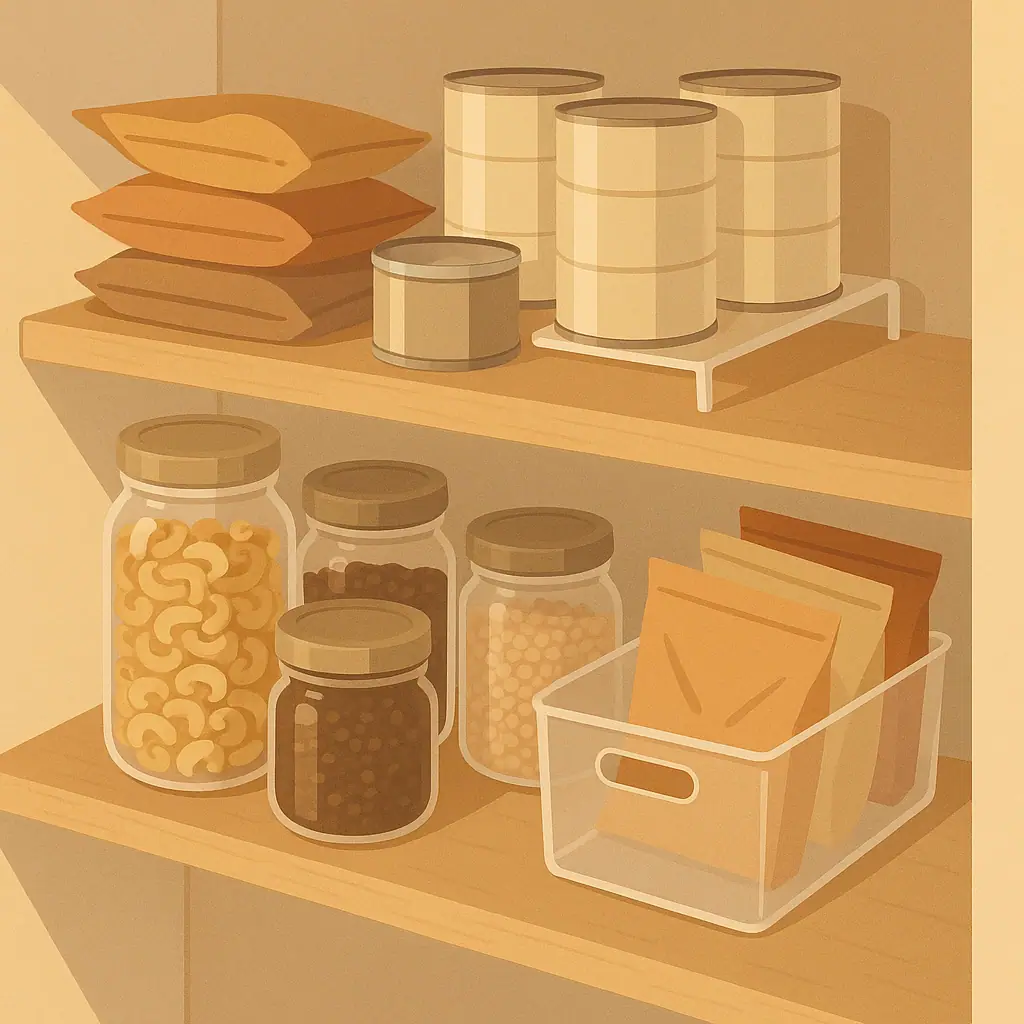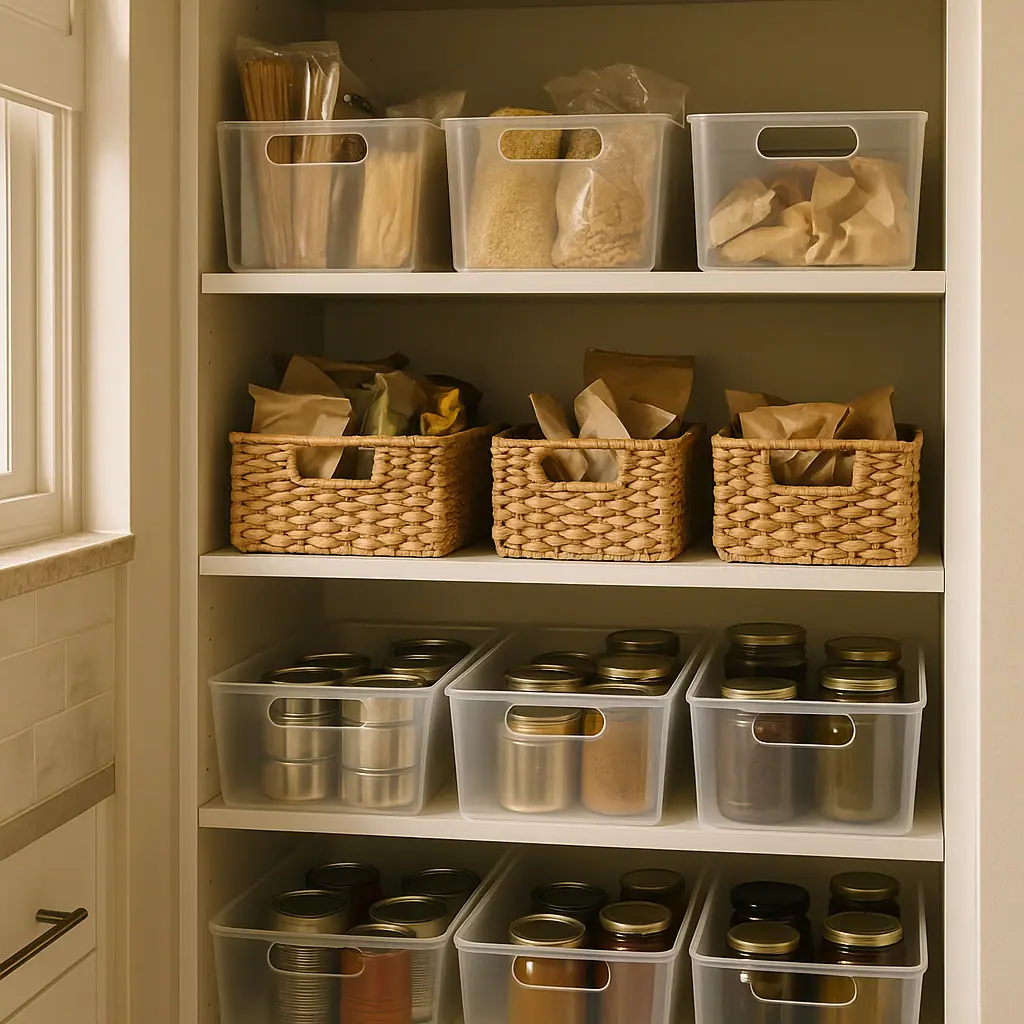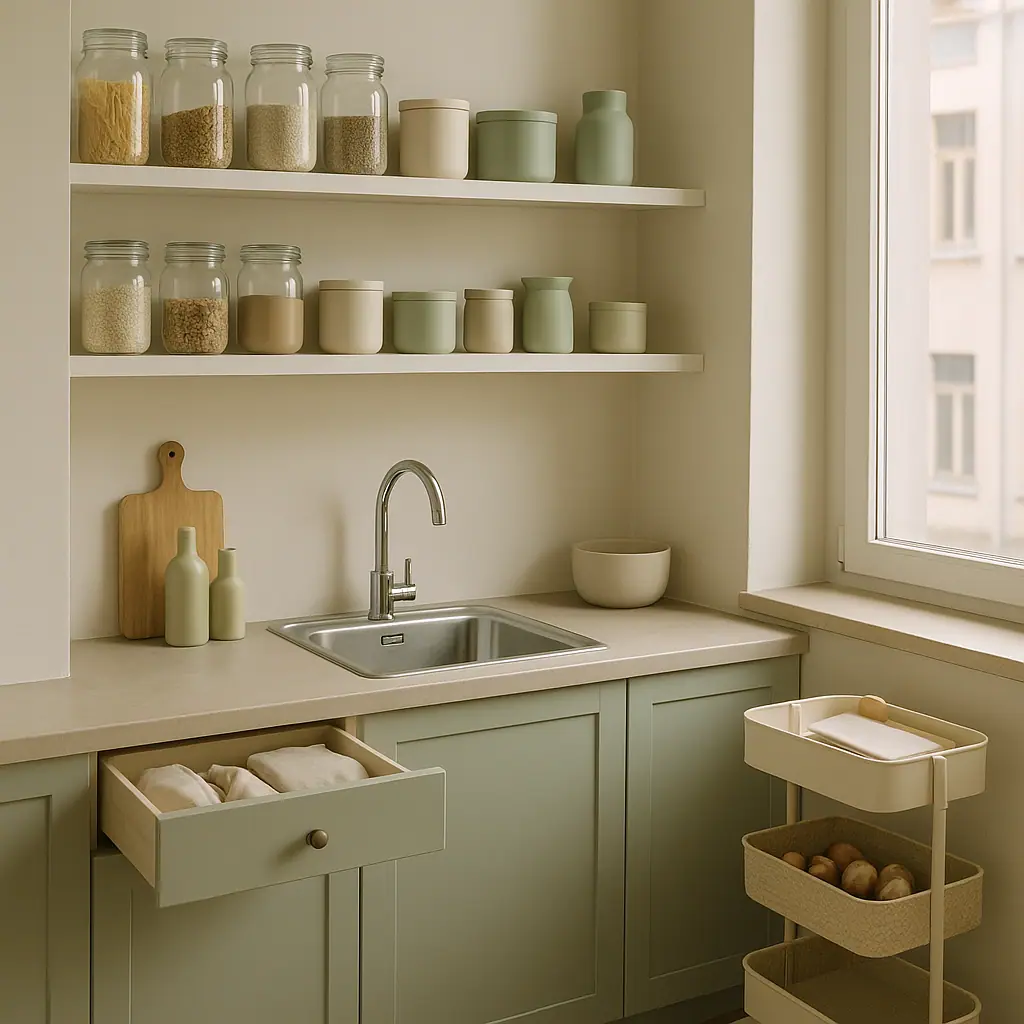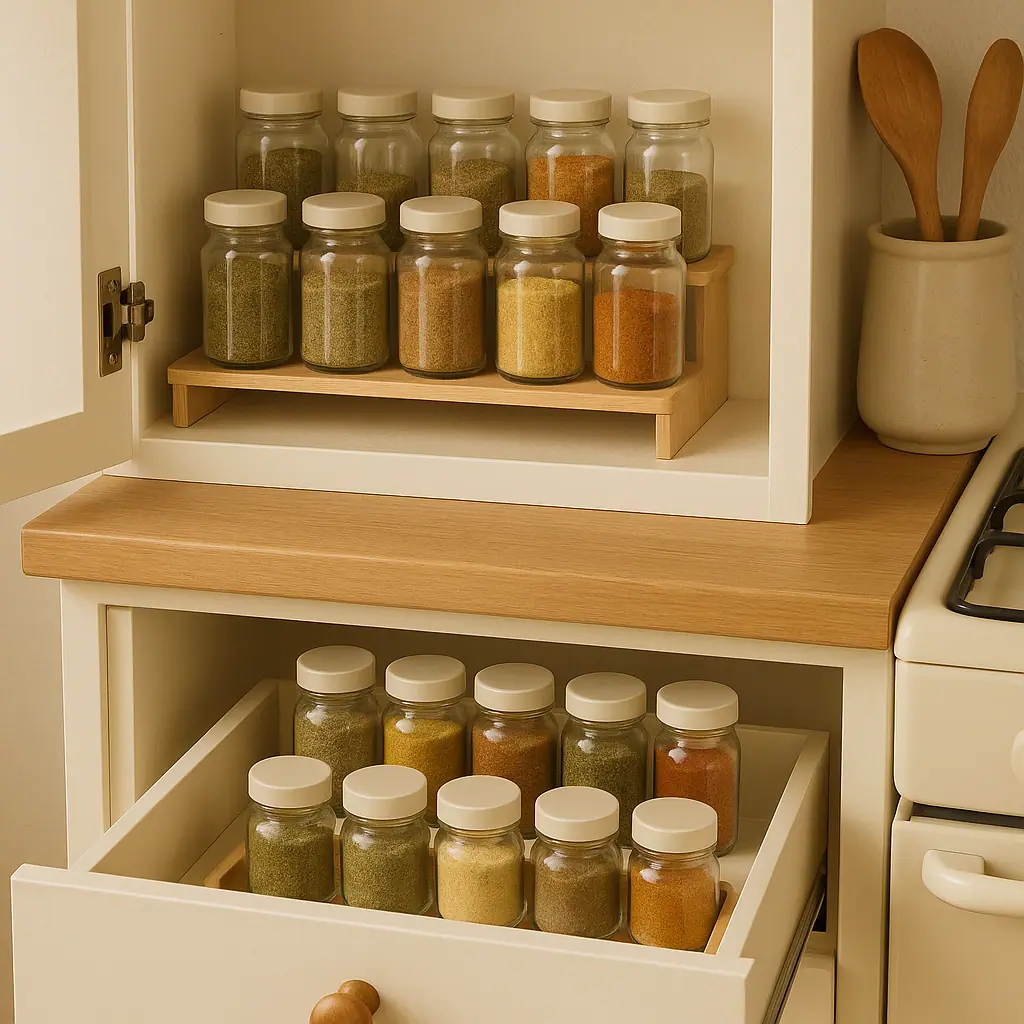
Learning how to organize spices in a small kitchen starts with a simple truth: spices are small, but they create a lot of daily friction. A crowded spice shelf can make cooking slower, hide duplicates, and push jars into awkward corners where you stop using them.
The goal is not to build a perfect display. The goal is to make the spices you actually cook with easy to see, easy to reach, and easy to put back. In a small kitchen, that usually means choosing one calm zone, editing the collection, and using a storage method that fits the cabinet or drawer you already have.
Why Spice Organization in a Small Kitchen Matters
Spices lose usefulness when they are hard to find. You may buy another jar of cumin because the first one is hiding behind baking powder, or skip a recipe because the cabinet feels too annoying to search. In a small kitchen, those little moments add up.
Storage location also matters for quality. Texas A&M AgriLife Extension recommends keeping dried herbs and spices in tightly covered containers, in a dark place, and away from heat, light, and moisture: Texas A&M AgriLife Extension spice storage guidance.
That does not mean you need a special pantry. It means the shelf above the stove, the sunny counter rack, and the damp area beside the sink are usually not the calmest homes for spices. A cabinet, shallow drawer, or narrow bin away from cooking heat is often easier to maintain.
Start With the Right Spice Zone
Before buying jars, labels, or a tiered rack, pick the storage zone. The best zone is close enough to the prep area that you will use it, but protected enough that the spices are not sitting in steam, direct sun, or heat.
Good small-kitchen spice zones
A shallow upper cabinet, a drawer near the main prep counter, a narrow pull-out bin in a pantry shelf, or a small section of a cabinet beside dry goods can all work. The right answer depends on what your kitchen gives you.
- Upper cabinet: best when shelves are shallow enough that jars do not disappear in the back.
- Drawer: best when you can see jar tops or lay jars in one layer without stacking.
- Pantry bin: best when you have one reachable shelf but no dedicated spice cabinet.
- Wall or door rack: useful only when the surface, lease, and weight limits make sense.
Zones to treat carefully
A shelf above the range may seem convenient, but heat and steam can work against spice quality. Ohio State University Extension notes that spices should not be stored close to the stove because heat and light shorten shelf life: Ohio State University pantry storage guidance.
After you choose a calmer zone, test the motion. Can you open the door fully? Can you pull one jar without knocking over three others? Can the organizer come out for cleaning? Those practical checks matter more than matching containers.
What to Check First Before You Organize Spices
Empty the spice area completely and wipe the shelf or drawer before sorting. This is the moment to notice sticky lids, spilled seasoning, duplicate jars, expired blends, and spices that you no longer cook with.
Use a simple three-part sort. Keep the spices you use often. Move occasional baking or seasonal spices to a secondary spot. Let go of jars that have little aroma, unknown age, caked texture, or no realistic use in your kitchen.
Check the container shape
Small kitchens are often defeated by mismatched container shapes. Tall jars, squat tins, packets, and bags all behave differently. If you are not decanting, choose an organizer that works with the containers you already have. If you do decant, keep the original best-by date or purchase date somewhere useful.
Check the shelf depth
Measure the depth before buying a riser or turntable. A round lazy Susan may waste corners in a narrow cabinet, while a rectangular tray may use the same space more predictably. A tiered riser helps only if you can still see and reach the back row.
How to Organize Spices in a Small Kitchen Step by Step
Work with one zone and one honest collection. Trying to solve every cabinet at once usually creates more clutter.
- Gather every spice in one place. Include jars from the cabinet, pantry shelf, countertop, baking bin, and any backup stash.
- Wipe the future spice zone. Clear crumbs and powder so the new setup starts clean.
- Group by cooking habit. Put everyday savory spices together, baking spices together, heat or chili spices together, and seldom-used blends together.
- Remove duplicates first. Combine only when the jars are the same spice and still fresh enough to keep. Otherwise, keep the better jar and let the tired one go.
- Choose one visibility method. Use a tiered shelf, drawer insert, shallow tray, or small turntable. Avoid using all of them in one tiny zone.
- Place frequent spices at the front. Salt-free blends, garlic powder, cumin, paprika, cinnamon, pepper, or whatever you use weekly should not require a search.
- Give backup spices a separate home. Refills and rarely used jars can sit in a small labeled bin away from the active cooking zone.
- Schedule a small reset. Once a month, straighten jars, wipe spills, and check whether the system still matches how you cook.
Best Small-Kitchen Spice Organizer Options
You do not need every organizer type. Pick the one that solves the shape of your kitchen and the size of your spice collection.
Tiered cabinet riser - best for shallow cabinets
A riser makes back-row jars visible. It works best when shelves are not too deep and when all jars are similar height.
Drawer insert - best for one-layer visibility
A drawer insert lets you scan jar tops or angled jars quickly. It is useful when you have a spare drawer near the prep counter.
Shallow handled bin - best for pantry shelves
A bin lets you pull spices forward as one group. This is helpful when the shelf is deep and you do not want jars scattered across the back.
Small turntable - best for compact clusters
A turntable can work for oils, vinegars, or a small group of everyday spices, but it needs clearance. If jars fall off or hide each other, use a tray instead.
Visibility reduces duplicate buying
When each jar has a visible place, it is easier to notice what you already own before adding another bottle.
One zone speeds up cooking
A single active spice zone saves time because seasonings are not split across random cabinets, counters, and bins.
Small resets stay realistic
A tray, drawer insert, or riser can be wiped and straightened quickly, which helps the system survive regular use.
Pretty jars can create extra work
Decanting every spice looks tidy, but it adds labeling, date tracking, and refill maintenance that some kitchens do not need.
Door racks need careful checks
They can be useful, but renters should verify surface limits, lease rules, weight, and door clearance before mounting anything.
Common Spice Organization Mistakes to Avoid
The first mistake is buying containers before editing. If you have 46 jars but cook with 18, new containers may simply make the clutter more uniform. Edit first, then buy only what the remaining collection needs.
The second mistake is storing spices where they look nice instead of where they stay useful. A sunny counter rack may photograph well, but it may not be the best place for dried herbs and spices over time.
The third mistake is over-labeling in a way that slows you down. Labels should help you cook and reset. If a label system requires a special marker, exact template, or long routine, it may be too fragile for everyday use.
A Simple Spice Checklist
Use this checklist whenever the spice zone starts feeling crowded again.
- Can I see every active spice? If not, reduce the active zone or use a riser, drawer insert, or pull-forward bin.
- Are spices away from heat and steam? Move them away from the stove, dishwasher vent, sink splash, and sunny counter if possible.
- Are duplicates handled? Keep one working jar and move or discard extras that only add confusion.
- Are baking spices separate? If you bake only sometimes, they may not need front-row space in the cooking zone.
- Can I clean the zone quickly? A system that cannot be wiped down will collect powder and crumbs.
- Does the setup match this month of cooking? Let frequently used jars move forward and rarely used jars move back.
When to Get Extra Help
Get extra help before mounting a rack, adding adhesive shelves, drilling into a cabinet, or loading a door with heavy glass jars. Renters should check lease rules and product instructions before changing a surface or relying on adhesive storage.
Also pause if you are unsure whether a spice is still worth using. Dried spices are usually a quality issue more than a dramatic safety issue, but flavor fades. If the jar has no aroma, has clumped from moisture, or has an unknown history, replacing it may be calmer than building a system around it.
Frequently Asked Questions
What should I check first when organizing spices in a small kitchen?
Check the storage location. Choose a zone away from heat, steam, direct sunlight, and sink moisture before choosing a riser, drawer insert, tray, or turntable.
How often should I review my spice collection?
A quick monthly reset is enough for most small kitchens. Wipe spills, move frequent spices forward, and check for duplicates before buying replacements.
Should I decant spices into matching jars?
Only if it makes the system easier for you. Matching jars can help in a drawer or shallow shelf, but they also require labels, dates, and refills.
Can I use a spice rack on a cabinet door?
Sometimes. Check door clearance, rack weight, product instructions, and rental rules first. A freestanding bin or drawer insert is easier to undo.
Final Thoughts
How to organize spices in a small kitchen is less about owning the perfect rack and more about building a small routine. Keep active spices visible, protect them from heat and moisture, and choose one organizer that fits the space you already have.
Start with a 20-minute edit. Remove duplicates, pick one calm zone, and place the spices you use every week where your hand naturally reaches. If cooking feels easier tomorrow night, the system is working.