Over-the-door storage ideas work best when the door still looks like part of the room, not like a last-minute overflow zone. In a small apartment, the back of a door can hold useful things, but it can also become a crowded wall of pockets, hooks, bags, and visible clutter.
The calmer approach is to give each door one clear job. A bedroom door might hold a few accessories. A bathroom door might hold towels. A laundry or utility door might hold light supplies. When the category is narrow, the organizer looks intentional and is much easier to reset.
Why Over-the-Door Storage Ideas Can Look Messy
Over-the-door storage is visible storage. Even when it is technically hidden behind an open door, you still see it whenever the door closes, swings, or faces a hallway. That means the visual rule matters as much as the storage rule: fewer categories, fewer colors, and fewer dangling items usually look calmer.
The other issue is movement. A door is not a fixed wall. It opens, closes, shakes slightly, and may rub against trim, hooks, or hanging organizers. A setup that looks neat in a product photo may feel noisy in daily use if it bumps, rattles, or makes the door harder to close.
For general household safety context, the U.S. Consumer Product Safety Commission publishes consumer safety information and recalls through CPSC.gov. That does not replace the instructions for a specific organizer, but it is a useful reminder to treat hanging storage conservatively when weight, stability, or falling objects could matter.
Start With One Door and One Category
Before buying anything, choose the door and name the exact category it should support. This simple step prevents the organizer from becoming a mixed storage wall. A good category is specific enough that you can tell, at a glance, what belongs there and what does not.
- Bedroom door: scarves, belts, hats, lightweight bags, robes, or tomorrow's outfit.
- Bathroom door: towels, hair tools after they are fully cool, or a small set of everyday toiletries.
- Closet door: shoes, accessories, seasonal extras, or small wardrobe helpers.
- Laundry door: lint rollers, mesh bags, cleaning cloths, or light refill supplies.
- Entry door area: hats, dog leashes, tote bags, or a narrow drop zone if the door swing allows it.
If the list for one door includes six unrelated categories, split the plan. A door can hold a useful micro-zone, but it should not become the apartment's spare closet.
Use visual limits, not just weight limits
Weight limits matter, but visual limits matter too. Even light items can look messy when they are different colors, sizes, and lengths. Three matching canvas pockets may look calmer than ten clear pockets stuffed with unrelated objects. A row of identical hooks may look calmer than a mixed set of hangers, bags, and clips.
Check the door before choosing the organizer
Measure the door thickness, the gap above the door, and the space between the door and trim. Also check whether the organizer will hit a wall, towel bar, shelf, light switch, or closet rod. If the door already sticks, scrapes, or closes tightly, a bulky over-door hook may create more frustration than storage.
Over-the-Door Storage Ideas That Do Not Look Messy
The best over-the-door storage ideas are narrow, quiet, and easy to reset. Choose the format by the category, not by the biggest organizer available.
1. A slim hook rail for daily pieces
A simple over-door hook rail can work well for robes, belts, hats, light tote bags, or the outfit you plan to wear next. Keep the hook count modest. If every hook is full all the time, the door will look busy even when everything is technically organized.
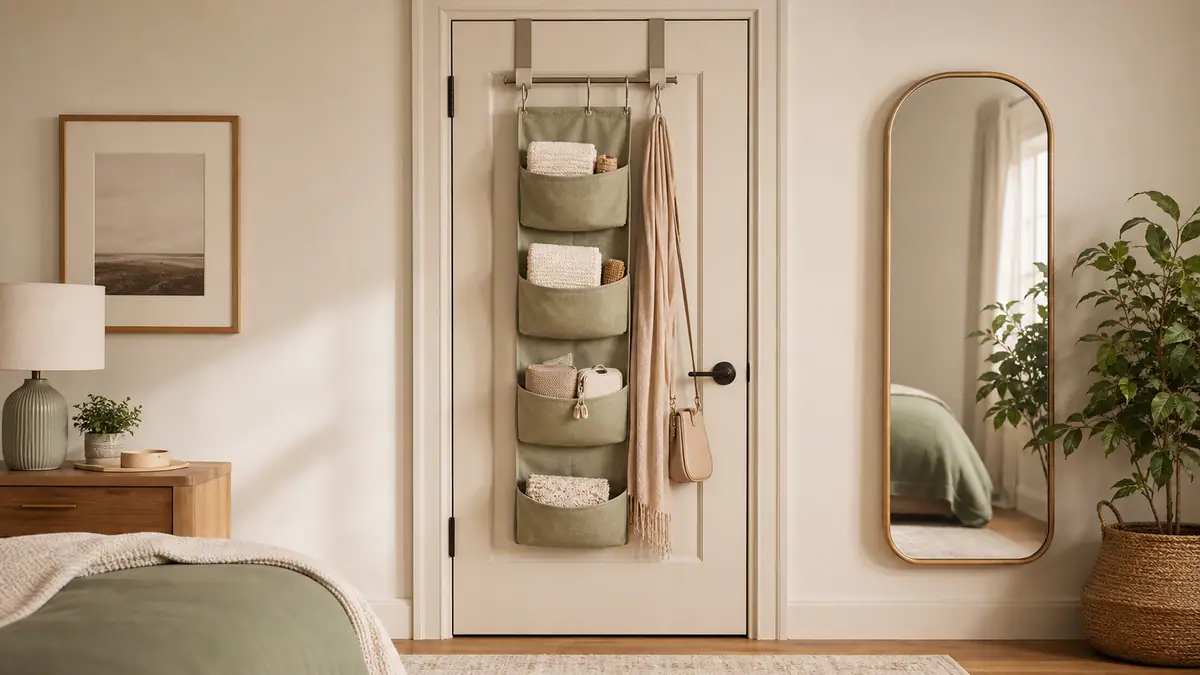
2. Fabric pockets for soft, repeatable categories
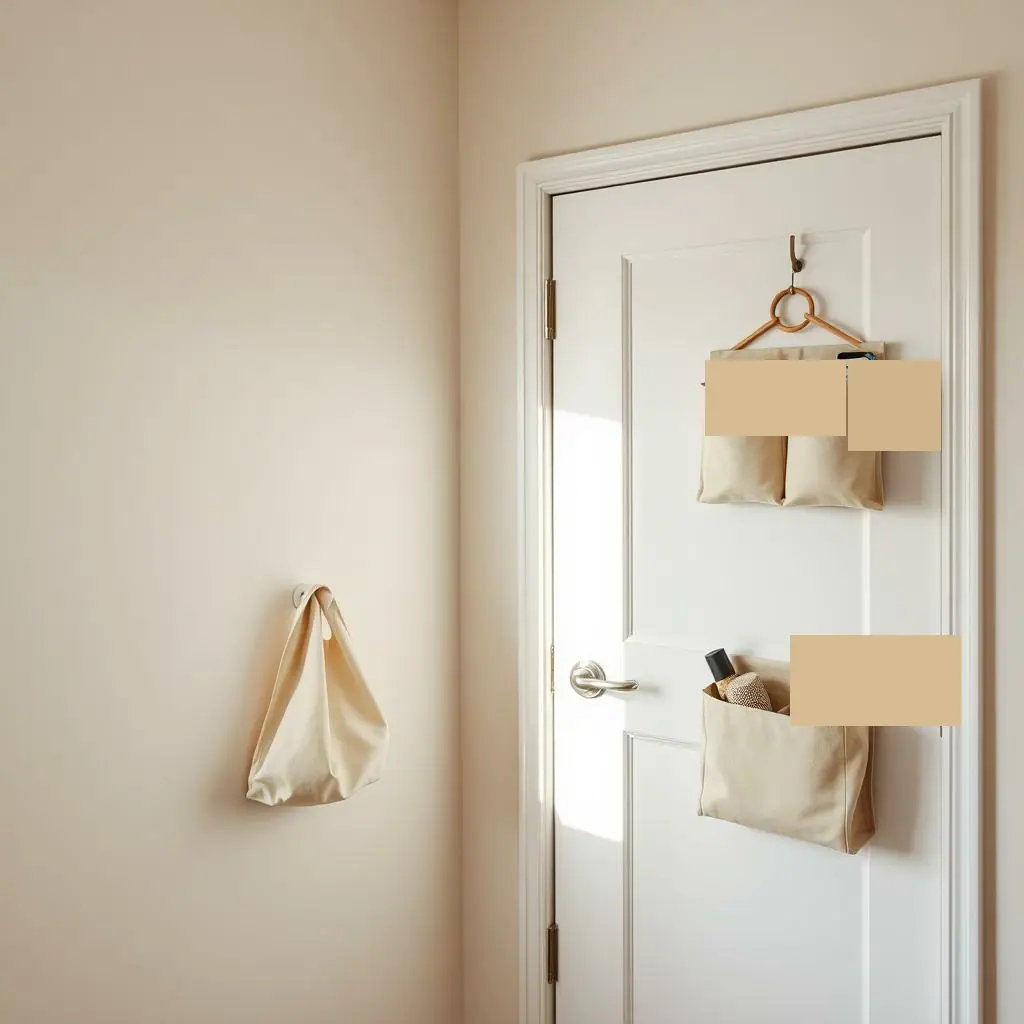
Soft pocket organizers are best for items that are light and similar in size: scarves, socks, hair accessories, cleaning cloths, or small bathroom backups. Choose opaque or muted fabric when you want a calmer look. Clear pockets are useful for visibility, but they also show every color and label.
3. A towel ladder or double towel hook for bathrooms
In a bathroom, over-door storage looks neater when it supports one task. A few towels on a simple rack usually look calmer than a multi-pocket organizer full of products. Let towels dry fully and avoid crowding wet fabric against a painted door.
4. A narrow shoe organizer for one kind of shoe
Over-door shoe pockets can work in small closets, but they look cleaner when they hold one narrow category: flats, sandals, slippers, or children's shoes. Bulky shoes often distort pockets and make the door look lumpy.
5. A utility pocket for laundry helpers
A laundry or utility door can hold lint rollers, mesh bags, clothespins, microfiber cloths, and small light supplies. Keep liquids, heavy bottles, and anything breakable somewhere more stable.
6. A hidden command center inside a closet door
Inside a closet, an over-door organizer can hold accessories, care items, or small packing supplies without becoming part of the room view. This is often the cleanest option when the category is useful but not decorative.
How to Set Up Over-the-Door Storage Step by Step
A slow setup keeps the door useful and helps the final result look deliberate.
- Empty the door area first. Remove old hooks, bags, and temporary items so you can see the actual door swing and available space.
- Choose one category. Write down the door's job in a short phrase, such as "daily towels," "light accessories," or "laundry helpers."
- Measure before buying. Check door thickness, top clearance, trim clearance, organizer width, and how far the organizer projects into the room.
- Read the product instructions. Confirm weight limits, door compatibility, padding needs, installation steps, and whether hardware could mark paint or trim.
- Protect contact points. If the product allows it, use soft bumpers or built-in padding where metal touches the door. Do not improvise in a way that makes the organizer unstable.
- Load the lightest version first. Start with fewer items than the organizer can hold, then live with it for a week before adding more.
- Standardize what shows. Fold fabric neatly, group similar colors, face handles the same way, and remove packaging that adds visual noise.
- Review the swing. Open and close the door several times. If it rattles, hits trim, or needs force, adjust or choose a different storage method.
If you use adhesive hooks as part of the setup, check the exact manufacturer guidance rather than assuming all removable hooks behave the same way. Command's official instructions, for example, include surface preparation, wait time, removal steps, and reminders to check package weight limits; review the Command application and removal guidance for the product you actually own.
Pros and Cons
Over-door storage can be one of the most renter-friendly ways to add vertical storage, but it is not invisible. It works best when the category is light and the visual boundary is firm.
No drilling required
Many over-door organizers add useful storage without permanent holes, which can be helpful in rentals when the door and lease allow it.
Good for light daily categories
Accessories, towels, cloths, and small wardrobe helpers can become easier to reach when the door has one clear job.
Easy to remove or relocate
If the setup does not help after a week, many over-door options can move to another door without changing the room permanently.
Can look busy quickly
Visible pockets and hooks become cluttered when they hold too many colors, labels, bags, or unrelated categories.
May affect door movement
Thick hooks, heavy loads, or wide organizers can scrape trim, rattle, or make the door harder to close.
Common Mistakes to Avoid
The first mistake is buying the largest pocket organizer because the door has empty space. More pockets often create more visible clutter. If you only need a home for five light items, choose a smaller format that leaves breathing room.
The second mistake is mixing daily items with backups. A towel you use every day and a backup bottle of shampoo may both fit on the same door, but they do not belong to the same routine. Keep daily access and inventory storage separate whenever possible.
The third mistake is ignoring the door itself. Hollow-core doors, delicate paint, tight trim, and narrow clearances may not tolerate every over-door hook well. If the organizer leaves pressure marks, makes the door stick, or feels unstable, remove it before it becomes a bigger problem.
The fourth mistake is storing heavy, fragile, or high-value items overhead. A door moves too often for glass jars, tools, electronics, heavy bottles, candles, or irreplaceable items. Put those on a stable shelf, in a cabinet, or in a bin that rests on a fixed surface.
A Simple Checklist for a Calmer Door
Use this checklist before deciding whether the setup is finished.
- Does the door have one job? If not, remove anything that does not match the category.
- Can the door close normally? No scraping, forcing, rattling, or hitting nearby walls.
- Are heavy items stored low elsewhere? The door should not carry the apartment's heaviest overflow.
- Do the visible items look related? Similar colors, sizes, and materials make open storage feel calmer.
- Is there empty space left? A little breathing room keeps pockets and hooks from looking stuffed.
- Can you reset it in two minutes? If the answer is no, the system may be too complicated.
When to Use a Different Storage Option
Use a different storage option if the door is already hard to close, the room is very narrow, the organizer would sit at shoulder height in a walkway, or the items are heavy, fragile, wet, or expensive. A renter-friendly choice is only useful if it makes daily movement easier.
Good alternatives include a freestanding slim shelf, a rolling cart, a drawer divider, a low basket, a cabinet riser, a wall hook where drilling is allowed, or a closet shelf bin. These options may take more floor or shelf space, but they often look calmer because they do not move every time the door opens.
Frequently Asked Questions
What should I check first before using over-the-door storage?
Check the door thickness, top clearance, trim clearance, door swing, product instructions, and the weight of the items you plan to store. If the door does not close normally, choose another method.
How often should I review an over-door organizer?
Review it after the first week, then during a monthly reset. Remove items that do not match the door's main category and check whether the organizer is rubbing, rattling, or collecting extras.
How do I make over-door storage look less cluttered?
Use one category, leave a few empty spots, choose simple materials, group similar colors, and avoid clear pockets when the contents have lots of labels or mixed packaging.
Can I undo over-the-door storage later?
Usually, yes. Most over-door racks and hooks can be removed, but you should still check for pressure marks, paint rub, and lease rules before relying on them long term.
Final Thoughts
Over-the-door storage ideas that do not look messy come from restraint. Give the door one job, choose a format that fits that job, and leave enough space that the setup still looks calm after a normal week.
If the door begins to rattle, scrape, or collect unrelated items, that is not failure. It is feedback. Move the heavy or extra items somewhere more stable, keep the visible category narrow, and let the door solve one small problem well.