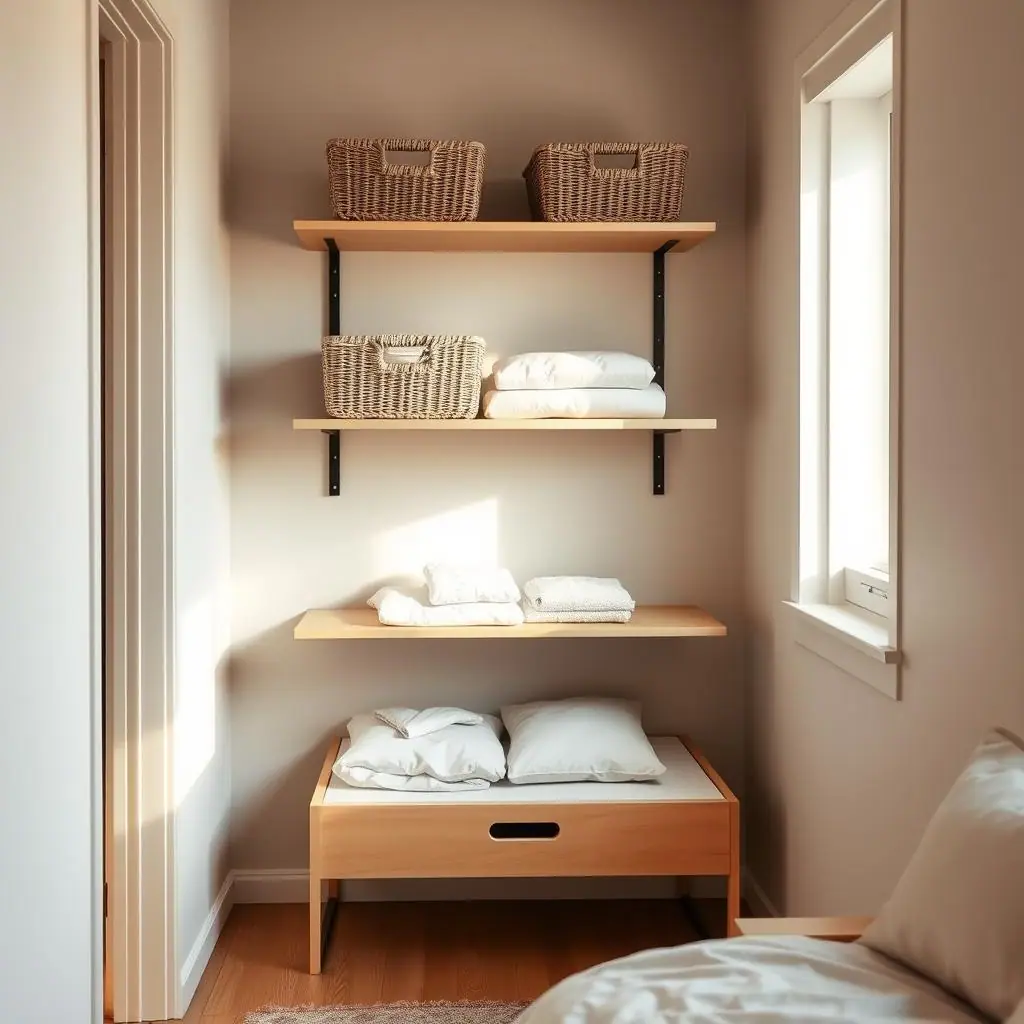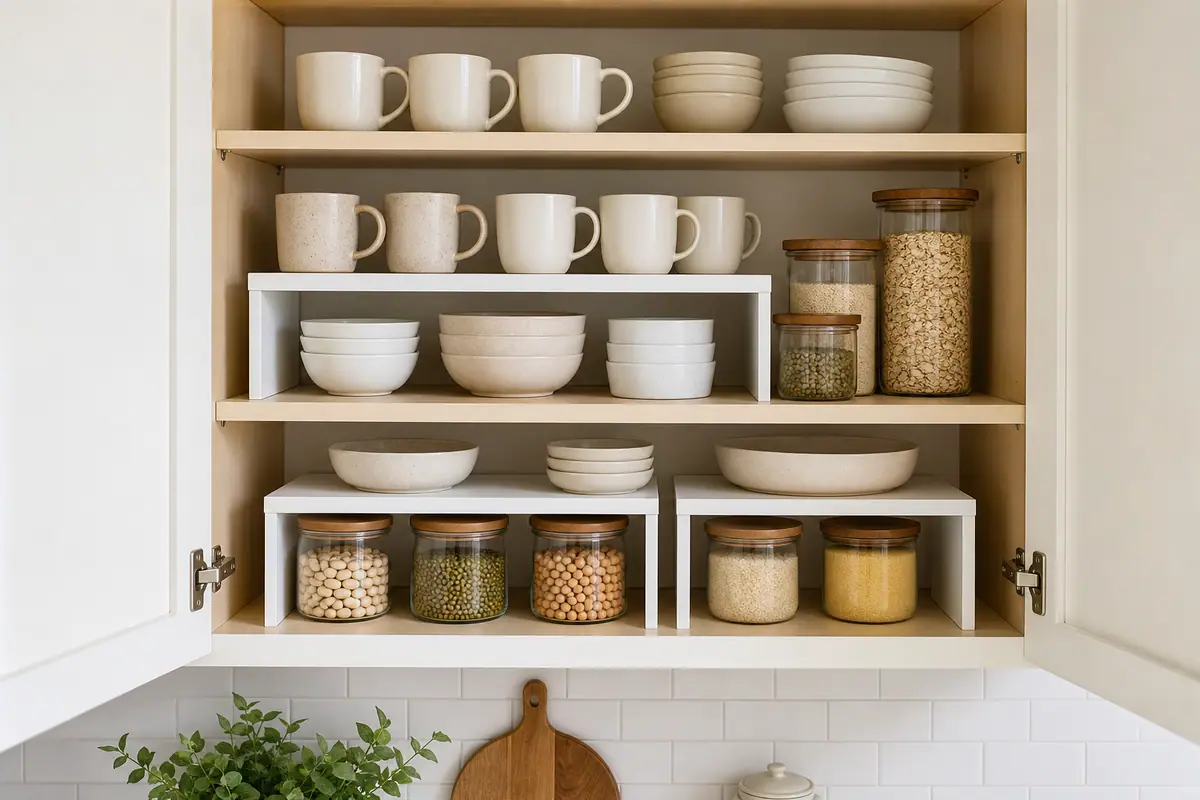
Shelf risers help when a shelf has unused vertical space and the items underneath still stay easy to see, lift, and return. They waste space when they create a second layer that is too short, too deep, too wobbly, or too annoying to use after a normal week.
In a small apartment, a shelf riser should not be a way to squeeze more things into a cabinet without making choices. It should give one category a clearer job. The calm test is simple: if the riser makes the shelf easier to reset, it earns its space. If it only creates a crowded little parking garage for clutter, skip it.
Why Shelf Risers Matter in Small Spaces
Shelf risers can be useful because many cabinets and closets are built with more height than the items inside need. Mugs, cans, folded hand towels, plates, bowls, small pantry jars, and bathroom backups often leave empty air above them. A riser can turn that air into a second usable level.
But vertical storage only helps when access stays simple. A riser that is too tall may block the shelf above. A riser that is too short may make the lower level useless. A riser that is overloaded may flex, slide, or make stacked items feel less stable.
For broader household safety context, the U.S. Consumer Product Safety Commission shares safety education through the official CPSC website. That does not choose a riser for you, but it is a useful reminder to treat loaded storage conservatively when falling objects, children, or high shelves could matter.
Start With the Shelf Job
Before buying shelf risers, decide what the shelf needs to do. A pantry shelf has a different job from a dish cabinet, bathroom cabinet, closet shelf, office shelf, or laundry supply shelf. The riser should support that job instead of forcing every shelf into a two-level setup.
If the shelf already has broad mixed categories, fix that first. A riser will not calm a shelf that holds snacks, medicine, candles, cords, and extra keys in the same area. Readers working on cabinet categories may also find the zone method in the simple pantry zone system for small homes useful before adding any new organizer.
Good shelf riser jobs
Shelf risers work best for stable, repeatable categories: a row of mugs above a row of mugs, small plates over bowls, spices in a cabinet, short pantry cans, folded washcloths, guest hand towels, or small daily bathroom items. In these cases, the riser separates a category without hiding it.
Poor shelf riser jobs
Shelf risers work poorly for heavy appliances, tall bottles, loose soft piles, oddly shaped items, and anything you need to grab quickly while balancing other objects. If the lower level becomes a tunnel or the upper level becomes a wobbly stack, the riser is wasting space.
What to Check First Before Buying Shelf Risers
The first check is clearance. Measure the height from the shelf surface to the shelf above it, then measure the items that would sit under and on top of the riser. Leave finger room above each level so you can lift items without scraping or tilting them.
The second check is depth. A deep riser can hide items in the back of a cabinet. In many small kitchens and closets, a shallower riser placed toward the front works better because the lower level stays visible.
The third check is width. A riser should not block the whole shelf unless every item on that shelf belongs to the same routine. Sometimes one small riser on one side works better than a full-width riser that turns the entire shelf into a layered system.
The fourth check is product guidance. When a riser, shelf insert, or cabinet accessory includes manufacturer instructions, use those instructions instead of guessing. IKEA's product support page, for example, points customers toward assembly guides and product-specific help through IKEA product support.
How to Use Shelf Risers Step by Step
Use this process before buying a matching set. It keeps the decision tied to the real shelf, not a product photo.
- Empty one shelf. Work with one shelf or cabinet at a time so you can see the true height, depth, and category mix.
- Name the category. Decide whether the riser is for mugs, plates, cans, towels, toiletries, or another narrow group.
- Measure the shelf opening. Include width, depth, usable height, shelf lip, door hinge, and the space your hand needs to lift items.
- Test with objects first. Use a sturdy box or book temporarily to see whether two levels actually improve reach before buying a riser.
- Keep heavy items low. Put heavier dishes, jars, or supplies on the shelf surface, not on a narrow riser overhead.
- Leave breathing room. A riser that technically fits but leaves no hand space will be frustrating every day.
- Review after one week. If items are not being returned to the riser naturally, move it or remove it.
Where Shelf Risers Usually Help
Shelf risers are strongest in spaces with low, stable items and predictable use. They are less useful in deep spaces full of mixed shapes.
- Dish cabinets: risers can separate small plates, bowls, saucers, or mugs when the cabinet has extra height.
- Pantry shelves: risers can make short cans, jars, tea boxes, and small dry goods easier to see.
- Bathroom cabinets: risers can separate daily products from backup items if bottles are short enough to stand safely.
- Linen shelves: risers can help with folded washcloths and hand towels, but they are usually less helpful for bulky bath towels.
- Closet shelves: risers can hold light accessories, but bins or dividers may work better for soft goods.
If your closet shelf has folded stacks rather than firm items, compare the organizer type before buying. The guide to shelf dividers vs storage bins for closet shelves can help separate stack problems from container problems.
Pros and Cons
Shelf risers are neither essential nor useless. They are small tools that work only when the shelf height, item shape, and routine all match.
They use empty vertical space
A riser can turn unused air above short items into a second visible level without adding another cabinet.
They can improve visibility
When the riser is shallow and stable, items on the upper and lower levels are easier to scan than a crowded single layer.
They support narrow categories
Mugs, small plates, short jars, tea boxes, and folded cloths can stay grouped without spreading across the whole shelf.
They can make the lower level awkward
If the gap is too short, the items underneath become harder to remove than they were before.
They can encourage overfilling
A riser may look like extra room, but it can quickly become a reason to keep too many duplicates on one shelf.
Common Shelf Riser Mistakes to Avoid
The first mistake is buying risers before measuring. Shelf height varies, and a riser that works in one cabinet may waste space in another.
The second mistake is using risers for tall items. If bottles, jars, or containers barely fit underneath, the lower level will become irritating to use.
The third mistake is placing heavy objects on a narrow riser. Keep heavy items low and stable, and follow product instructions for any stated limits.
The fourth mistake is adding too many levels. In most small-home shelves, one simple riser is easier to maintain than several stacked products.
The fifth mistake is ignoring the door swing. A riser may fit the shelf but still block a cabinet door, hinge, or sliding closet panel from working comfortably.
A Simple Checklist
Use this checklist before deciding whether shelf risers will help or waste space in your home.
- Is there unused height? If the shelf is already tight vertically, a riser will probably not help.
- Are the items short and stable? Risers work better for firm, low items than for tall bottles or soft piles.
- Can I reach both levels? The top and bottom should both be easy to use without moving several things.
- Is the category narrow? A riser should hold one clear job, not a mixed storage problem.
- Will heavy items stay low? Keep weight on the shelf surface unless product guidance clearly says otherwise.
- Did it pass a one-week test? If the shelf is harder to reset after normal use, remove the riser.
When to Get Extra Help
Get extra help when a shelf bows, brackets feel loose, a cabinet system has unclear limits, or you are storing anything heavy overhead. A shelf riser should never be used to compensate for a weak shelf or unstable furniture.
If the storage area is part of a tall freestanding unit, think beyond the riser. Wall anchoring, product instructions, lease rules, and household safety may matter more than fitting one more layer onto the shelf.
Frequently Asked Questions
What should I check first before using shelf risers?
Check the shelf height and the items you want to store. If both the top and bottom levels will have enough clearance for your hand, the riser is more likely to help.
How often should I review a shelf with risers?
Review it after the first week, then during your normal pantry, dish, or closet reset. If the lower level keeps getting ignored, the riser may not belong there.
What should I do if I am not sure whether a riser fits?
Test the idea with a temporary sturdy object before buying. If the trial makes access harder, skip the riser or try a different shelf.
Can I move shelf risers later?
Yes. Most shelf risers are movable, and that is part of their value. If one cabinet does not need a riser, try it with mugs, pantry cans, or light bathroom backups instead.
Final Thoughts
Shelf risers help when they make unused height easier to use without hiding the lower level. They waste space when they add a second layer that is cramped, heavy, unstable, or too fussy to reset.
Start with one shelf, one category, and one temporary test. Measure the opening, keep heavy items low, and let the first week show whether the riser supports the routine. The calmest storage product is the one that makes the shelf easier to use after real life happens.