The simple pantry zone system for small homes starts with a calmer question than “where can I fit everything?” Ask instead: “what job should each shelf or cabinet area do?” Once every small area has a clear job, groceries become easier to unpack, meals become easier to start, and duplicate buying becomes easier to notice.
This approach works whether you have a narrow cabinet, one shared shelf, a rolling cart, or no separate pantry at all. You are not trying to create a perfect walk-in pantry. You are building a small, repeatable pantry zone system for small homes that matches how you actually cook, shop, and reset after grocery day.
Why Pantry Zones Small Homes Need a Simple System
Small kitchens usually fail in the handoff moments. Groceries come home, half-used pasta gets pushed behind cereal, snacks drift into baking space, and dinner ingredients end up split between three shelves. The problem is not always lack of space. Often, the problem is that each shelf is trying to hold too many unrelated jobs.
A zone system gives each area a narrow purpose. One shelf can hold breakfast. One bin can hold dinner helpers. One cabinet section can hold baking. One tray can hold open snacks. When the boundary is clear, you can see when a zone is too full before the whole kitchen feels messy.
Food storage still needs common-sense checks. The FDA recommends storing food safely in cupboards, refrigerators, and freezers to help prevent foodborne illness, and its consumer guidance is a useful reference when deciding what belongs in dry storage versus colder storage: FDA food storage guidance.
Start With Pantry, Kitchen, and Cabinet Organization
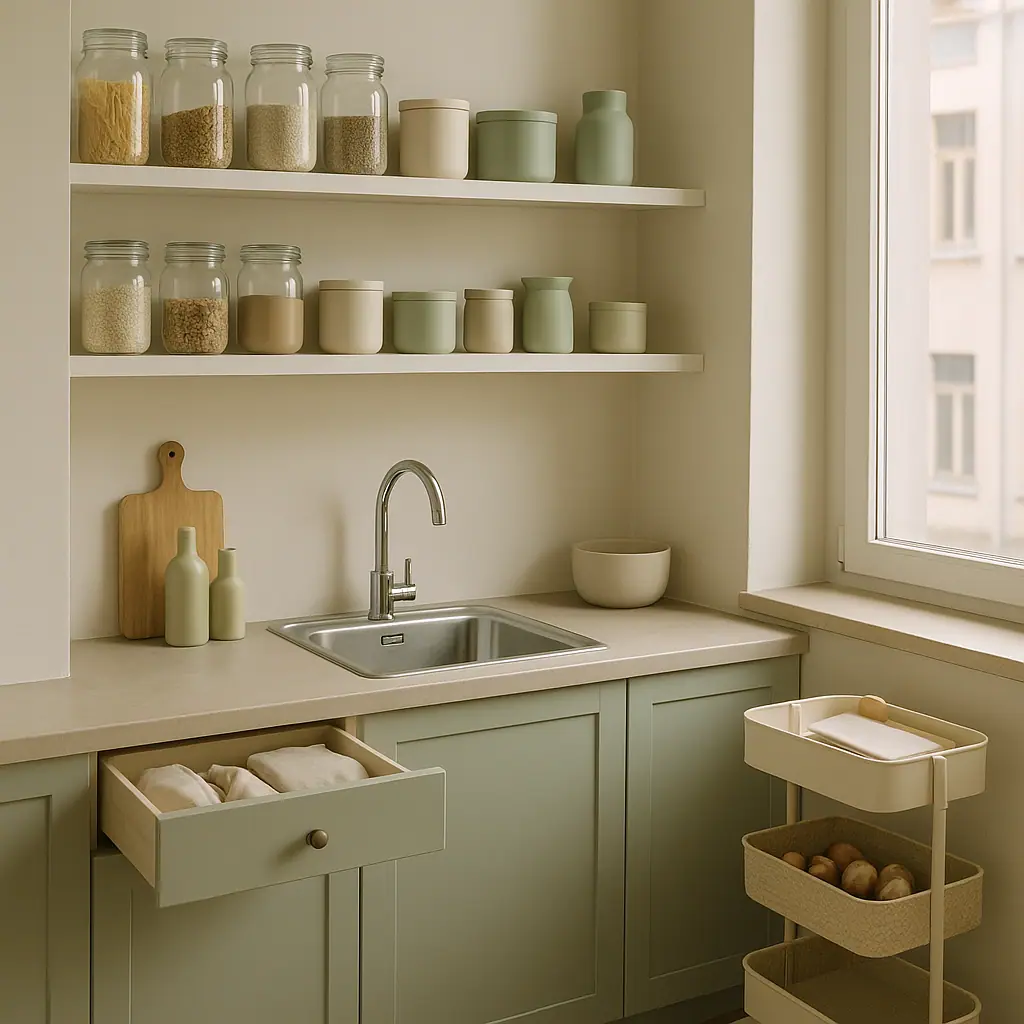
Before sorting food, define the storage area you actually have. In a small home, the pantry may be a single upper cabinet, a lower shelf, two drawers, part of a bookcase-style unit, or a cart beside the refrigerator. Treat that area as your pantry even if it does not look like one.
Map the zones by use, not by package shape
Packages can trick you into organizing by height or color. A better first sort is by use. Put foods together because they support the same moment in your week.
- Breakfast zone: oats, cereal, nut butter, shelf-stable milk, tea, coffee backup, or daily smoothie add-ins.
- Dinner zone: pasta, rice, canned tomatoes, beans, broth, sauces, and quick meal bases.
- Snack zone: crackers, bars, nuts, dried fruit, chips, lunchbox items, or after-school snacks.
- Baking zone: flour, sugar, chocolate chips, baking powder, extracts, and decorating items.
- Backup zone: unopened extras that should not crowd the active shelf.
Use the front row for the current week
The front row should hold food you expect to touch soon. Backstock, rare baking ingredients, and unopened duplicates can live farther back or higher up. This keeps the active pantry small enough to maintain.
What to Check First for the Simple Pantry Zone System for Small Homes
Start by emptying only the pantry area you are changing today. A full-kitchen pull-out can feel productive for ten minutes, then become a table full of decisions. One shelf, one cabinet, or one cart is enough for a useful reset.
Wipe the area, then check four things before anything goes back: expiration dates, open packages, duplicates, and foods stored in the wrong place. If a package says to refrigerate after opening, do that. If a can is swollen, badly dented, leaking, or rusted, do not build a system around it.
Then measure the space you plan to use. Shelf depth, shelf height, door clearance, and the width of your widest package matter more than the name of the organizer. A bin that is too deep becomes a hiding place. A riser that is too tall blocks the shelf above it.
How to Handle the Simple Pantry Zone System for Small Homes Step by Step
Use this method when the pantry feels crowded, but you do not want to buy a whole new set of storage products.
- Pick one pantry area. Choose a cabinet, shelf, drawer, cart, or underused dry-goods spot that can become the main pantry zone.
- Remove everything from that area. Keep the project small enough that you can finish before the next meal.
- Group food by meal moment. Breakfast, dinner helpers, snacks, baking, drinks, and backup goods are usually enough.
- Choose the active zones. Give the easiest shelves to food you use every week. Move rare or unopened items to less valuable space.
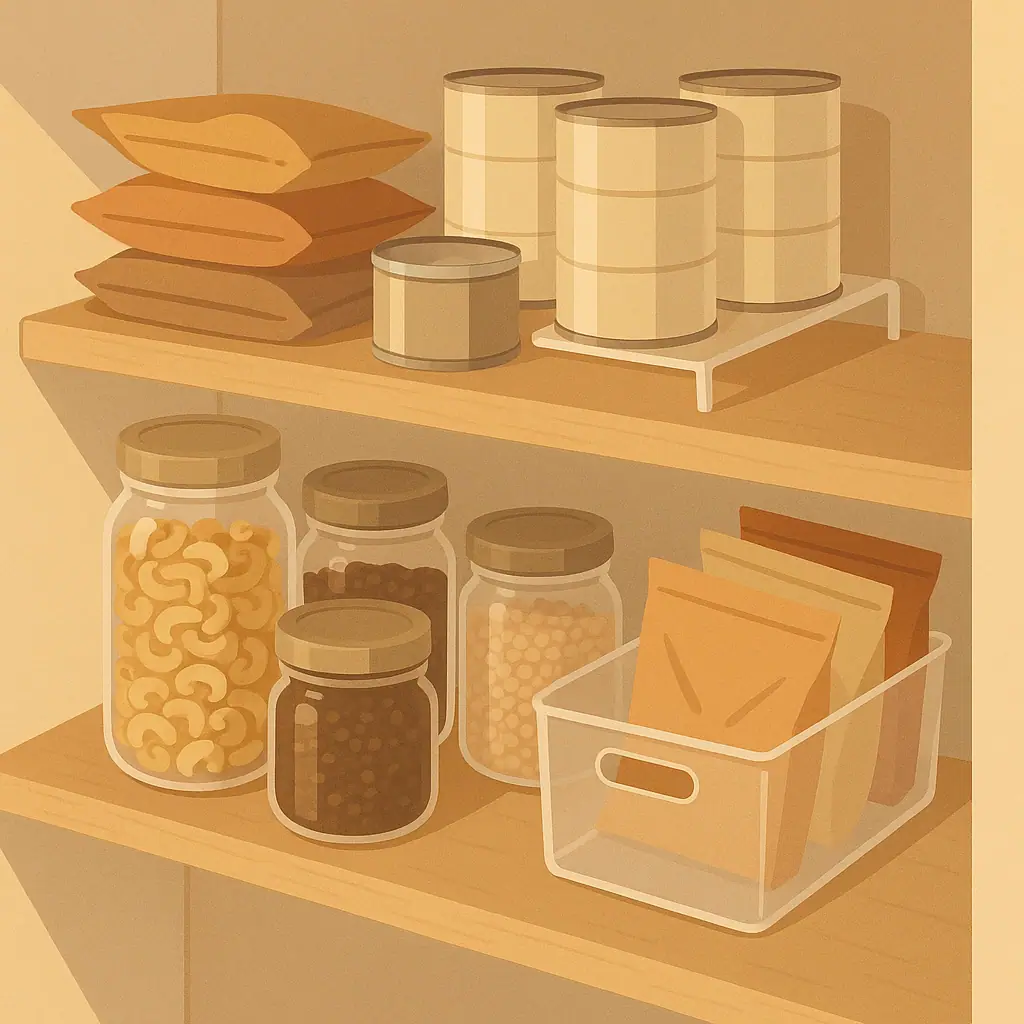
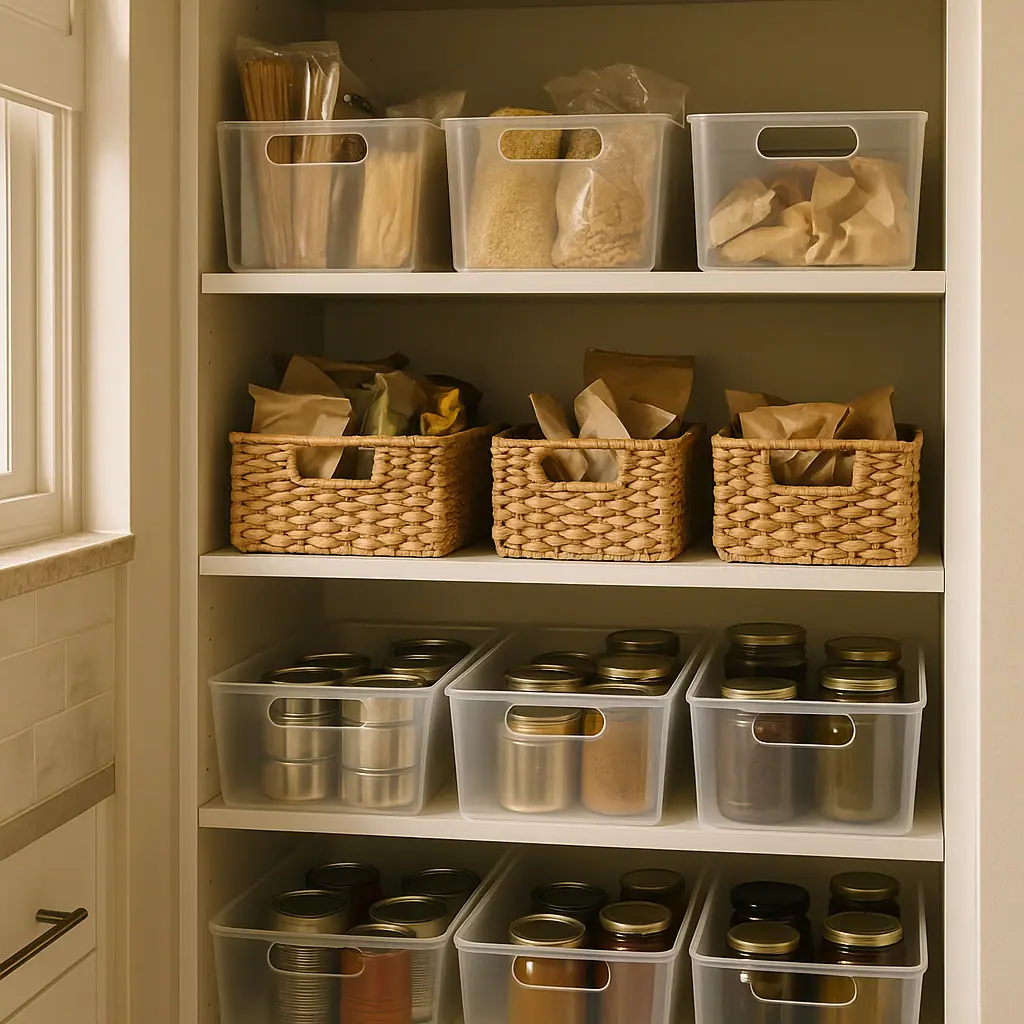
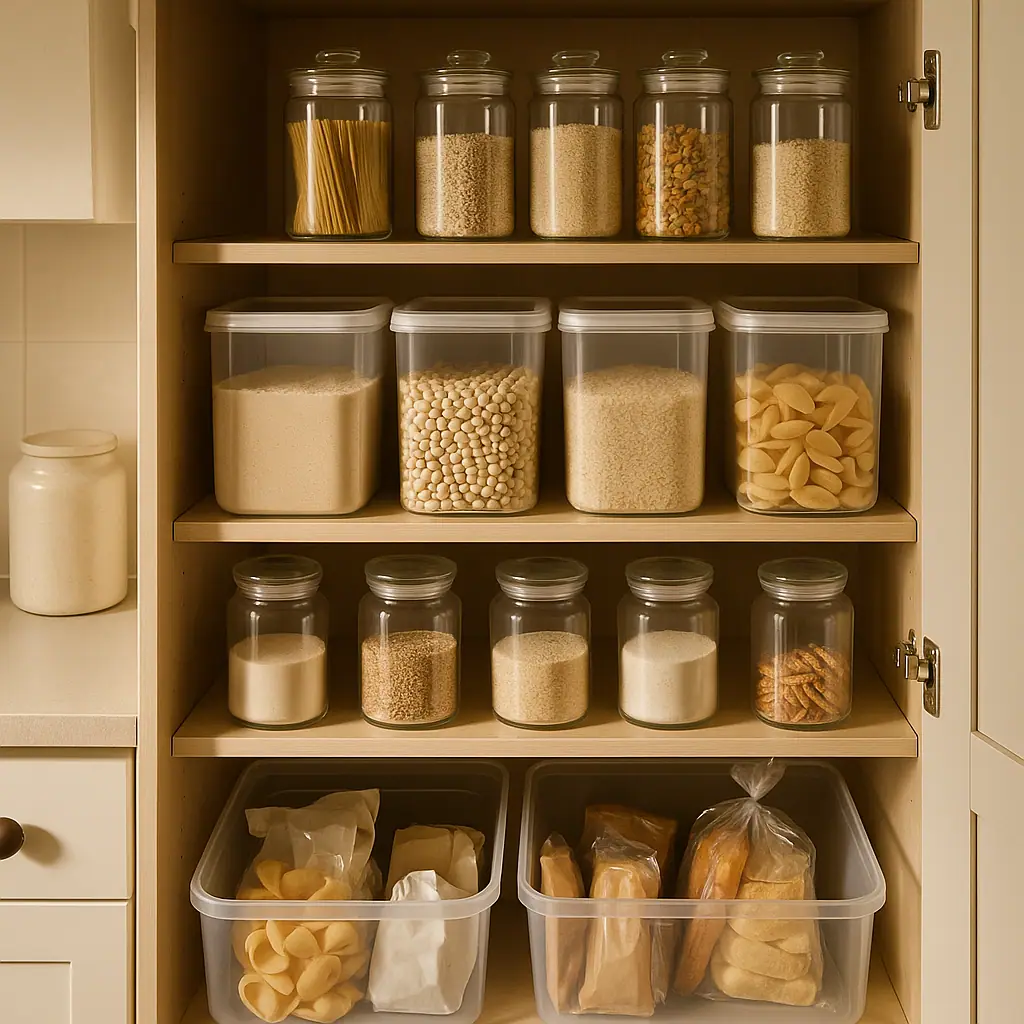
- Use simple containers only where they solve a problem. A shallow bin can hold snack bags. A turntable can hold small jars. A riser can make cans visible. Do not add a container just to make the shelf look finished.
- Label the zone, not every item. A simple “breakfast,” “dinner,” or “snacks” label is easier to maintain than labeling every container.
- Leave a small landing space. Keep a few inches of breathing room for new groceries so the system does not break on shopping day.
- Reset after the next grocery trip. The first real test is not how it looks today. It is whether you can put groceries away without guessing.
Best Pantry Zones for Small Homes
The right zones depend on your eating habits, not on someone else’s pantry photo. A household that cooks rice bowls three nights a week needs a different layout from one that relies on breakfast foods, lunch snacks, and quick pasta.
Daily-use zone
This is the shelf or bin you touch most often. Keep it at eye level or waist level if possible. It should hold the foods that make your normal week easier, not every food you own.
Meal-starter zone
This area holds the beginning of easy dinners: grains, pasta, canned beans, canned tomatoes, broth, sauces, or shelf-stable proteins. Keeping meal starters together helps you notice when dinner options are low.
Open-package zone
Open snacks, open grains, and half-used baking ingredients need a clear home. A shallow bin or tray works well because it can be pulled forward and checked before buying more.
Backstock zone
Backstock should be boring and limited. Keep unopened extras together so they do not compete with active food. If the backup zone is full, that is a signal to pause bulk buying.
Clear zones reduce duplicate buying
When breakfast, dinner, snacks, and backup goods each have a place, it is easier to see what you already have before shopping.
Small resets become faster
A zone can be straightened one section at a time, which is more realistic than reorganizing the whole kitchen every month.
The system adapts to real homes
It works in a cabinet, drawer, cart, shelf, or mixed storage setup because the main idea is purpose, not pantry size.
It requires honest editing
If old packages, duplicates, and impulse buys stay in the active zone, the system will feel crowded again quickly.
Too many bins can hide food
Deep bins may look tidy from the front while making small packages harder to see, especially on deep shelves.
Common Pantry, Kitchen, and Cabinet Organization Mistakes to Avoid
The first mistake is organizing by container type before organizing by use. Matching bins can still hold a confusing mix of breakfast, baking, snacks, and dinner ingredients. Sort by purpose first, then choose containers only where they help.
The second mistake is filling every inch. A pantry with no open space is hard to restock and harder to clean. Leave a small gap in each active zone so new groceries do not become a pile on the counter.
The third mistake is letting backstock live in front. Unopened extras should not block the food you are trying to use this week. Put active food at the front and backups behind, above, below, or in a separate bin.
A Simple Pantry Zone Checklist
Use this checklist after grocery day or whenever the pantry starts feeling unclear.
- Can I name each zone? If a shelf cannot be described in one phrase, it may be holding too many jobs.
- Is the active food easiest to reach? Weekly items should not sit behind rare baking supplies or unopened backups.
- Are open packages grouped together? Open food is what you need to use first, so it should not disappear behind sealed extras.
- Is backstock separate? Keep unopened duplicates together and check that zone before buying more.
- Can the shelf be wiped quickly? If every reset requires unloading five nested bins, simplify the setup.
- Is there room for the next grocery trip? A useful pantry has a little breathing room for normal life.
When to Get Extra Help
Get extra help before adding heavy wall shelves, mounting a door rack, changing cabinet hardware, or relying on adhesive products in a rental. Check lease rules, product instructions, surface limits, and weight ratings before using storage that attaches to a wall, cabinet, or door.
Also pause when food storage instructions are unclear. Some products are shelf-stable only before opening, while others need a cool, dry, dark place to keep quality. When in doubt, check the package directions or an official food-safety source before deciding that a pantry shelf is the right home.
Frequently Asked Questions
What should I check first in pantry, kitchen, and cabinet organization?
Check the space you actually have. Measure shelf depth and height, then group food by use before buying bins, risers, jars, or labels.
How often should I review pantry zones in a small home?
A quick review after grocery day works well. Put new food into the right zone, move older open packages forward, and remove anything that no longer belongs.
What should I do if I am not sure where a food belongs?
Start with how you use it. If it helps breakfast, put it in breakfast. If it starts dinner, put it with meal starters. If storage safety is unclear, check the package or an official source.
Can I undo pantry zones later?
Yes. Pantry zones are easy to adjust. If a breakfast shelf becomes a snack shelf or a bin stops helping, rename the zone and reset it around your current routine.
Final Thoughts
The simple pantry zone system for small homes is not about making every shelf match. It is about making each shelf easier to understand. When breakfast, dinner, snacks, baking, open packages, and backups have clear boundaries, the pantry becomes less stressful to use.
Start with one shelf today. Give it one job, move unrelated food somewhere better, and leave a little breathing room. If the next grocery trip is easier to unpack, your pantry zone system is already doing its work.