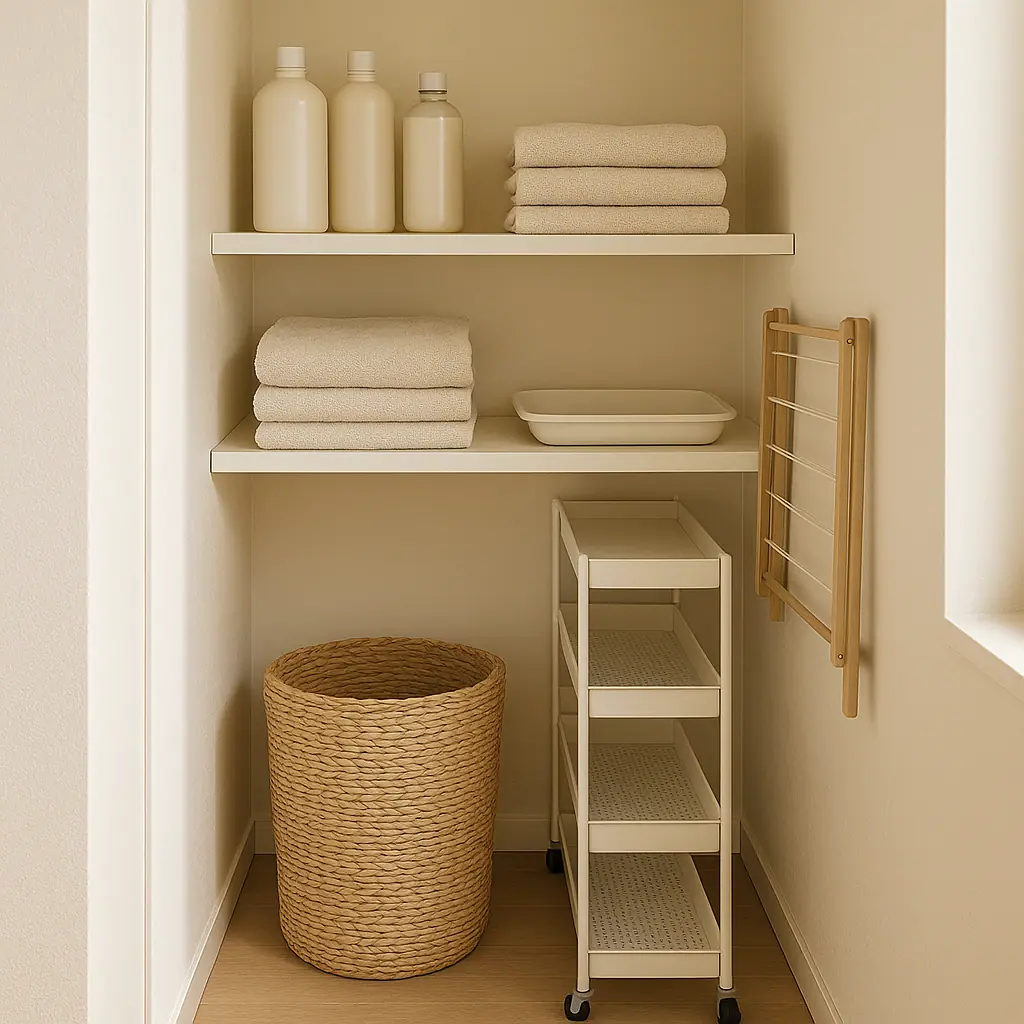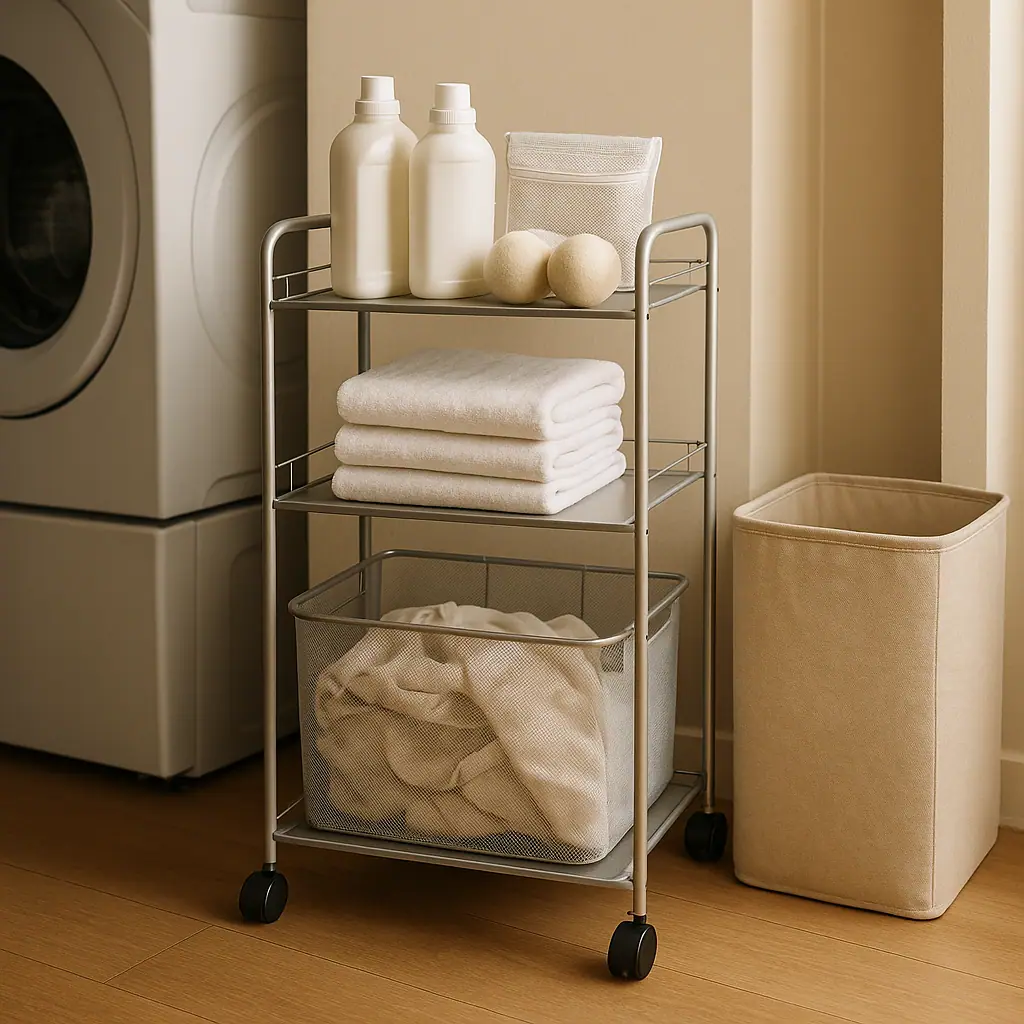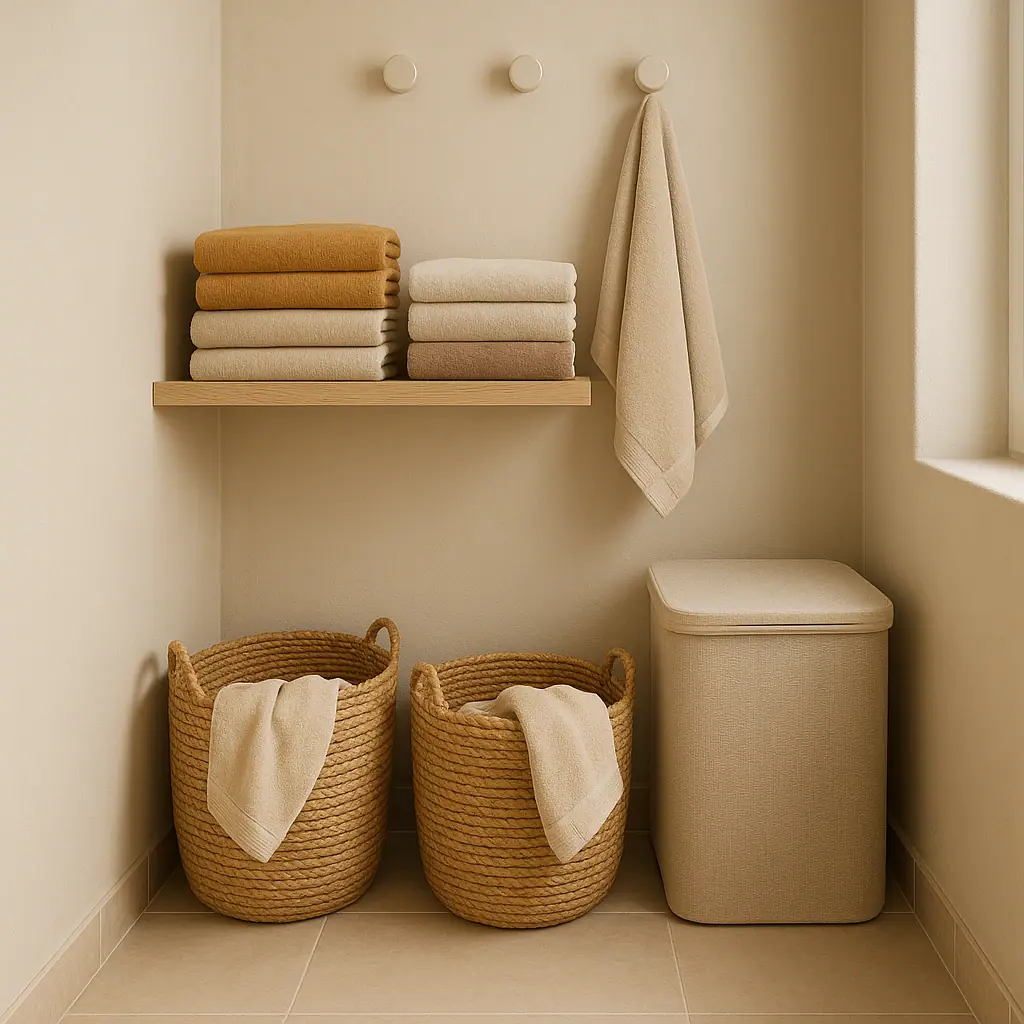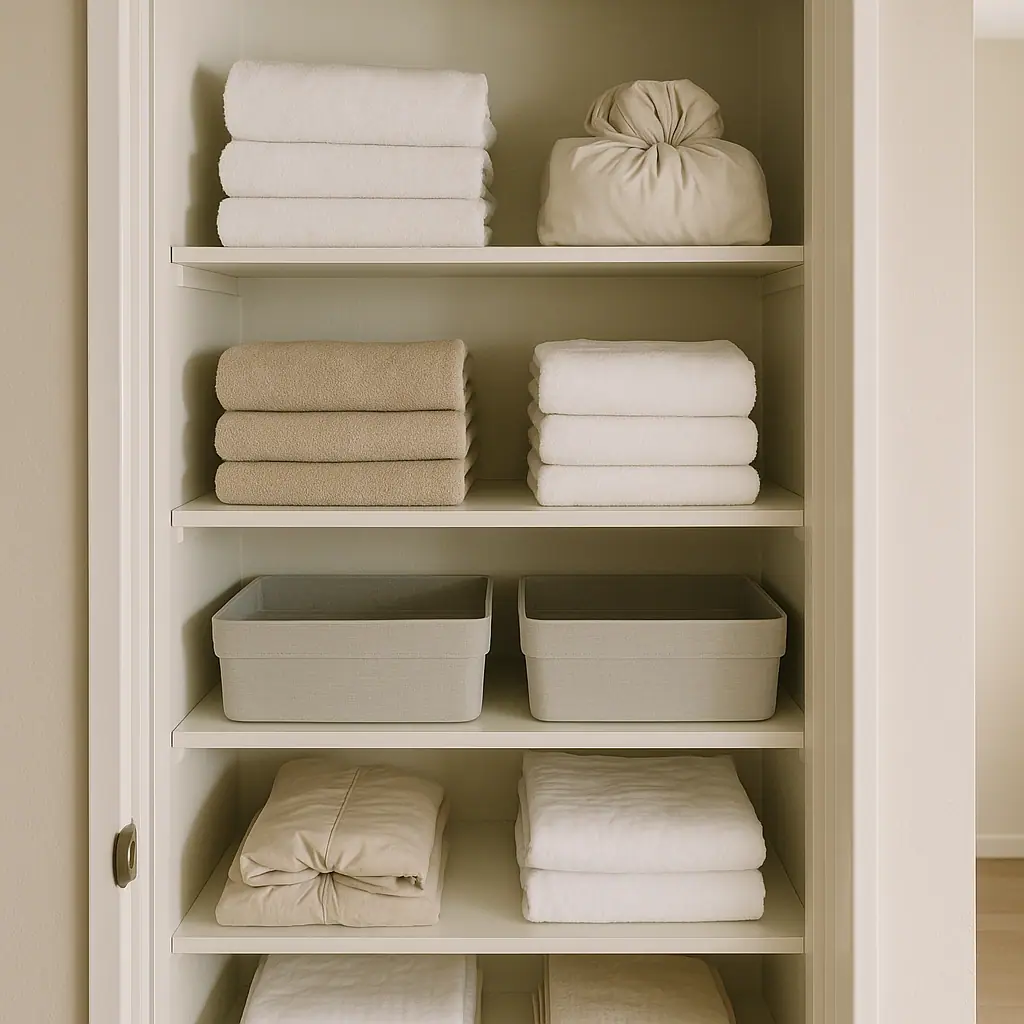
Small linen closet organization ideas that stay neat usually begin with less folding drama and more honest limits. A small closet can hold towels, sheets, spare pillowcases, bath supplies, paper goods, and cleaning extras, but it cannot do all of those jobs well unless each shelf has a clear purpose.
The goal is not to make the closet look styled for one afternoon. The goal is a calm system you can reset after laundry day, grocery day, or a rushed guest-prep moment. When the categories are simple, the best items are easy to reach, and backups have a limit, the closet stays useful without needing constant reorganization.
Why Small Linen Closet Organization Ideas That Stay Neat Matter
A linen closet gets messy because it receives clean items at the exact moment people are tired: after laundry, after changing beds, after cleaning the bathroom, or before guests arrive. If the closet has no simple return path, folded towels slide forward, sheet sets separate, and extra products fill the easy shelves.
Good closet organization also protects the items you already own. Towels need air, sheets need a way to stay grouped, and guest linens need to be easy to find without disturbing daily supplies. A small closet does not need more categories; it needs fewer categories that match real use.
If you add a freestanding shelving unit, tall cabinet, or wall-mounted organizer near the closet, check stability and installation instructions first. The U.S. Consumer Product Safety Commission explains that anchoring furniture with drawers, doors, and shelves helps prevent tip-over injuries: CPSC furniture tip-over guidance.
Start With the Main Linen Jobs
Before buying bins or dividers, write down what the closet must actually hold. Most small linen closets work best with three to five jobs, not ten. For example, one shelf can hold daily towels, one can hold sheet sets, one can hold guest linens, and one small section can hold backstock bathroom supplies.
Keep daily linens in the easiest zone
The best shelf is the one between waist and eye level. Use that space for the towels, washcloths, and sheets you reach for every week. If daily towels are stored too high, people pull from the bottom of the stack or toss clean laundry onto the nearest open shelf.
Move rare items out of prime space
Extra blankets, holiday linens, beach towels, and rarely used guest sets should not take the most convenient shelf. Put occasional items higher, lower, or in a separate under-bed bin if the closet is extremely tight. Prime space should serve normal weeks.
What to Check First for a Small Linen Closet
Empty one shelf at a time, not the whole closet at once. A one-shelf reset is calmer and gives you a realistic sense of what fits. As you remove items, check for worn towels, mismatched sheet pieces, duplicate pillowcases, expired toiletries, and anything that belongs in a bathroom cabinet, laundry zone, or cleaning supply area instead.
If you use a purchased organizer, shelf insert, or cabinet accessory, check the manufacturer instructions before loading it. IKEA's product support page, for example, points shoppers toward assembly guides and product-specific support rather than guessing from the shape of the item: IKEA product support and assembly guidance.
Then measure the shelf. Write down width, depth, and usable height. A bin that fits the shelf but blocks the door, hides the back row, or forces towels to be packed too tightly will not stay neat. Small linen closet organization works better when containers leave a little breathing room.
How to Organize a Small Linen Closet Step by Step
Use this process for a weekend reset or a quiet weeknight shelf-by-shelf project. The steps are simple on purpose because the closet has to survive normal laundry routines.
- Choose the closet jobs. Decide whether the closet holds towels, sheets, guest linens, toiletries, paper goods, cleaning cloths, or a smaller mix.
- Remove one shelf at a time. Sort that shelf into keep, relocate, donate if usable, and discard if worn out or unsuitable.
- Group sheet sets together. Fold the fitted sheet, flat sheet, and pillowcase into one bundle, or store the set inside one pillowcase.
- Limit towel stacks by type. Keep bath towels, hand towels, and washcloths in separate stacks so one category does not collapse another.
- Use bins for small loose items. Store travel toiletries, extra soap, guest supplies, or washcloths in shallow bins that can be pulled out.
- Place backups behind daily items. Keep active towels and sheets forward, with extras behind or above them.
- Label only if it solves a real problem. A simple label such as guest towels or queen sheets helps shared homes, but over-labeling can make the closet feel fussy.
- Do a two-minute reset after laundry. Straighten stacks, return empty bins, and remove anything that landed in the wrong zone.
Pros and Cons of Common Linen Closet Setups
There is no single perfect setup for every small home. Use these tradeoffs to choose the system that matches your shelf depth, household size, and laundry rhythm.
Open towel stacks are fast
Daily towels are easy to grab and easy to return when the stack is not too tall.
Sheet bundles reduce searching
Keeping each sheet set together prevents loose pillowcases and mismatched fitted sheets from spreading across shelves.
Shallow bins control small items
Bins make washcloths, guest toiletries, and refills easier to pull forward without disturbing folded linens.
Deep bins can hide duplicates
If a bin is too deep, extra soaps, pillowcases, or towels may disappear behind the front row.
Too many labels slow the routine
A label for every small category can make the closet harder to reset after normal laundry.
Common Linen Closet Mistakes to Avoid
The first mistake is keeping every old towel because it might be useful someday. A small apartment may need a few cleaning rags, but it does not need a full shelf of tired towels competing with the good ones.
The second mistake is mixing toiletries and linens without limits. A few backstock items can make sense, but open bottles, scented products, or bulky paper goods can crowd fresh towels and make the closet feel chaotic. Keep anything that can leak, stain, or smell in a separate contained zone.
The third mistake is stacking by size only. Size matters, but use matters more. Guest towels, daily towels, beach towels, and cleaning towels should not all share one tower just because they fold into similar rectangles.
A Simple Checklist for a Closet That Stays Neat
Run this checklist after laundry day or whenever the closet starts to feel full again.
- Can the daily towel stack be removed without toppling? If not, split it into two shorter stacks.
- Are sheet sets grouped by bed size? Keep queen, twin, or guest sets together so no one has to unfold everything.
- Is each shelf doing one main job? Mixed shelves need clearer boundaries or one fewer category.
- Can bins pull out easily? If a bin scrapes, catches, or requires two hands, it is too tight for daily use.
- Are heavy items low? Store bulky blankets, refill packs, and dense stacks where they can be lifted without reaching overhead.
- Did anything unrelated drift in? Move tools, random decor, medicine, or cleaning chemicals back to their proper zones.
When to Get Extra Help
Get extra help if the closet shelves are loose, the door will not close because of pressure from stored items, a tall organizer needs anchoring, or you are unsure whether a wall-mounted product is allowed in your rental. Do not guess about weight limits, wall anchors, or lease rules.
It is also worth asking for help if the closet holds supplies for children, older adults, guests, or roommates with different needs. A calm system should be understandable to the people who use it, not just the person who organized it.
Frequently Asked Questions
What should I check first in a small linen closet?
Check what the closet actually needs to hold. Then measure the shelves and reset one shelf at a time so the project does not become overwhelming.
How often should I review the linen closet?
Do a quick reset after laundry day and a deeper review every season. That is usually enough to catch worn towels, missing sheet pieces, and overfilled bins.
What should I do if I am not sure an organizer is safe?
Check the product instructions, shelf limits, lease rules, and wall or furniture guidance before loading it. If the setup feels unstable, choose a lighter removable option.
Can I undo this setup later?
Yes. Start with shelf zones, folded bundles, and removable bins. Those changes can be adjusted easily if your laundry routine, household, or storage needs change.
Final Thoughts
Small linen closet organization ideas that stay neat are usually modest: shorter stacks, grouped sheet sets, shallow bins, clear shelf jobs, and a small reset after laundry. Those choices work because they match how linens move through real life.
Start with one shelf today. Remove what does not belong, give the shelf one job, and leave enough room to return clean laundry without forcing it into place. A linen closet stays calm when the system is easy to repeat.