Under-sink organization ideas for renters need to start with the awkward parts of the cabinet: pipes, a deep back corner, cleaning bottles, trash bags, and the lease limits that usually rule out drilling. The goal is not to make the cabinet look full. The goal is to make it safer, easier to wipe down, and simple to reset after a normal week.
The under-sink area often becomes a catch-all because it is hidden. That makes it tempting to stack sprays, sponges, dishwasher tabs, extra bags, and tools wherever they fit. A calmer setup gives each item a job and keeps anything risky out of casual reach.
Why Under-Sink Organization Ideas for Renters Matter
A rental under-sink cabinet is different from an open pantry shelf. It has plumbing, possible moisture, and usually a cabinet floor that you do not want to damage. It may also hold cleaning products that should not be treated like ordinary storage.
If children visit or live in the home, storage needs to be more conservative. The Consumer Product Safety Commission advises that household products and medicines should be stored out of sight and reach of young children, preferably locked up, especially when cleaning agents are stored under the sink: CPSC household product safety guidance.
Even in an adults-only apartment, the same careful habit helps. Bottles stay upright, paper goods stay away from drips, and the cabinet remains easy to empty if the sink trap leaks. A good setup should make the space more usable without hiding a problem behind pretty bins.
Start With the Cabinet, Not the Organizer
Before buying anything, open both cabinet doors and look at the actual obstacles. Under-sink storage has fixed shapes that no organizer can ignore. The drain pipe, garbage disposal, supply lines, shutoff valves, and cabinet lip all decide what will fit.
Measure the usable zones
Measure the width, depth, and height on each side of the plumbing, not just the outside cabinet dimensions. A product that fits the total cabinet may still hit a pipe, block a valve, or stop the door from closing.
Notice what must stay accessible
Leave shutoff valves, disposal reset buttons, and plumbing joints visible enough to check. Renters should be able to spot a drip quickly and move stored items out without taking apart a complicated system.
- Left and right zones: use the open sides around the pipes instead of forcing one wide organizer across the whole cabinet.
- Back zone: reserve it for light backup items, not daily spray bottles that get knocked over.
- Front zone: keep daily dish soap, sponges, trash bags, or dishwasher tabs where they can be reached in one motion.
- Valve zone: keep it clear enough that an adult can reach the shutoff quickly if needed.
What to Check First for Under-Sink Organization Ideas for Renters
The best renter-friendly under-sink setup is removable. If the organizer can lift out in one piece or slide forward without tools, it is much easier to clean, inspect, and move later.
Check product instructions before relying on any organizer that has sliding parts, stacked shelves, adhesive pieces, or tension rods. IKEA's product support page is a practical example of where renters can look for assembly instructions and product-specific support before trusting a storage item in a tight cabinet: IKEA product support.
That does not mean every organizer needs to be from one brand. It means the setup should respect the limits of the item you choose. If a pull-out drawer says it needs a certain clearance, or a shelf has a weight limit, treat that as part of the design.
Separate wet, dry, and riskier items
Under-sink cabinets often mix categories that should not be piled together. Keep sponges and brushes in a washable tray. Keep trash bags and paper backup items away from the cabinet floor if there is any chance of drips. Keep cleaning products upright, closed, and easy to identify.
Avoid permanent changes
Renters should be cautious with screws, mounted tracks, adhesive hooks on weak finishes, and anything that blocks access to pipes. If your lease or cabinet surface is unclear, choose freestanding bins, handled caddies, or a removable mat instead.
How to Set Up Under-Sink Organization Step by Step
Use one cabinet and one afternoon. Trying to redesign the whole kitchen usually creates more mess than clarity.
- Empty the cabinet completely. Wipe the cabinet floor and check for damp spots, warped surfaces, sticky residue, or slow drips before putting anything back.
- Remove items that do not belong. Do not store food, loose batteries, pet treats, or random tools under the sink just because there is space.
- Group by use. Make one group for daily dishwashing, one for cleaning products, one for backup supplies, and one for items that should move elsewhere.
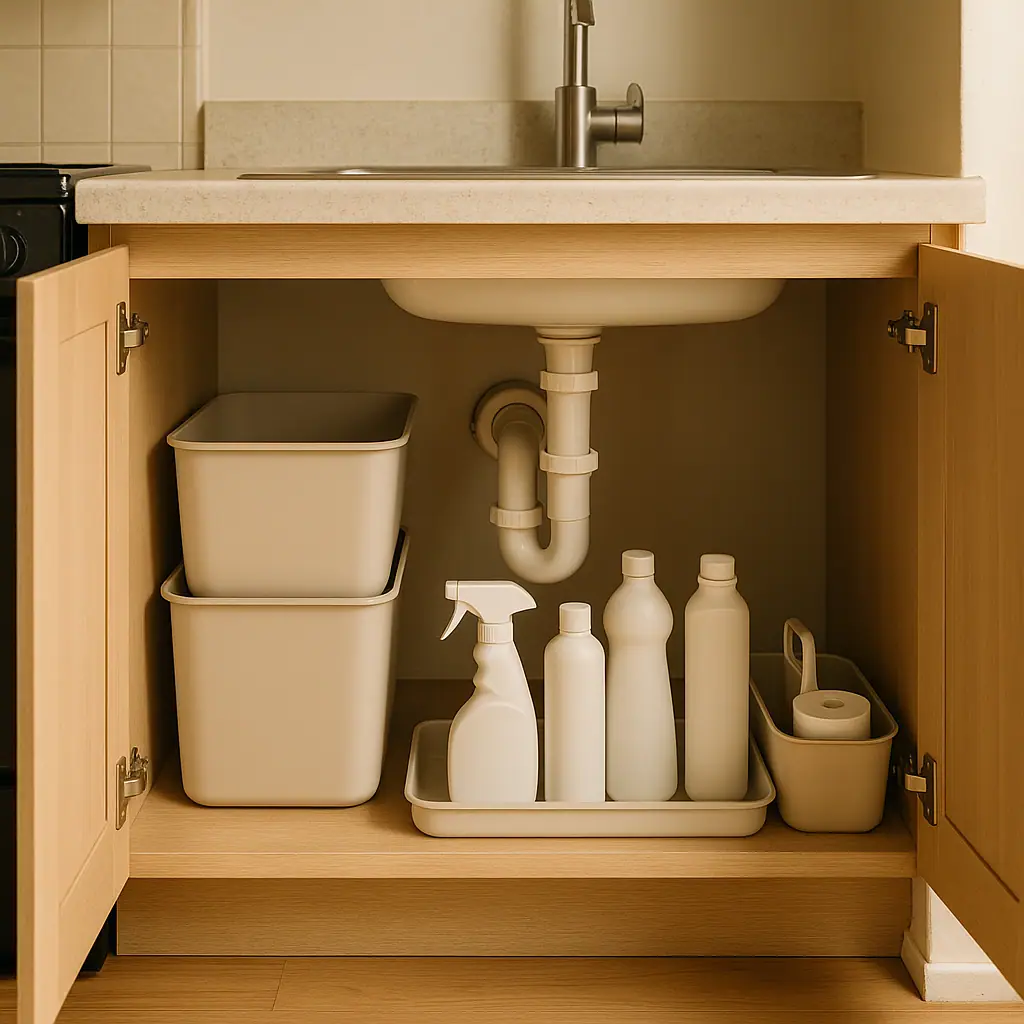
- Choose removable containers. Handled caddies, shallow bins, and washable trays work well because they can be lifted out for cleaning or maintenance.
- Keep bottles upright. Tall cleaning bottles should not lean against pipes or crowd the cabinet door. If they tip easily, use a bin with sides.
- Leave plumbing visible. Do not pack the area around valves or pipe joints so tightly that you cannot see or reach them.
- Add a small leak check habit. Once a week, pull the front bin forward and look for moisture before the cabinet becomes a problem.
Renter-Friendly Under-Sink Products That Usually Make Sense
Commercial organizers can help, but only when they solve the cabinet's real shape. Under-sink storage is rarely one perfect product. It is usually two or three small pieces that leave the plumbing alone.
Handled caddy — best for daily cleaning items
A handled caddy works well for dish soap, counter spray, gloves, and a small brush. It can move from cabinet to counter and back again, which keeps the daily routine simple.
Shallow washable tray — best for damp items
A tray gives sponges, scrub brushes, and dishwasher tabs a contained place. It also protects the cabinet floor from small drips and makes wipe-downs easier.
Clear bin with sides — best for backup bottles
A clear bin helps prevent bottles from spreading across the cabinet. Choose one that can slide forward without scraping pipes or blocking the cabinet door.
Split-height shelf — useful only with clearance
A small shelf can add a second level beside the pipes, but it should not force bottles to lean or make valves hard to reach. Measure before buying.
Pros and Cons of Under-Sink Organizers for Renters
Under-sink organizers can make a small kitchen easier to maintain, but only when they stay simple. Too many layers can turn a hidden cabinet into a puzzle.
Removable bins protect flexibility
They can be lifted out for cleaning, plumbing access, move-out checks, or a fast reset after a spill.
Zones reduce daily searching
Keeping dishwashing, cleaning, and backup supplies separate makes the cabinet easier to use without overthinking it.
Clear containers reveal problems
Visible sides make it easier to notice duplicates, leaking bottles, empty packages, and supplies that should be moved elsewhere.
Stacked systems can block plumbing
Deep drawers or tall shelves may hide valves, hit pipes, or make it harder to notice a slow leak.
Adhesive pieces can damage finishes
Hooks, clips, or mounted tracks may pull paint, laminate, or cabinet coating when removed, especially in a damp area.
Common Under-Sink Organization Mistakes to Avoid
The first mistake is filling the cabinet before checking for leaks. If the cabinet floor is damp, stained, soft, or musty, pause the organizing project and report or fix the issue according to your rental process.
The second mistake is storing too many categories together. Under the sink is not the best place for bulk paper towels, rarely used appliances, food, or sentimental extras. The more unrelated things you store there, the harder it becomes to see what is leaking, empty, expired, or unsafe.
A third mistake is making the setup too pretty to use. If a bin has to be opened, unstacked, and rearranged every time you need dish soap, the routine will fail. Daily items should sit at the front and return easily.
A Simple Under-Sink Checklist
Use this checklist every few weeks, or any time the cabinet starts feeling crowded again.
- Can I see the pipes and valves? If not, remove or shift organizers until access is clear.
- Are bottles upright and closed? Tighten caps and keep sprays from tipping against the door.
- Are dry supplies protected? Move paper goods away from the cabinet floor or store them elsewhere.
- Can the main bin lift out? If it takes several steps, the system is too complicated for a rental cabinet.
- Is anything stored here only because it has no home? Relocate unrelated items before adding another organizer.
- Did I check for moisture? A 10-second look can catch a small leak before it ruins the cabinet floor.
When to Get Extra Help
Ask for help when the cabinet shows signs of moisture, moldy odor, warped flooring, pests, or a leak you cannot explain. A storage project should not cover up a maintenance problem.
Also pause before adding a mounted pull-out system, screw-in rack, or adhesive product that could affect the cabinet surface. Check your lease, product instructions, and landlord or property manager guidance if you are unsure. A freestanding caddy is easier to undo than a damaged cabinet wall.
Frequently Asked Questions
What should I check first before organizing under the sink?
Check for leaks, moisture, odors, and blocked plumbing access. Then measure the clear space around the pipes before buying bins, shelves, or pull-out drawers.
How often should I review an under-sink cabinet?
A quick weekly moisture check is useful, especially in small rentals. Do a deeper reset once a month or whenever cleaning bottles, bags, and sink supplies start mixing together.
What should renters avoid storing under the sink?
Avoid food, loose paper goods on the cabinet floor, items that can be damaged by moisture, and anything that blocks valves or hides plumbing problems.
Can I use adhesive organizers under the sink?
Sometimes, but be cautious. Damp cabinet surfaces and rental finishes can make adhesive removal unpredictable. Freestanding bins, trays, and caddies are usually easier to undo.
Final Thoughts
Under-sink organization ideas for renters work best when they respect the cabinet's limits. Keep the setup removable, leave plumbing visible, and store daily items where they can be reached without shifting half the cabinet.
Start with one handled caddy, one washable tray, and one honest edit. If the cabinet becomes easier to clean, inspect, and reset, you have done enough. A calm under-sink space is not the fullest one. It is the one that works on an ordinary weekday.