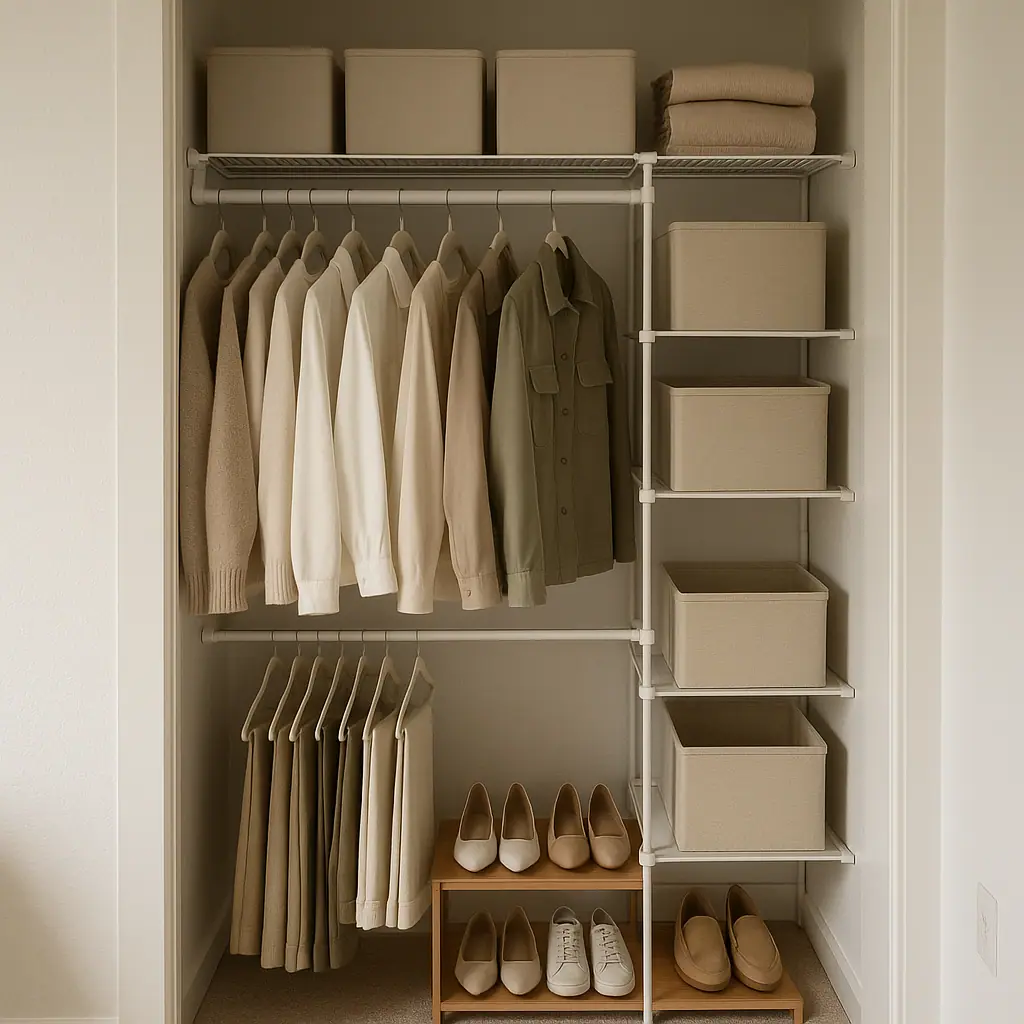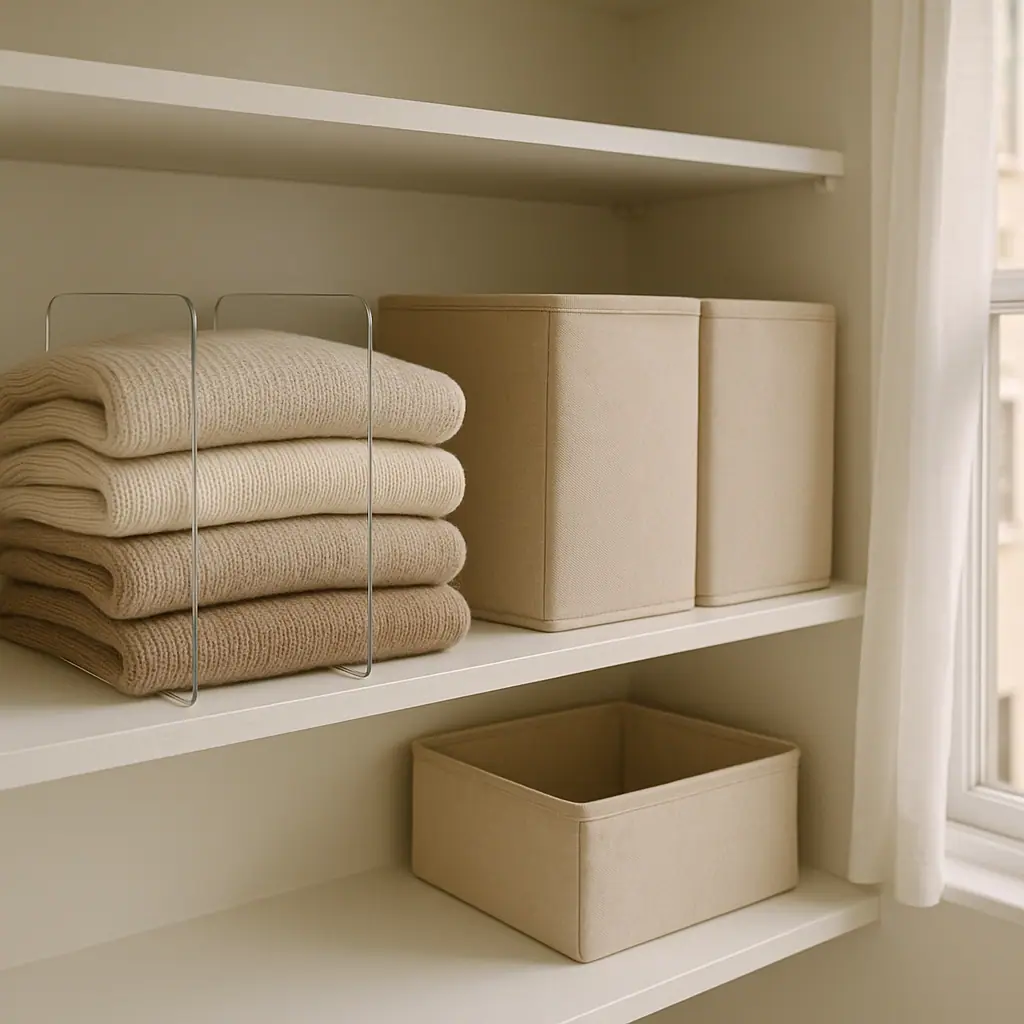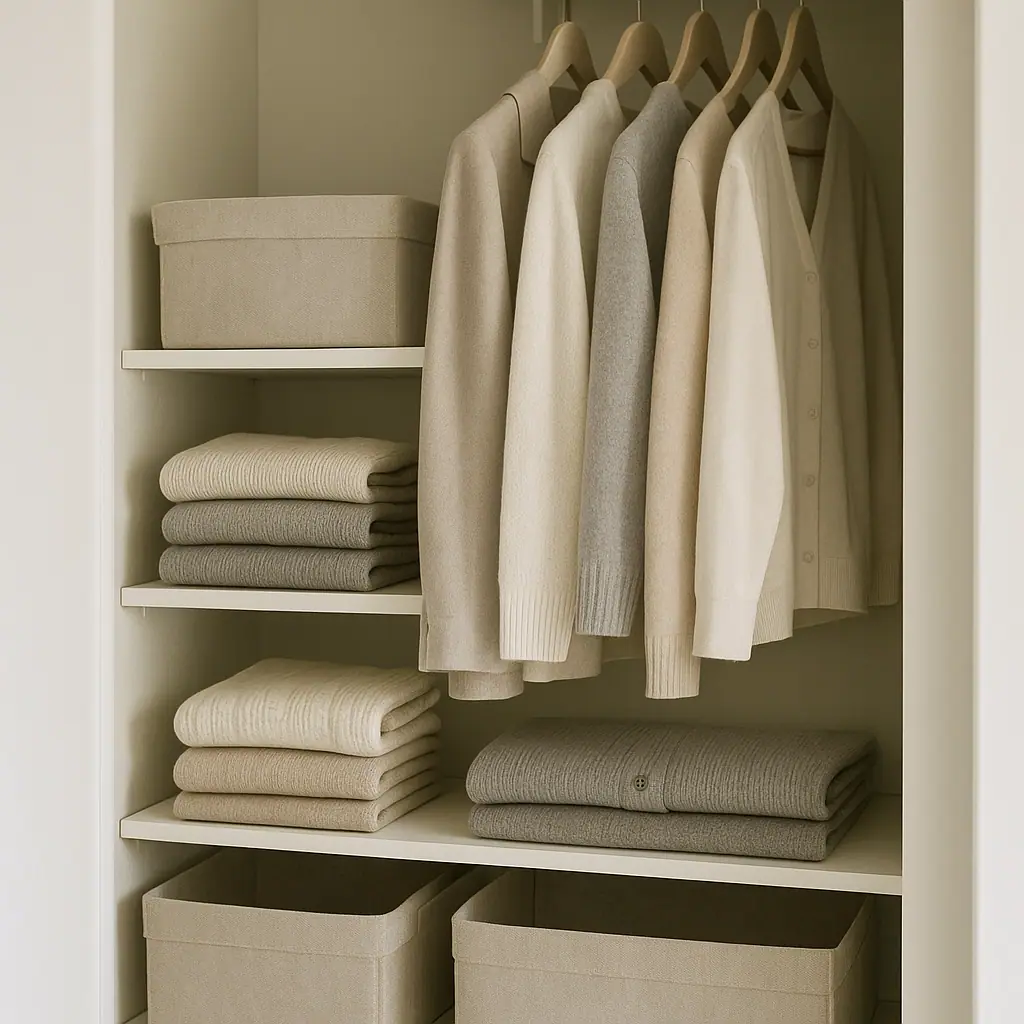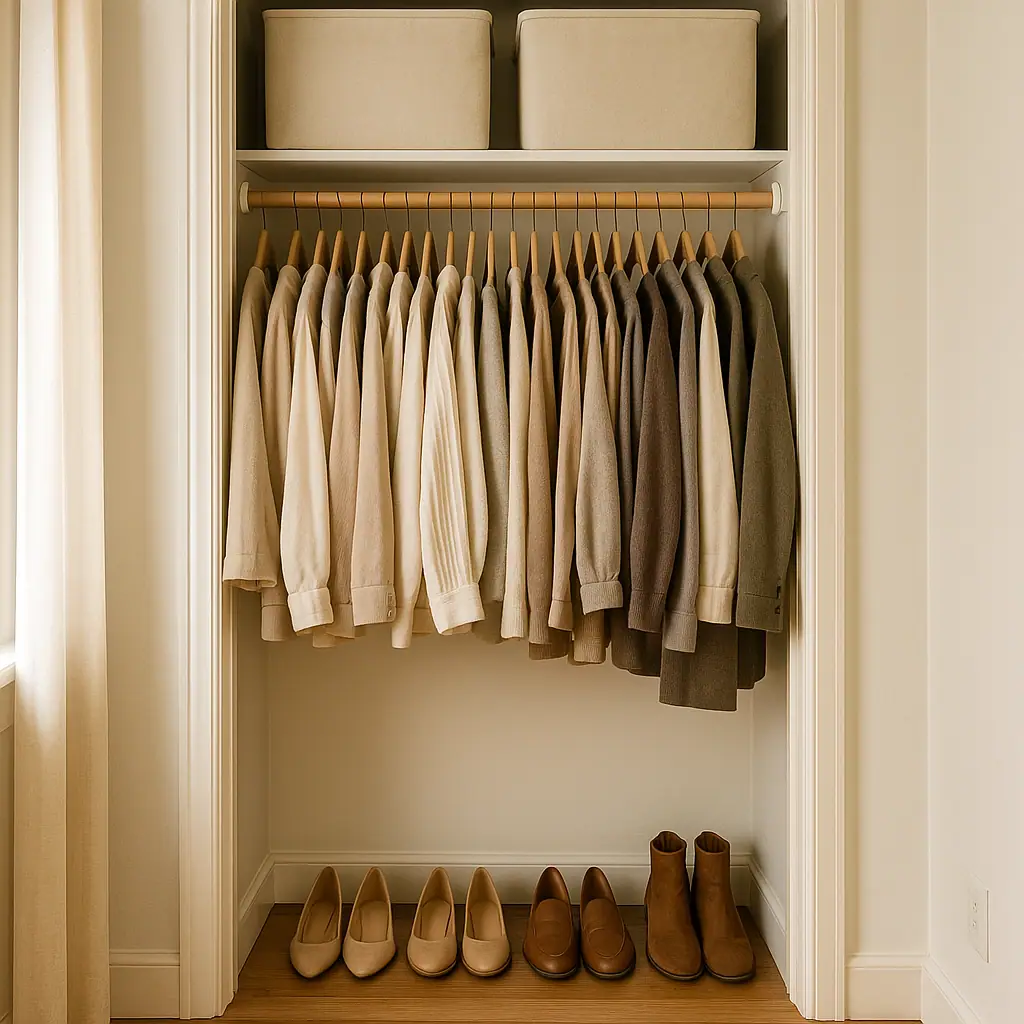
How to make a tiny closet feel easier to use starts with reducing friction, not forcing more products into a tight space. A tiny closet can feel difficult when the rod is too full, the floor is blocked, the top shelf hides everyday items, or every laundry day requires a full reset.
The calmer goal is simple: give the easiest space to the things you use most, move occasional items out of the way, and create one repeatable reset that does not depend on a perfect weekend cleanout. Tiny closet organization works best when the closet has fewer jobs and clearer limits.
Why Tiny Closet Organization Matters
A tiny closet usually fails in small ways before it feels completely unusable. A jacket slides off a crowded hanger. Shoes drift into the doorway. A top shelf becomes a mystery pile. Clean laundry waits outside the closet because putting it away feels harder than leaving it in a basket.
When those small frictions repeat, the closet starts asking for too many decisions. The solution is not always more storage. Often, it is a better order of access. Daily items need the easiest reach. Weekly items can sit a little higher or deeper. Occasional items should not compete with the clothes you touch every morning.
Start With the Closet Door and the First Reach
Open the closet the way you normally do on a busy day. Notice what blocks the first reach. If the door bumps a shoe rack, the floor needs editing. If hangers scrape tightly, the rod is overloaded. If the item you need is behind a bin, the zone is assigned to the wrong category.
Keep the first reach boring
The first reach should hold ordinary daily items, not special occasion clothes or backup supplies. Put work shirts, uniforms, favorite sweaters, or the few pieces you wear every week in the easiest section. Store formalwear, seasonal coats, and rarely used bags farther away.
Use the floor only for clear categories
A tiny closet floor can help, but only if it has a strict job. Shoes, a hamper, or one low bin may work. Mixed bags, loose returns, and random storage boxes usually make the whole closet feel harder to use.
What to Check First Before Adding Organizers
Before buying a shelf divider, second rod, hanging organizer, or drawer tower, measure the closet width, shelf depth, rod height, door swing, and floor clearance. A helpful product in one closet can become a daily obstacle in another if it blocks hangers or makes the door hard to close.
Stability matters too. If a tiny closet plan includes a tall freestanding unit near the closet, check the product instructions and think about tip-over risk. The U.S. Consumer Product Safety Commission shares practical Anchor It furniture safety guidance for homes with furniture that can tip. That does not replace the instructions for a specific organizer, but it is a useful reminder to treat tall storage as a safety decision, not just a space decision.
If your closet is a small reach-in, ShelfCalm's guide on how to organize a small reach-in closet step by step can help you map the space before choosing new products.
How to Make a Tiny Closet Feel Easier to Use Step by Step
- Remove only the blocked area: start with the floor, the rod, or the top shelf. Avoid emptying the entire closet if that will create a bigger mess than you can finish.
- Sort by real use: make groups for daily, weekly, occasional, seasonal, repair, donate, and relocate. Do not sort by what looks neat in a photo.
- Thin the daily zone: keep the easiest rod section for clothes you actually wear often. If a hanger has not moved in months, it should not own prime space.
- Lower heavy items: keep dense bins, boots, and packed bags low enough to lift safely. Use upper shelves for lighter seasonal items in labeled containers.
- Create one temporary overflow spot: use a small basket for returns, repairs, or undecided items. Empty it weekly so it does not become a second closet.
- Test organizers before committing: try temporary labels or existing bins for a week. Buy only what solves a measured problem.
- Reset after laundry: remove empty hangers, return shoes, and clear the floor every laundry cycle before the closet gets crowded again.
Small Changes That Make the Closet Feel Calmer
A tiny closet feels easier when every zone has a visible job. You do not need matching containers for everything. You need fewer mixed categories and a layout that makes common actions feel obvious.
- Give the rod breathing room: leave enough space for hangers to slide. If you have to force them apart, the rod is doing too much.
- Limit top-shelf categories: use the upper shelf for two or three labeled groups, such as seasonal clothes, guest linens, or travel items.
- Use one shoe rule: keep only the pairs worn weekly inside the closet. Occasional pairs can move to a labeled box elsewhere.
- Make returns visible: a small pending basket keeps repairs and donations from blending back into clean clothes.
- Keep labels plain: labels like daily shirts, winter, and donate work better than clever names no one remembers.
Common Tiny Closet Mistakes to Avoid
The first mistake is treating vertical space as unlimited space. Upper shelves are useful, but they should not hold heavy or frequently used items that are awkward to lift. Keep the most stable and reachable areas for the items you touch most often.
The second mistake is buying organizers before measuring. A hanging shelf can steal rod space. A shoe rack can block the door. A drawer tower can make the closet feel tighter if it leaves no room to stand and sort.
The third mistake is keeping too many maybe items in the daily zone. Clothes that need repair, pieces that do not fit, and items saved for rare occasions can all stay in the home without living in the easiest closet space.
Pros and Cons of a Tiny Closet Reset
Daily access improves quickly
Clearing the first reach can make mornings easier even before the entire closet is reorganized.
Less pressure to buy products
Sorting by use often reveals that the closet needs fewer mixed items before it needs more organizers.
Better weekly maintenance
A small pending basket, clear floor rule, and laundry-day reset keep the closet from rebuilding the same pile.
Requires honest editing
The closet will still feel tight if rarely used items continue to occupy the easiest rod and shelf space.
May need seasonal adjustment
Coats, boots, warm layers, and summer clothing can change the best layout during the year.
A Simple Tiny Closet Checklist
- First reach clear: the door opens fully and the easiest section holds daily items.
- Rod can slide: hangers move without scraping through packed clothing.
- Floor has one job: shoes, a hamper, or one low bin, not a mixed pile.
- Heavy items stay low: dense storage is not above shoulder height.
- Top shelf is labeled: only light occasional categories live higher up.
- Pending basket empties weekly: repairs, returns, and donations do not drift back into the closet.
When to Get Extra Help
Get extra help if the closet plan involves moving heavy furniture, adding a tall freestanding unit, installing hardware, or changing anything your lease may restrict. Check lease terms, surface limits, product instructions, and weight guidance before you attach or stack storage products.
You should also pause if the closet belongs to more than one person. A tiny shared closet needs agreement about daily zones and overflow rules. Otherwise, one person's calm system can become another person's blocked access.
Frequently Asked Questions
What should I check first in a tiny closet?
Check the first reach. Open the door and notice what blocks daily use: crowded hangers, shoes on the floor, a mystery shelf, or items stored in the wrong zone.
How often should I reset a tiny closet?
A short reset after laundry day is usually enough for normal use. Clear the floor, remove empty hangers, and empty the pending basket before piles rebuild.
What if I am not sure an organizer will fit?
Measure first, then test the idea with a temporary label or an existing bin. If the door, hangers, or floor access get worse, the organizer is not helping.
Can I undo a tiny closet setup later?
Yes. Start with removable labels, movable bins, and one-week tests. Adjust the daily zone before buying anything permanent or making lease-sensitive changes.
Final Thoughts
How to make a tiny closet feel easier to use comes down to access, limits, and repeatable maintenance. Give the best space to daily items, keep heavy storage low, avoid buying before measuring, and make the reset small enough to repeat.
Start with the one part of the closet that slows you down most. If that small change makes laundry, shoes, or morning clothes easier for a week, build the rest of the closet around that calmer routine.