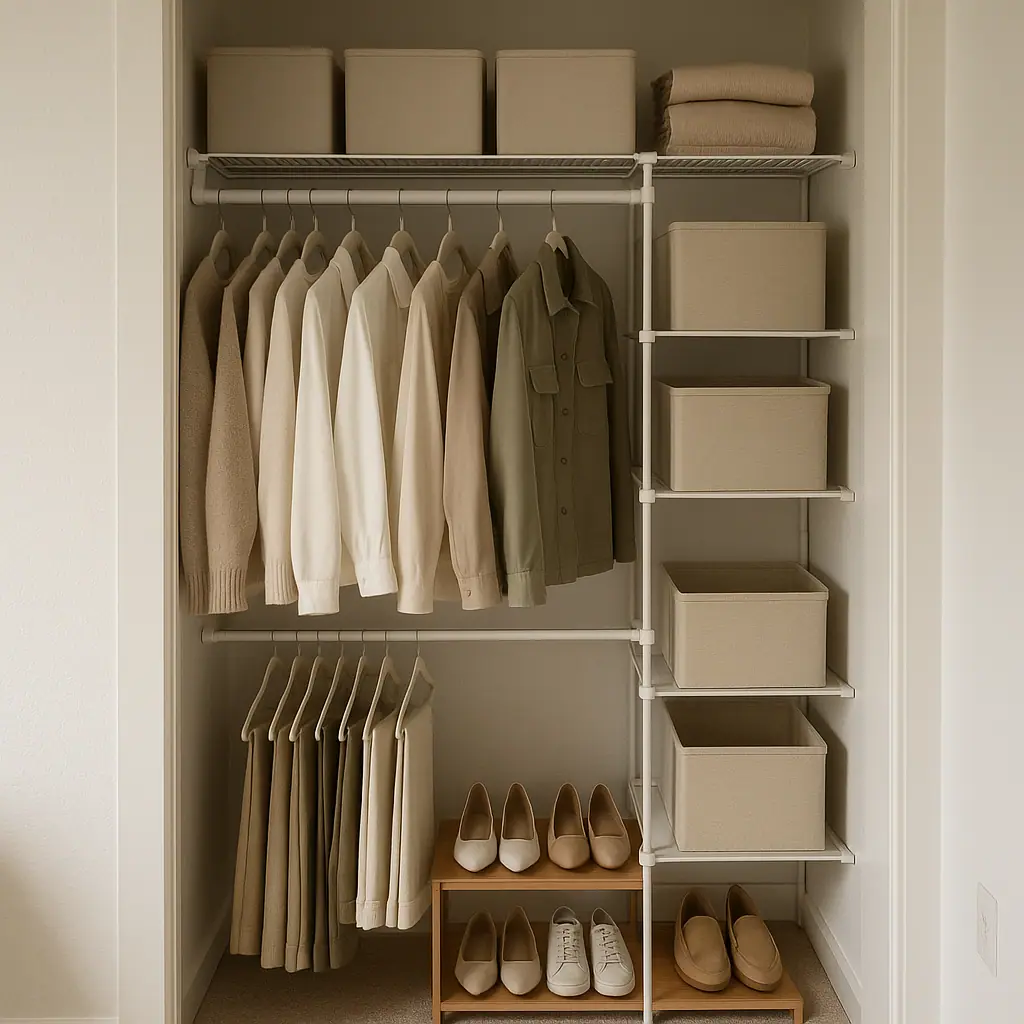
Shared closet organization ideas for couples and roommates work best when the closet stops being one vague shared space and becomes a set of small, fair zones. In a small apartment, the problem is rarely just lack of hangers. It is unclear ownership, mixed laundry rhythms, different clothing volumes, and storage decisions that no one can maintain after a busy week.
A calm shared closet does not need to feel identical on both sides. It needs visible boundaries, honest capacity, and a reset routine that both people can understand. Start with the daily friction point: where clothes pile up, where shoes block the door, or where one person cannot find basics without moving the other person's items.
Why Shared Closet Organization Matters
When two people use one closet, every small decision affects someone else. A crowded hanging rod can make laundry harder to put away. A deep shelf without labels can turn into a mixed pile. Shoes, bags, folded clothes, towels, and seasonal items can all compete for the same easiest space.
The goal is not a picture-perfect split. The goal is a system that reduces repeated decisions. Each person should know where daily clothes go, where overflow goes, and what should not return to the closet at all.
Start With Closet Systems and Wardrobe Storage Basics
Begin by dividing the closet into three types of access: daily, weekly, and occasional. Daily items need the easiest reach. Weekly items can sit slightly higher or deeper. Occasional items can be boxed, labeled, or moved to under-bed storage if the closet is too tight.
Choose zones before products
Use masking tape, sticky notes, or temporary labels to mark proposed zones before changing the closet. This keeps the decision low-risk and gives both people a chance to notice what feels unfair or awkward.
Respect different wardrobes
A couple or roommate pair may not need a perfect half-and-half split. One person may have more hanging clothes, while the other may need more folded storage. Fairness means each person can use the closet without constantly moving the other person's things.
What to Check First for Shared Closet Organization Ideas for Couples and Roommates
Measure the hanging width, shelf depth, door clearance, and floor space before choosing organizers. A second hanging rod, cube unit, over-door rack, or tall drawer tower may sound useful, but it has to fit the closet safely and still let the door close without scraping.
If you add tall freestanding storage near a closet, treat stability as part of the plan. The U.S. Consumer Product Safety Commission's Anchor It furniture safety guidance is a helpful reminder that tall furniture and tip-over risk deserve attention. For any specific organizer, follow the product instructions, weight limits, and anchoring guidance instead of guessing.
For a related small-closet walkthrough, ShelfCalm's guide on how to organize a small reach-in closet step by step can help you map the closet before assigning shared zones.
How to Handle a Shared Closet Step by Step
- Empty only the problem areas: pull out the items causing friction, such as shoes, top-shelf bins, or the overstuffed rod. Avoid emptying the entire apartment at once.
- Sort by person and use: make separate piles for each person, then sort each pile into daily, weekly, occasional, seasonal, repair, donate, and relocate.
- Set a daily zone for each person: give every person one reliable place for everyday clothes. This might be a rod section, a drawer stack, a shelf, or a hanging organizer.
- Create one shared zone only when it makes sense: shared items like linens, laundry supplies, or travel bags need a clear label and a specific owner for resets.
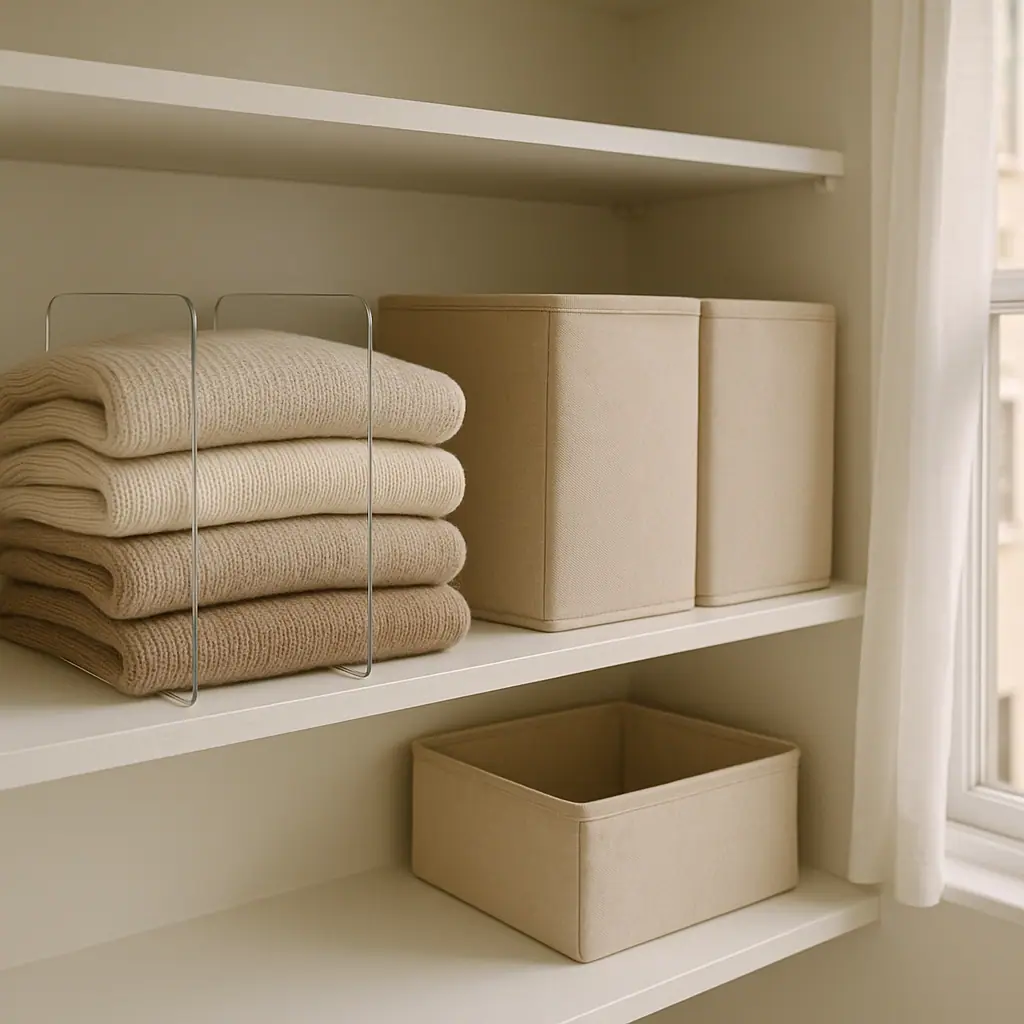
- Use vertical storage carefully: add a shelf divider, second rod, or stacked bin only if it does not crush clothes, block the door, or make heavy items hard to lift.
- Label temporary systems first: use removable labels for two weeks before buying matching bins. If the label still makes sense after real use, the system is worth keeping.
- Agree on an overflow rule: if one zone is full, the next item must be edited, rotated, or moved elsewhere rather than spilling into the other person's space.
- Schedule a short reset: choose one weekly moment to return strays, remove empty hangers, and clear the floor before the closet becomes a negotiation again.
Practical Shared Closet Zones That Stay Fair
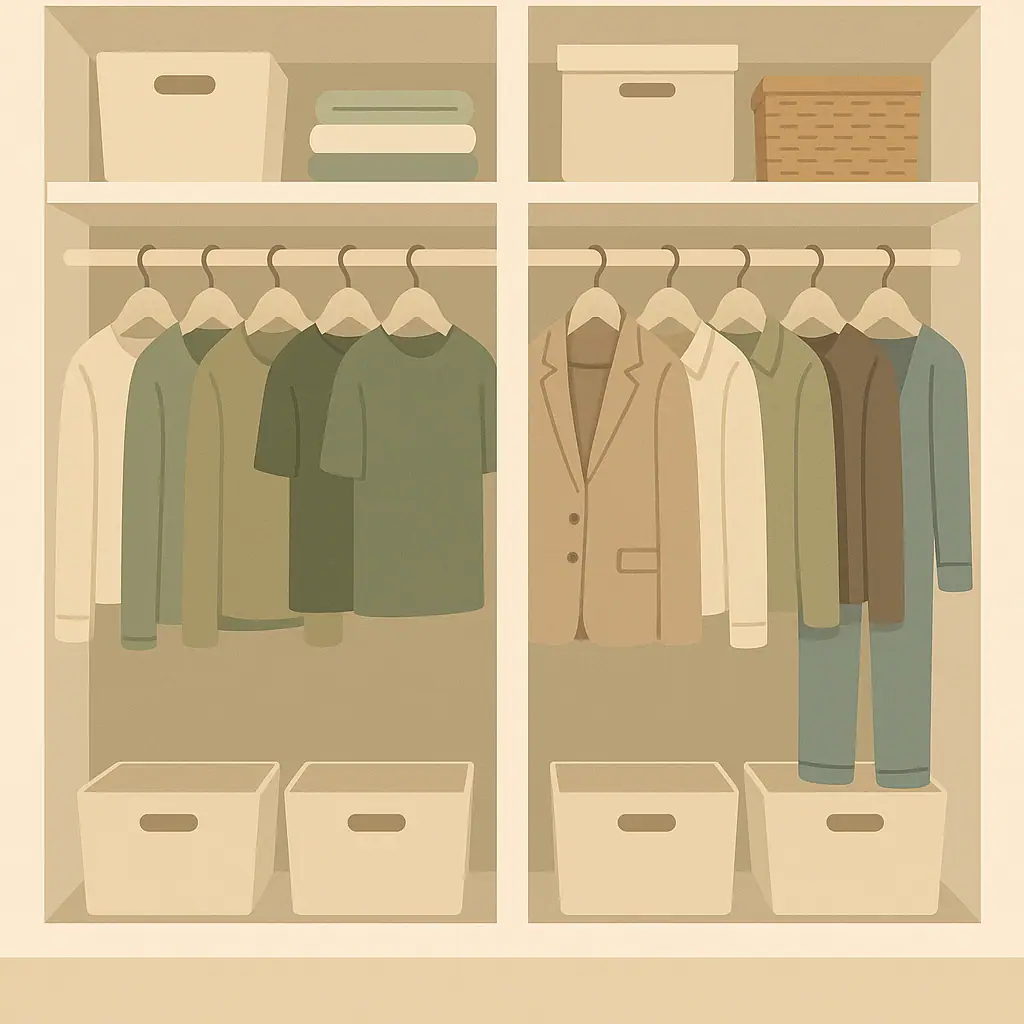
The simplest layout is a left-right split for hanging clothes, with shared floor and upper-shelf rules. If one person has more hanging items, use a mixed split instead: one person gets more rod length while the other gets more drawer or shelf space. Write that choice down with labels so it does not have to be renegotiated every laundry day.
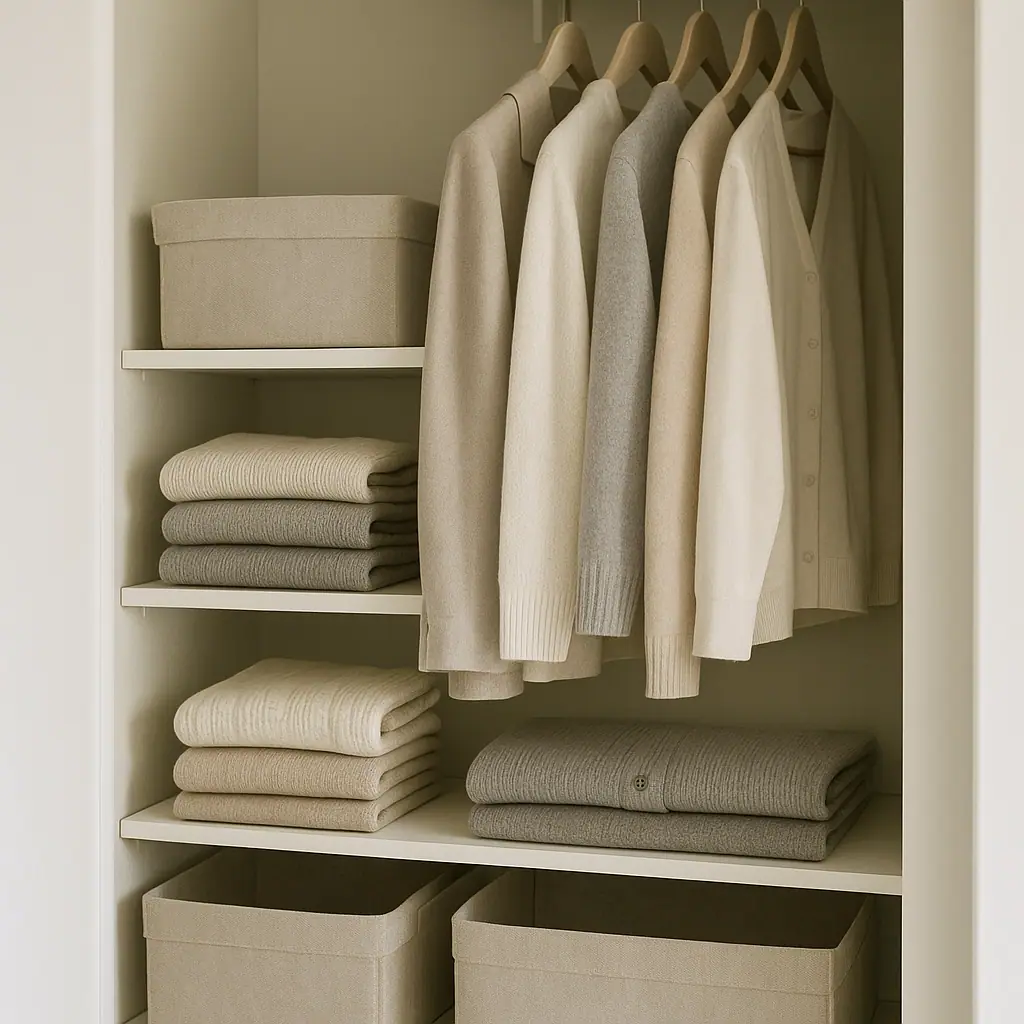
- Daily hanging zone: shirts, work clothes, uniforms, or outfits worn several times a week.
- Folded zone: sweaters, jeans, workout clothes, or items that stretch on hangers.
- Shoe zone: one row or rack for weekly shoes, with occasional pairs boxed elsewhere.
- Shared shelf: only for items both people truly use, such as a steamer, lint roller, or linen bin.
- Pending basket: one small basket for returns, repairs, or items that need a decision before the weekly reset.
Common Closet Systems and Wardrobe Storage Mistakes to Avoid
The first mistake is buying identical organizers for two different wardrobes. Matching bins may look tidy, but they can waste space if one person needs long hanging storage and the other needs folded storage.
The second mistake is letting shared storage become nobody's responsibility. A shared shelf should have a short label and a reset rule. Otherwise it becomes the place where unrelated items land when no one wants to decide.
The third mistake is storing heavy items too high. Keep dense bins, boots, and packed bags low enough to lift safely. Upper shelves are better for light seasonal items in clearly labeled containers.
Pros and Cons of Shared Closet Zone Systems
Clearer ownership
Each person knows which rod, shelf, drawer, or bin belongs to them, which reduces repeated small conflicts.
Easier weekly resets
Labels and zones make it faster to return laundry, shoes, and stray items without redesigning the closet every time.
Better use of awkward space
Upper shelves, floor rows, and door space can each get a defined job instead of becoming mixed overflow.
Requires an honest first sort
The system only works if both people edit items that no longer fit, no longer get worn, or do not belong in the closet.
Needs occasional adjustment
Seasonal clothing, new jobs, changing routines, or a new roommate can make the original split less useful over time.
A Simple Shared Closet Checklist
- Daily zones named: each person has a clear spot for everyday clothes.
- Shared zone limited: shared items have a label and a reset owner.
- Heavy items low: dense bins, boots, and packed bags are not stored above shoulder height.
- Door closes cleanly: over-door and floor storage do not scrape, jam, or block access.
- Overflow rule agreed: a full zone triggers editing or rotation, not silent spillover.
- Weekly reset scheduled: strays return to the right zone before piles rebuild.
When to Get Extra Help
Get extra help if the closet plan depends on moving heavy furniture, installing a tall unit, adding a second rod, or using hardware that your lease may not allow. Check the lease, product instructions, and surface limits first.
You should also pause if one person feels the system is not fair. A shared closet is part storage and part routine. A five-minute conversation about access can prevent weeks of quiet frustration.
Frequently Asked Questions
What should I check first in a shared closet?
Check what each person needs daily. Then measure the rod, shelf, floor, and door space before deciding where each zone should go.
How often should couples or roommates review the closet?
A quick weekly reset works for normal use. Review the full split seasonally, after laundry routines change, or when one person's zone keeps overflowing.
What if we do not have equal amounts of clothing?
Use a fair split, not necessarily an equal split. One person may need more hanging space while the other needs more shelves or drawers.
Can we undo the closet setup later?
Yes. Start with removable labels and temporary zones for two weeks. If the setup feels awkward, adjust the boundaries before buying permanent organizers.
Final Thoughts
The calmest shared closet organization ideas for couples and roommates are the ones both people can keep using. Give each person a daily zone, limit shared storage, keep heavy items low, and use a weekly reset to catch overflow early.
Start with one shelf, one rod section, or one shoe row today. If that boundary works for a week, build the rest of the closet around it.